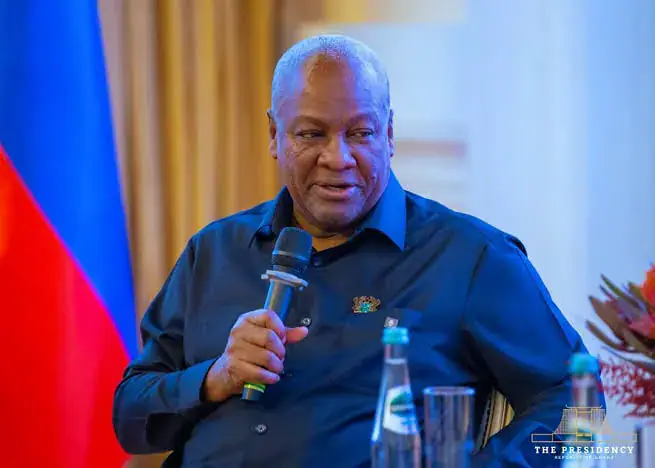
President John Dramani Mahama of Ghana has outlined five key areas that Ghana wants addressed in proposed reparatory justice discussions with the United Kingdom, the African Union (AU), CARICOM, and the African diaspora. These areas include a formal apology for the transatlantic slave trade, the return of looted cultural artefacts, and targeted investments in education, healthcare, and youth development.
President Mahama's priorities also involve measures to combat systemic racism and development partnerships aimed at tackling structural poverty and inequalities in the global economic system. He emphasized that the engagement must move beyond acknowledging the atrocities of slavery and colonialism to delivering practical interventions that address their enduring consequences.
British Prime Minister Andy Burnham has indicated his willingness to consider calls for a formal apology on behalf of the British state and proposed structured discussions with communities affected by the transatlantic slave trade. However, Burnham has ruled out financial reparations. President Mahama welcomed Burnham's recognition of the human rights abuses associated with the slave trade and the UK government's openness to considering a formal apology.
President Mahama, as African Union Champion on Reparations and Chair of the Global Advisory Panel on Reparatory Justice, commended Burnham's statement for its bold and reflective approach to the UK's legacy of slavery and colonialism. Mahama's proposed discussions are organized around five broad commitments, including a formal apology, international cooperation to eliminate systemic racism, and targeted support for education and healthcare.
The President also called for the restitution of stolen cultural heritage and strategic development partnerships to address structural poverty, alongside reforms to unfair global economic and debt arrangements. He cited the Accra Reset and the Bridgetown Initiative as important frameworks in addressing these economic challenges.
President Mahama described the British government's position as an important development in the global campaign for reparatory justice, particularly after the adoption of a Ghana-led United Nations resolution recognizing the transatlantic slave trade as a grave crime against humanity. The UK abstained from voting on the resolution, adding significance to the development.
President Mahama emphasized that recognition of historical atrocities and a formal apology would not undo the suffering and injustices experienced by millions of Africans but would signal a crucial departure from past denial and open the path toward genuine healing and repair. He proposed sincere and structured engagement involving the AU, CARICOM, the African diaspora, and countries that participated in the transatlantic slave trade.
Key points
- President Mahama identifies five priority areas for reparatory justice talks with the UK.
- The proposed discussions aim to address the enduring consequences of slavery and colonialism.
- President Mahama welcomes the UK's openness to a formal apology but emphasizes that more practical interventions are needed.