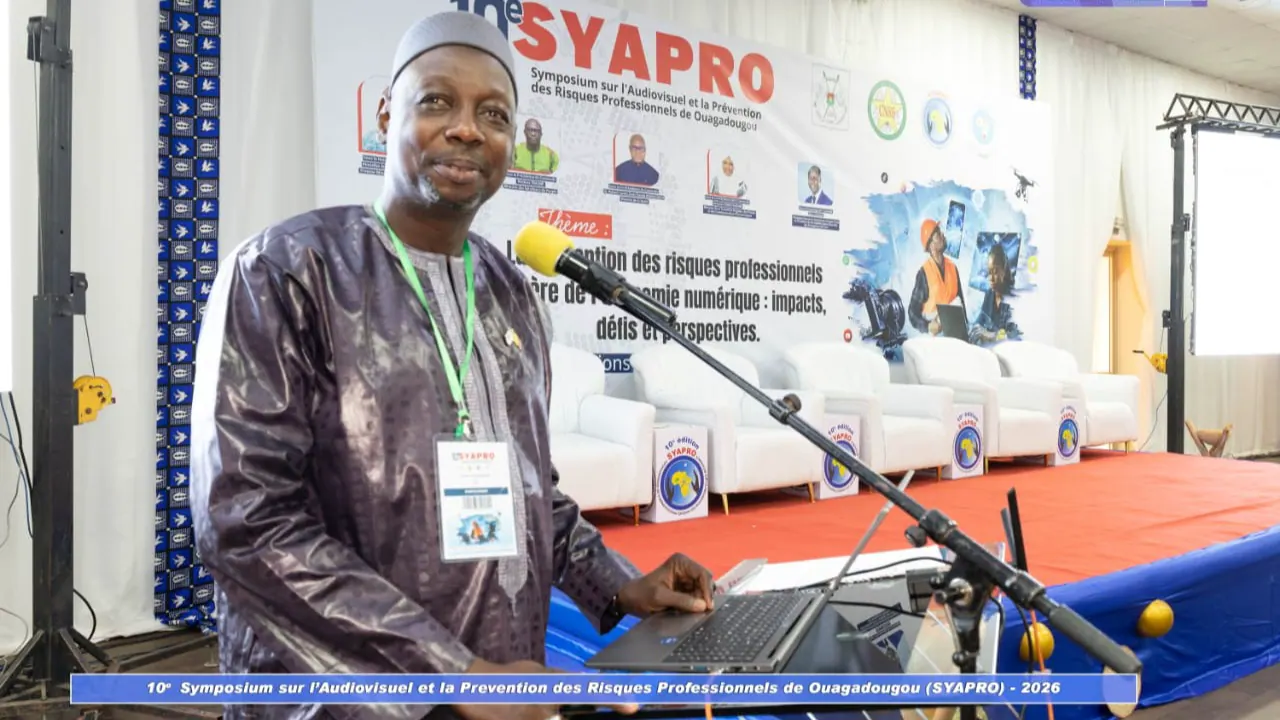
The National Social Security Institute (INPS) of Mali participated in the 10th edition of the Symposium on Audiovisual and Occupational Risk Prevention (SYAPRO), held from September 21 to 25, 2026, in Ouagadougou. Dr. Mahamane Koné, head of the prevention department at INPS, presented a paper on "Occupational Risk Prevention in the Digital Economy Era: Impacts, Challenges, and Perspectives." The symposium brought together various stakeholders to discuss the evolution of occupational risk prevention in the face of changing work environments.
Dr. Mahamane Koné emphasized that the digitalization of administration, banking, services, and commerce has introduced new challenges for workplace health and safety. These challenges include hyperconnectivity, the difficulty of separating professional and personal life, and ergonomic issues related to prolonged screen time. He stressed that these changes require a rethinking of occupational risk prevention strategies to mitigate their impacts on workers' health.
To address these challenges, Dr. Koné proposed several solutions, including the development of a charter on the right to disconnect, defining specific times for professional communications, adapting equipment, and raising awareness about cybersecurity. He also suggested revising regulatory texts and training occupational health doctors and prevention controllers to better identify, evaluate, and manage emerging risks associated with the digital economy.
The INPS's participation in the 10th SYAPRO symposium contributes to discussions on the evolution of occupational risk prevention. The institute's communication highlighted the need for a proactive approach to addressing the new risks associated with digitalization. By engaging in these discussions, the INPS aims to promote a culture of prevention and improve working conditions in Mali.
The digitalization of various sectors, including administration, banking, services, and commerce, has transformed work environments and introduced new risks. The increased use of computers, smartphones, and professional platforms has led to hyperconnectivity and blurred boundaries between professional and personal life. These changes require a rethinking of occupational risk prevention strategies to protect workers' health and well-being.
Dr. Koné's presentation emphasized the importance of adapting equipment and workspaces to prevent occupational risks. This includes using ergonomic furniture and devices designed to reduce the strain associated with prolonged screen time. He also highlighted the need for awareness-raising campaigns on cybersecurity and the protection of professional data.
The INPS's advocacy for adaptation in occupational risk prevention in the digital age is crucial for promoting a safe and healthy work environment in Mali. By engaging in discussions and sharing expertise, the institute aims to contribute to the development of effective strategies for mitigating the risks associated with digitalization and promoting sustainable and healthy workplaces.
Key points
- The INPS calls for better consideration of new digital risks in the workplace, including hyperconnectivity and ergonomic issues related to prolonged screen time.
- Dr. Mahamane Koné proposed several solutions, including the development of a charter on the right to disconnect and raising awareness about cybersecurity.
- The INPS's participation in the 10th SYAPRO symposium contributes to discussions on the evolution of occupational risk prevention in the face of changing work environments.