General Caleb Akandwanaho, popularly known as Salim Saleh, has a well-established place in Uganda's military history. However, his entry into that history was modest, as he once said that he did not join the army, but rather the struggle. Saleh was recruited into the liberation effort after reading books about fighting for freedom. This distinction matters, as it helps explain the man and his approach to conflict and negotiation. His philosophy is built around a simple idea: you may defeat an enemy without destroying him, and sometimes the greater victory lies in leaving your opponent a bridge back.
Saleh's approach to conflict resolution was evident in the final stages of the liberation war in the early 80s, where he encountered the difficult intersection between fighting and negotiation. After 1986, he personally led talks with former adversaries in northern Uganda, sometimes at great personal risk. This instinct would become much clearer in his later life, as he began to speak frequently about social cohesion, harmony, and keeping society together. In his world, a ceasefire is not necessarily peace, but an opportunity to begin the harder work of repairing relationships.
Saleh's intellectual journey is also revealing. While studying at the Senior Command and Staff College at Kimaka in the mid-2000s, he began putting on paper an idea that would increasingly shape his thinking: poverty, food insecurity, and conflict are deeply connected. There is something profound about a general arriving at such a conclusion, as he began to ask whether livelihoods could prevent conflicts. A young person with nothing to do, no earning, and little hope is easier to recruit into conflict than one with an income and a future.
Saleh's thinking, coupled with his deep appreciation of Musevenomics, helps explain his journey from battlefield commander to champion of socioeconomic transformation. It also explains his enduring interest in agriculture, cooperatives, household production, and ultimately, Operation Wealth Creation. For him, poverty is not just economic; it can quickly turn into a security problem. Economic exclusion can become political anger, and desperation can become conflict.
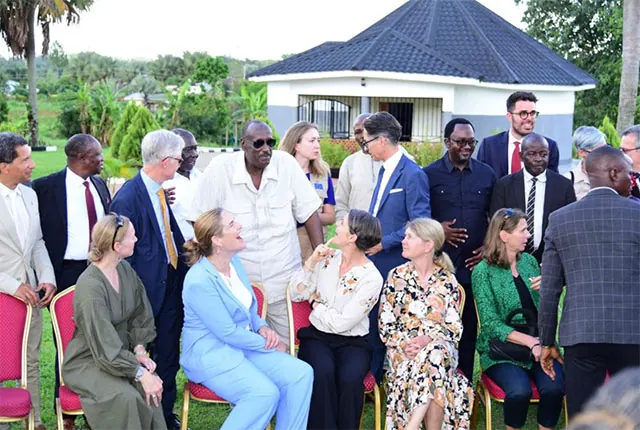
Saleh's personal style matters, as he is very comfortable outside the theatre of military and political power. He sits with generals, ministers, ambassadors, farmers, cultural leaders, young people, and locals, as well as current and former adversaries, with much the same ease. He listens, probes, and questions assumptions, and when another argument makes better sense, he concedes the point. That is confidence without insecurity, and it explains his appreciation of soft power.
Saleh has long understood that people cannot always be commanded into unity or even development; sometimes they must be persuaded. His song "We Are One", his play "Ceasefire", and the "Uganda, This Is Home" campaign all carry the same message of, yes, we can disagree, even fiercely, and still belong to one another. As Uganda approaches its 64th Independence anniversary, Saleh's philosophy is more relevant than ever.
As Uganda celebrates 64 years of independence, history will surely remember Saleh the soldier, but it should also remember the peacemaker. For Saleh, the journey seems to have come full circle, from fighting for Uganda to working to keep Ugandans together. His legacy is a testament to the power of dialogue, socioeconomic transformation, and social cohesion.
Key points
- General Salim Saleh's approach to conflict resolution emphasizes the importance of leaving opponents a bridge back and promoting social cohesion.
- Saleh's philosophy connects poverty, food insecurity, and conflict, and he has worked to address these issues through initiatives like Operation Wealth Creation.
- Saleh's personal style and appreciation of soft power have enabled him to build relationships with diverse groups and promote unity and development.