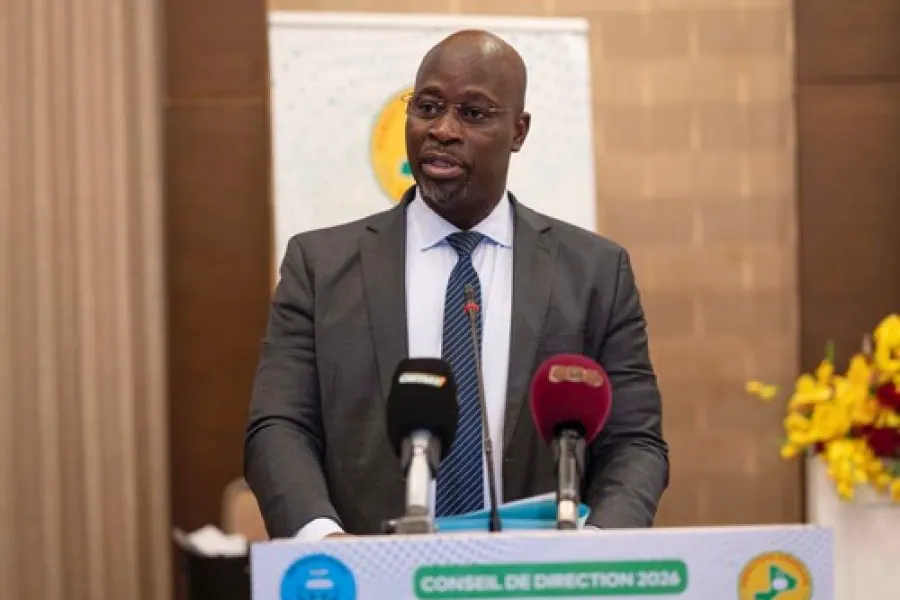
On the sidelines of the 11th annual congress of the African Tax Research Network (ATRN) in Rwanda, from September 22-24, 2026, Mali's Director General of Taxes, Hamadou Fall Dianka, emphasized the importance of digitalizing tax administrations and mobilizing domestic resources. He also discussed the challenges facing countries of the Alliance of Sahel States (AES). This was reported by Aujourd'hui-Mali on October 3, 2026.
In a related development, Mali is counting on specialized justice to combat corruption and financial delinquency. The country's National Economic and Financial Pole (Pnef) concentrates expertise to protect public resources. According to the president of Pnef, the fight against corruption and economic and financial crimes has reached a new level in Mali. The Pnef was created to provide an effective judicial response to complex cases.
The Pnef is a key component of Mali's national system for protecting public resources. Its creation responds to the need to adapt the judicial system to increasingly technical crimes that can compromise public resource management. The Pnef is not a completely new creation, as economic and financial poles already existed in certain jurisdictions. However, the judicial reform has led to centralization and specialization.
The organization of the Pnef is defined by Law No. 2021-051 of September 29, 2021, amending the Code of Criminal Procedure. The new Code of Criminal Procedure adopted in December 2024 confirms the competence of the Pnef within the Tribunal de Grande Instance of Commune III. Malado Gouro Bocoum stated that this reform aims to strengthen magistrates' and investigators' specialization.
The Pnef's competence is defined by Article 881 of the Code of Criminal Procedure and covers corruption and economic and financial delinquency offenses. The Pnef also handles connected offenses, including those with a transnational dimension. Cases under its jurisdiction include corruption of public agents, corruption in public procurement, and money laundering.
The Pnef's special features include a Financial Prosecutor, specialized investigating chambers, and correctional and criminal chambers. This organization is reinforced by an Economic and Financial Brigade and specialized assistants. This approach allows for the gathering of necessary expertise from investigation to judgment.
The creation of the Pnef aims to put an end to economic impunity and guarantee better protection of national resources. The ambition is clear: to become a judicial bulwark against those who undermine the state's economic foundations.
Key points
- Hamadou Fall Dianka, Mali's Director General of Taxes, praises the resilience of AES countries.
- Mali's National Economic and Financial Pole (Pnef) is a new tool in the fight against corruption and financial delinquency.
- The Pnef has been given a broad mandate to investigate and prosecute economic and financial crimes.