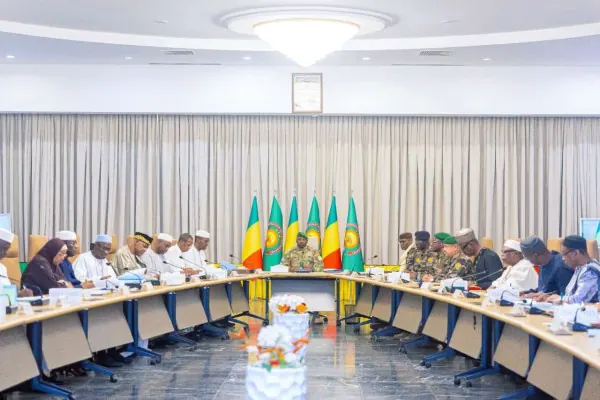
The Malian Council of Ministers, in its recent session, adopted several key projects and decrees aimed at enhancing the country's mining and agricultural sectors. Among the adopted texts were projects related to the creation, organization, and functioning of the School of Mines and Petroleum. This new institution aims to provide quality training for human resources in the mining and petroleum domains, addressing the current insufficiency in specialized training structures.
The Council also adopted projects related to the creation of the Agency for Research and Development of Mineral Resources. This agency will focus on research, production, securing, valuation, and dissemination of geological, mining, petroleum, and gas knowledge across the national territory. The creation of this agency is expected to correct the shortcomings identified in the current program for mineral resources development, particularly regarding its status, institutional framework, and financial resource mobilization.
In the mining sector, the Council approved the first renewal of research permits for several companies. These include Company Mines And Career "COMICAR SARL," Hongda Liujiu Mali SARL, Ressources Robex Mali SARL, Dansoko Gold Mine SARLU, M.B.C. Diffusion, Wagadou Explore SARL, and Yong Xin Mines SARL. The permits, which were initially affected by a suspension between December 2022 and March 2025, will allow these companies to continue their research activities for an additional three years, renewable once.
The Council also approved the second renewal of a research permit for Africa Mining SARL at Dandoko, Circle of Kéniéba. This permit renewal aims to facilitate further research following the identification of several anomalies that justify continued exploration activities. The mining sector in Mali has seen significant activity, with the government attributing permits for gold and mineral research to various companies in recent years.
In addition to mining reforms, the Council adopted a decree specifying the details of competencies transferred from the state to local authorities in agriculture, rural development, and equipment. This move follows the modification of the fundamental principles of territorial administrative organization and aims to adjust to the new territorial configuration, particularly after the suppression of the Collectivity territory Cercle.
The Malian government's efforts to enhance its mining and agricultural sectors reflect its broader strategy to optimize resource exploitation and promote sustainable development. By creating new institutions and adjusting regulatory frameworks, the government seeks to address existing challenges and attract further investment in these critical sectors.
The implementation of these new reforms and projects is expected to have a positive impact on Mali's economic development. The mining sector, in particular, holds significant potential for growth, given the country's rich mineral resources. Similarly, reforms in the agricultural sector aim to improve food security and rural development.
Key points
- The Council of Ministers adopted projects for the creation of the School of Mines and Petroleum and the Agency for Research and Development of Mineral Resources.
- Several mining companies were granted renewals of their research permits, allowing them to continue exploration activities.
- The government also adopted a decree on transferring state competencies to local authorities in agriculture and rural development.