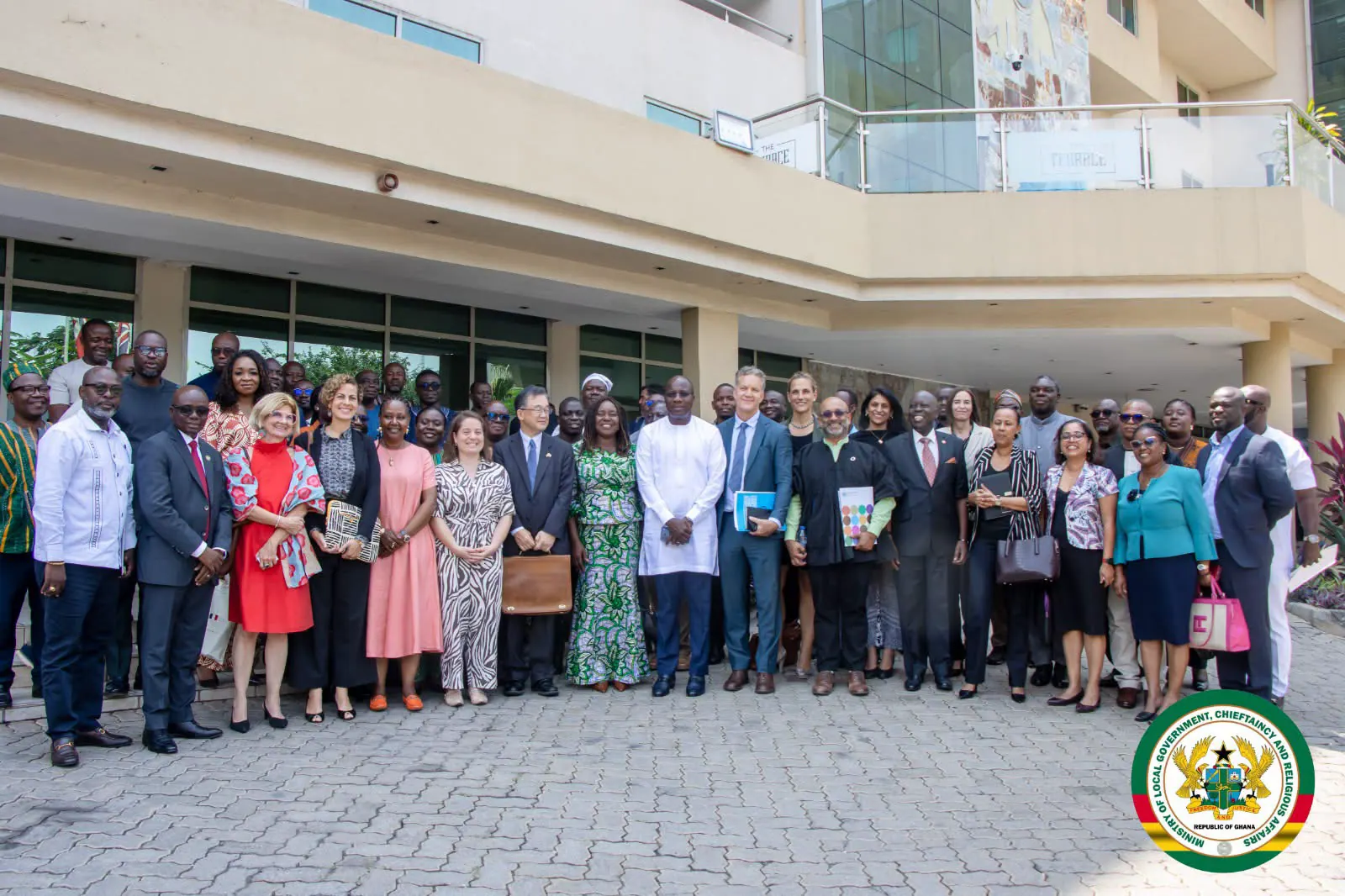
Ghana's Minister of Local Government, Chieftaincy and Religious Affairs, Mahama Ayariga, has urged development partners to share global best practices and practical experiences to help Ghana transform local governance and deepen decentralisation. He made the call at a special breakfast meeting with development partners, heads of departments, and agencies under the Ministry in Accra. The meeting was held on the theme; “Strengthening Partnerships for Sustainable Local Governance and Inclusive Development.”
Mr Ayariga said Ghana needed to leverage not only the financial resources of development partners but also their knowledge, expertise, and experiences from countries where decentralisation and local governance systems had delivered efficient public services. He cited the punctuality of public transportation in Japan as an example of how simple systems, when consistently implemented, could transform public behaviour and perceptions. This, he believes, could be replicated in Ghana.
The Minister said development partners had made significant contributions to local governance through interventions in urban development, sanitation, climate resilience, social protection, social cohesion, and local economic development. He, however, emphasised that he was more interested in learning from their experiences than receiving financial support. Mr Ayariga stated that President John Dramani Mahama had directed him to ensure that citizens had a positive experience in their interactions with local government.
Mr Ayariga cited the Greater Accra Passenger Transport Executive (GAPTE) as an example, urging its management to ensure that Aayalolo buses departed at their advertised times, whether full or empty. He believed that such consistency could encourage commuters to plan their movements around reliable public services. The Minister's vision is to see Accra and other Ghanaian cities operate with greater efficiency and effectiveness, similar to cities in countries such as Germany and the United Kingdom.
The Minister expressed concern about the dependence of many assemblies on central government transfers and development partner funding. He stated that local authorities must work towards becoming functioning economic entities. Mr Ayariga said local economic development was particularly important because young people and women increasingly looked to local governments for opportunities to earn livelihoods.
To promote transparency and accountability, Mr Ayariga announced plans to introduce regulations and directives requiring assembly meetings to be aired live on local FM stations. He also called for targeted capacity-building and support for Metropolitan, Municipal, and District Chief Executives (MMDCEs) and assembly personnel. This, he believes, would help build their capacity to perform effectively.
Mr Ayariga further highlighted the potential of traditional authorities and religious institutions to contribute to national development. He called for greater investment in traditional governance systems and efforts to harness the capacity of religious institutions as partners in advancing social and economic development through effective local governance.
Key points
- The Minister of Local Government, Chieftaincy and Religious Affairs, Mahama Ayariga, seeks global best practices to transform local governance in Ghana.
- Mr Ayariga emphasises the need for knowledge sharing and capacity building to deepen decentralisation.
- The Minister envisions Accra and other Ghanaian cities operating with greater efficiency and effectiveness, similar to cities in developed countries.