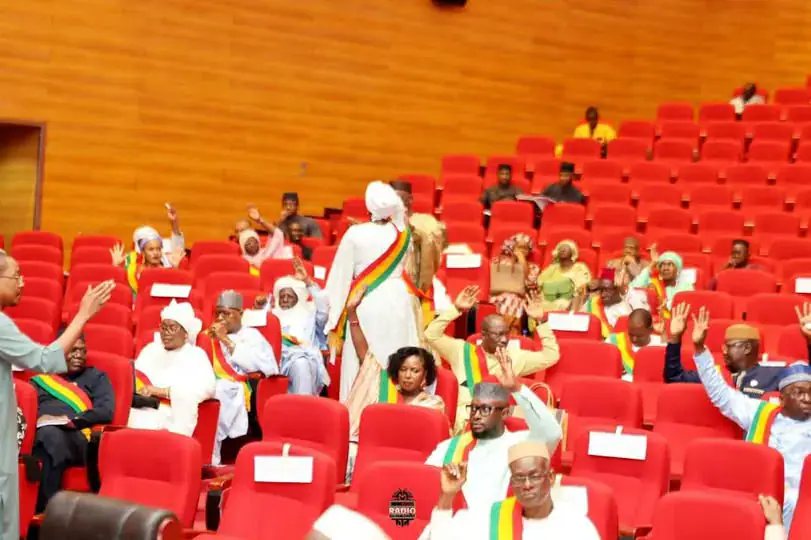
On November 26, 2026, Mali's Conseil National de Transition (CNT) adopted a law ratifying an ordinance determining fiscal resources for local collectivities. The CNT session, presided over by Honorable Hamèye Founé Mahalmadane, aimed to finalize the allocation of fiscal revenues to communes, regions, and the District of Bamako. This move is part of Mali's broader efforts to adapt its fiscal system to recent administrative and institutional reforms. The law was defended by Minister of State for Economy and Finance, Alousséni Sanou.
The new ordinance, adopted by the Council of Ministers on August 7, 2026, seeks to enhance the financial capacities of local collectivities. By doing so, it aims to enable them to effectively assume their competencies and better address population needs. The ordinance establishes modalities for distributing various fiscal revenues between communes and regions. For instance, the Taxe de développement régional et local (TDRL) will be allocated 92% to communes and 8% to regions. Similarly, the tax foncière, patentes, and licences will be divided 75% to communes and 25% to regions.
The allocation keys differ based on the nature of the taxes concerned. Other taxes, such as those on livestock, firearms, and motor cycles, as well as rights and taxes from artisanal mining and forestry exploitation, have specific distribution rates. The District of Bamako will receive all the taxes initially attributed to its communes. Beyond revenue distribution, the reform aims to clarify mechanisms for collecting and managing fiscal resources. It outlines responsibilities for tax administration services, Domaines and Cadastre services, and public accountants.
A key aspect of this reform is the digitalization of fiscal procedures. This measure is expected to improve revenue collection, simplify operations, and enhance the mobilization of local collectivities' own resources. By providing a clear framework for budget elaboration, the reform seeks to improve local development financing. The digitalization process is anticipated to increase transparency and efficiency in tax collection.
The CNT adopted the law unanimously, with 116 votes in favor, no votes against, and no abstentions. This approval signifies a critical step towards enhancing local governance and financing in Mali. The reform is expected to have a positive impact on the country's decentralization efforts, allowing local collectivities to better serve their populations.
Minister Alousséni Sanou emphasized the importance of this reform in aligning Mali's fiscal system with its new territorial organization. The changes are designed to address the needs of local populations more effectively. By strengthening the financial capacities of communes, regions, and the District of Bamako, the government aims to promote sustainable local development.
The implementation of this reform will be closely monitored to assess its impact on local development and fiscal management. The digitalization of fiscal procedures and the clarification of responsibilities among different services are expected to improve the efficiency of tax collection and resource management. This, in turn, should lead to better allocation and use of resources for local development projects.
Key points
- The CNT's approval of the new law aims to enhance the financial capacities of local collectivities in Mali.