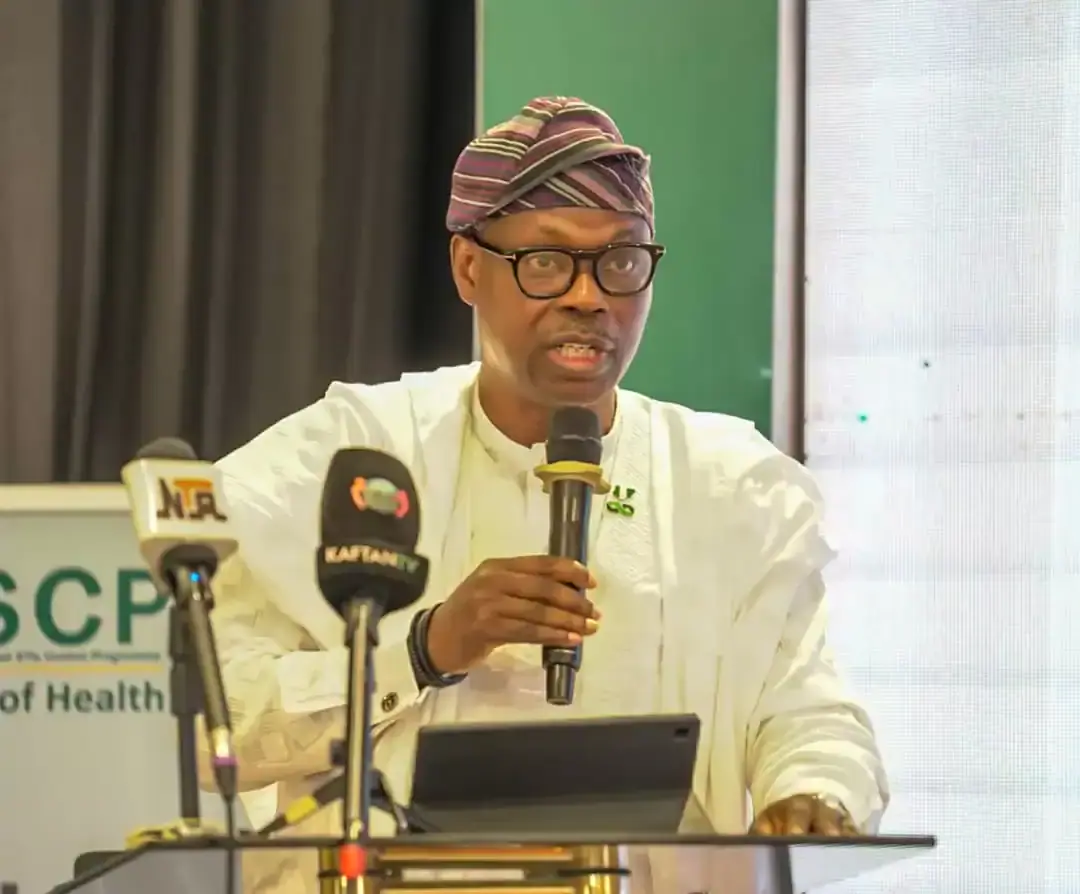
The Federal Government of Nigeria has reaffirmed its commitment to eliminating Noma, a debilitating disease that causes severe facial disfigurement in children. According to the Minister of State for Health and Social Welfare, Dr. Iziaq Adekunle Salako, the government is strengthening interventions in prevention, early detection, treatment, reconstructive surgery, and social reintegration to eliminate the disease. This assurance was given at the Biennial Meeting and Scientific Conference of the Nigerian Association of Oral and Maxillofacial Surgeons (NAOMS) in Sokoto.
Noma is a disease closely associated with poverty, malnutrition, poor oral hygiene, and weak healthcare systems. It typically begins as a simple gum infection in malnourished children aged between two and six but rapidly destroys the lips, cheeks, nose, and jaw if left untreated. The disease has a high mortality rate, with about 90 percent of children who develop acute Noma globally dying without timely treatment. Survivors often suffer severe facial disfigurement and lifelong social stigma.
Nigeria remains one of the countries with the highest burden of Noma, particularly in Sokoto, Kebbi, Zamfara, Borno, and other northern states. The Minister noted that the country's advocacy efforts, alongside those of health stakeholders, including NAOMS, contributed to the World Health Organisation's recognition of Noma as a Neglected Tropical Disease in December 2023. This recognition is expected to translate into concrete actions towards eliminating the disease.
The Federal Government has launched the National Oral Health Strategic Plan 2026–2030, which provides for the integration of oral healthcare into primary healthcare services, training of frontline health workers, and deployment of oral health services across local government areas. The plan also includes the provision of free reconstructive surgery for children affected by Noma, ensuring that no family has to sell its land or other valuable assets to pay for treatment.
The Minister announced plans to include Noma care, from early detection to postoperative follow-up, in the Basic Health Care Provision Fund and National Health Insurance Authority benefit packages. This move aims to increase access to healthcare services for affected children and reduce the financial burden on families. Additionally, surveillance has been strengthened through the integration of Noma into the Integrated Disease Surveillance and Response system and the District Health Information Software 2.
The Minister emphasized the critical role of maxillofacial surgeons in treating advanced cases of Noma, noting that survivors often require specialized reconstructive procedures to restore facial structures and improve their ability to eat, speak, and lead normal lives. He urged young surgeons not to shy away from Noma treatment despite its complexity and limited financial rewards, stressing that "Noma is not contagious, Noma is not a curse, Noma is preventable."
The conference also featured a lecture by Dr. Henry Leonhardt, a Consultant Oral and Maxillofacial Surgeon from Dresden University Clinic, Germany. The President of NAOMS, Prof. Olalekan Micah Gbotolorun, urged members to strengthen their capacity to tackle Noma, describing it as a devastating disease that progresses rapidly if not detected and treated early. The Sokoto State Commissioner for Health, Dr. Faruk Umar Abubakar, commended NAOMS for choosing Sokoto to host the conference and urged participants to take full advantage of the conference to deepen their knowledge and improve their professional capacity.
Key points
- The Nigerian government has launched the National Oral Health Strategic Plan 2026–2030 to integrate oral healthcare into primary healthcare services and provide free reconstructive surgery for children affected by Noma.