The Ebola outbreak in eastern Congo has surpassed 12,000 confirmed cases, according to data from Congo's Ministry of Health. The outbreak, which was declared in May, has resulted in 12,021 confirmed cases, with nearly half of those infected having died. This outbreak is the fastest-growing Ebola outbreak in history and is on track to surpass the death toll from the West African outbreak that killed 11,000 people between 2014 and 2016.
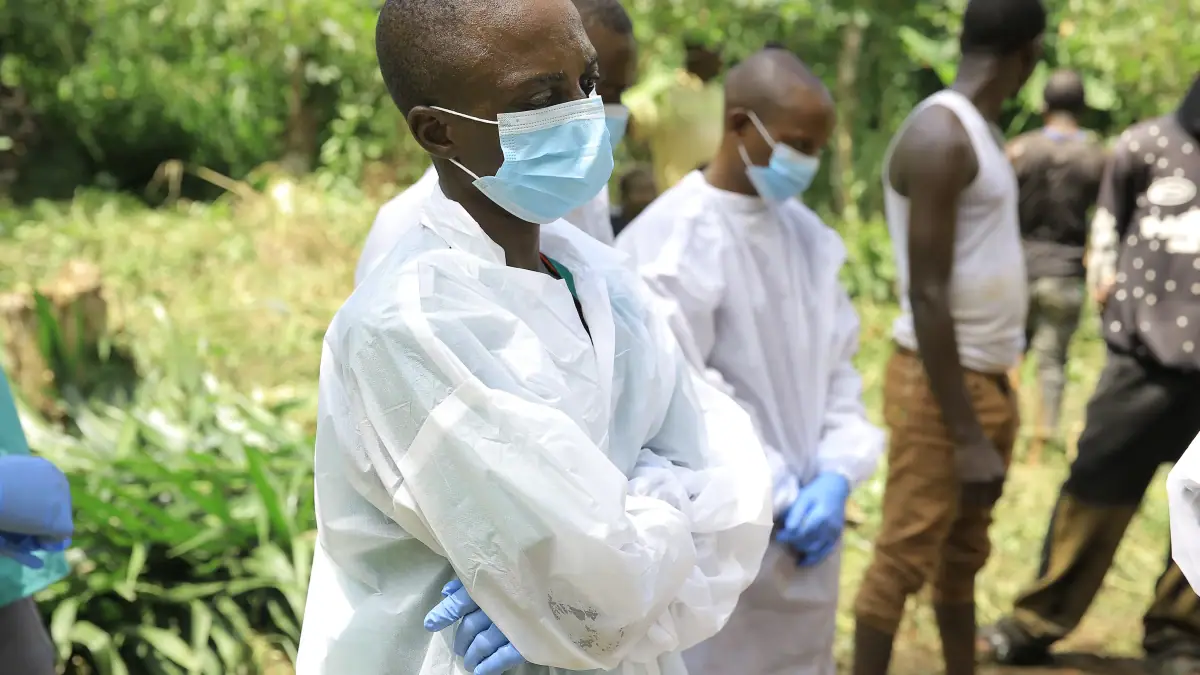
The outbreak is caused by the rare Bundibugyo virus, for which there is no approved vaccine or treatment. Response teams are facing significant challenges, including armed conflict, poor roads, and violence from residents fueled by mistrust and misinformation. Ebola spreads through direct contact with the blood or other bodily fluids of people who are sick or have died from the disease. Containing the disease requires quickly identifying and treating patients in isolation, monitoring people who may have been exposed, and safely burying the dead.
Fighting between the army and the Convention pour la révolution populaire rebels resumed on Thursday morning in Iga-Barrière, a mining town about 25 kilometers north of Bunia in eastern Congo. This has sent new waves of displaced people toward the city, which is a major hub for the Ebola response. Bunia is the capital of northeastern Ituri province and has been affected by the conflict, which has created one of the world's most severe humanitarian crises.
The conflict has disrupted Ebola response efforts, with fighting earlier in the week preventing teams from reaching some communities and disrupting monitoring of people exposed to the virus. Some treatment centers have also been left with fewer staff, according to Dr. Catherine Smallwood, the World Health Organization's Ebola incident manager. She stated that about a dozen people, including two WHO personnel and Congolese health officials, were evacuated to Bunia on Tuesday after being trapped in a hospital in Akwe for three days amid intense crossfire.
The Convention pour la révolution populaire rebels are one of over 100 armed groups in eastern Congo, where conflict has created a severe humanitarian crisis. The group was founded last year by former warlord Thomas Lubanga, who was convicted by the International Criminal Court in 2012 of recruiting children under 15 and using them in fighting. The ongoing conflict has made it challenging for response teams to contain the Ebola outbreak.
The World Health Organization and other response teams are working to contain the outbreak, but their efforts are being hindered by the conflict. The situation is being closely monitored, and efforts are being made to safely evacuate staff and ensure the continuation of response efforts. The international community is also providing support to help combat the outbreak and alleviate the humanitarian crisis.
The Ebola outbreak in eastern Congo is a major public health concern, and the ongoing conflict has made it challenging to contain the disease. The situation requires continued international support and attention to prevent further spread of the disease and alleviate the humanitarian crisis. Key response efforts include quickly identifying and treating patients, monitoring those exposed, and safely burying the dead to prevent further transmission.
Key points
- The Ebola outbreak in eastern Congo has surpassed 12,000 confirmed cases, with nearly half of those infected having died.
- The conflict has disrupted Ebola response efforts, making it challenging to contain the disease.
- The international community is providing support to help combat the outbreak and alleviate the humanitarian crisis.