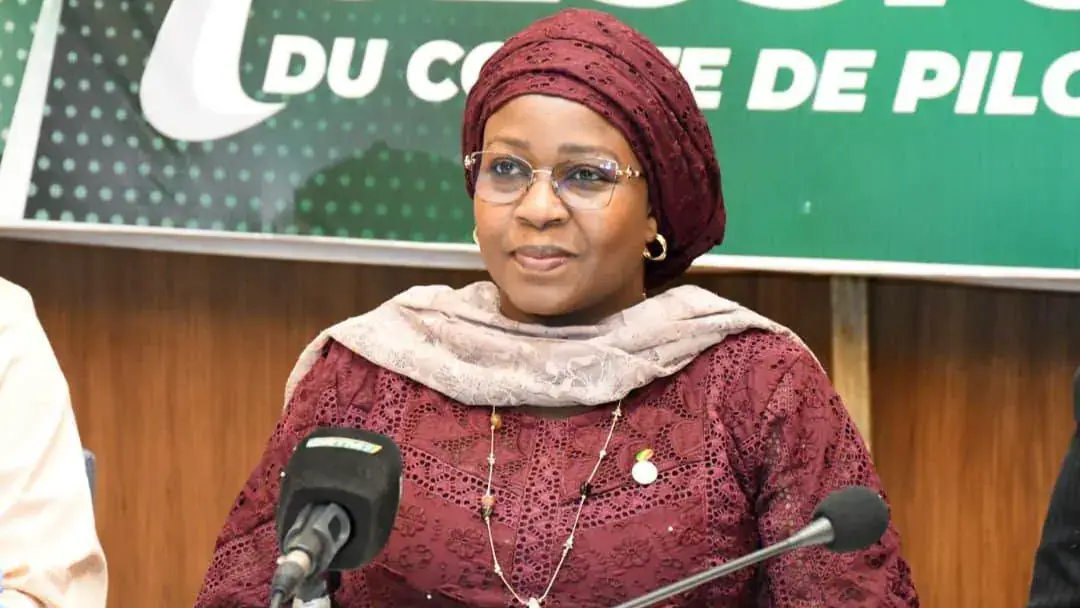
The Malian government's land restoration project has made significant progress, covering 102,882 hectares of land under sustainable management in just 32 months. The project, launched in March 2024 with the support of the World Bank, aims to help communities restore degraded lands while considering climate change. The project's achievements were announced during the 4th ordinary session of the project's steering committee, chaired by Minister of Environment, Sanitation, and Sustainable Development, Doumbia Mariam Tangara.
The project has directly impacted 347,657 people, including 123,381 women, and created or consolidated over 22,000 jobs. Additionally, 921 people have received training, and a master's program in sustainable development has been launched with 60 students enrolled. According to a beneficiary survey, 74% of participants are satisfied with the project, with 81% of women beneficiaries expressing satisfaction. These results demonstrate the project's positive impact on local communities.
The project has also financed 44 forest management plans covering over 570,000 hectares and 31 pasture management plans. Community-based projects have been implemented in the Inner Niger Delta and along the Great Green Wall. Furthermore, 94 partnerships with fishing and forestry actors have generated over 3 billion FCFA in revenue in less than six months. These partnerships have contributed to the project's success and created new economic opportunities.
In terms of climate benefits, preliminary estimates suggest that the restored lands could store around 1.53 million tons of CO2. The Malian government is now preparing its first projects for the carbon market, which could provide additional revenue streams. The project's success has sparked optimism about the potential for land restoration to contribute to Mali's climate goals.
Minister Tangara emphasized that the project's results are having a tangible impact on households and territories. However, she also highlighted the need to translate plans into concrete actions on the ground. The government will need to continue to work with local communities, partners, and stakeholders to ensure the project's long-term sustainability.
The project's achievements demonstrate the potential for large-scale land restoration efforts to drive positive change in Mali. With continued support from the World Bank and other partners, the project could serve as a model for other countries in the region. The Malian government's commitment to sustainable development and environmental protection is clear, and the project's success will be closely watched.
As the project moves forward, it will be essential to maintain momentum and ensure that benefits are equitably distributed. The government will need to continue to engage with local communities and stakeholders to address any challenges that arise and ensure that the project's goals are met. With careful planning and implementation, the project could have a lasting impact on Mali's environment and economy.
Key points
- The project has covered 102,882 hectares of land under sustainable management, benefiting 347,657 people and creating 22,000 jobs.