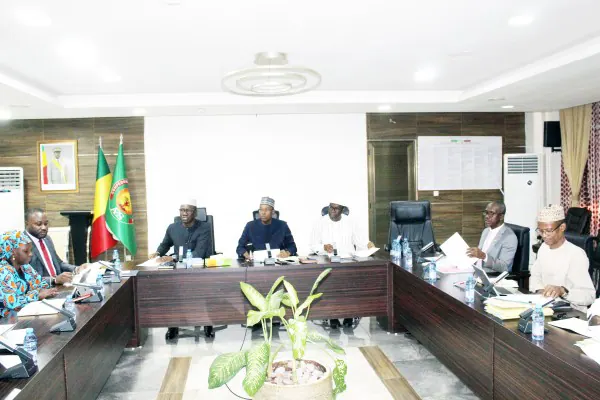
Mali's Minister of Economy and Finance, Alousséni Sanou, recently chaired the National Committee for Monitoring the Mining Local Development Fund (FMDL). The committee reviewed and validated investment projects submitted by regional committees. This development marks a crucial step in making mining revenues a genuine driver of local development. The meeting was attended by Minister of Territorial Administration and Decentralization, General Issa Ousmane Coulibaly, and Minister of Mines, Pr Amadou Keïta.
The FMDL was established as part of the mining sector reform. The fund aims to translate Mali's mineral wealth into tangible improvements in the daily lives of its populations. According to the decree, the National Monitoring Committee is responsible for defining strategic orientations, approving budgets and projects, and ensuring their proper execution. Minister Sanou emphasized the need for rigorous management of resources, based on transparency, objective project selection, and regular monitoring.
In the previous session on March 2, 2026, the committee validated the resources mobilized for the 2025 exercise, amounting to 18.435 billion Fcfa. The funds were allocated to territorial collectivities. With the examination of regional projects, the fund enters its most anticipated phase: implementation on the ground. Minister Sanou described this as a major turning point, shifting from resource distribution to validating structuring projects addressing priority needs.
The goal is to make the mining sector a driver of local development. The minister stressed that mining revenue should translate into concrete, visible, and sustainable achievements in beneficiary communes. The focus is on creating a new dynamic in mining areas, where extracted wealth contributes to building more attractive territories, generating economic activities, and sustainable jobs.
The projects approved respond directly to needs expressed by communes. General Issa Ousmane Coulibaly stated that each collectivity identified priorities based on allocated resources. Investments include drilling for water access, constructing classrooms, equipping health centers, and manufacturing school furniture. These choices reflect a willingness to direct mining resources towards sectors with a direct impact on living conditions.
The success of the FMDL will be measured by its ability to transform mining billions into essential services, opportunities for populations, and visible progress in beneficiary communes. Mali's gold will only reach its full value when it contributes to sustainably improving local populations' lives. The committee's efforts aim to create a lasting impact, addressing the expectations of communities.
The FMDL has the potential to make a significant difference in Mali's development. With a focus on transparency and objective project selection, the fund can contribute to the country's economic growth and improve living standards. The implementation of projects will be closely monitored to ensure that the fund's objectives are met, and its impact is sustained over time.
Key points
- The FMDL aims to translate Mali's mineral wealth into tangible improvements in the daily lives of its populations.