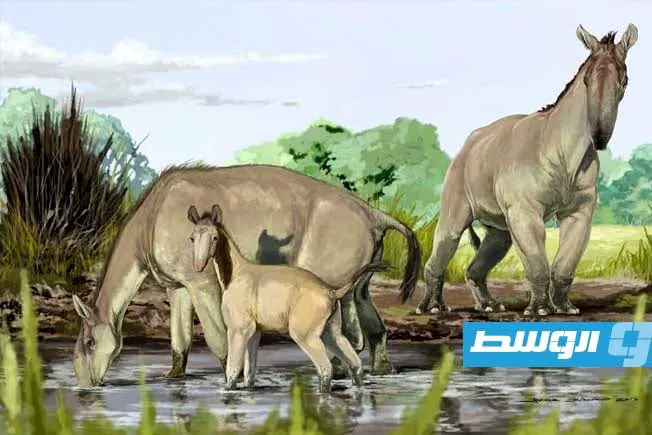
A significant archaeological discovery has been made in the town of Sitia, located on the Greek island of Crete. The fossilized skull of a rhinoceros-like animal, estimated to be between 8 to 8.5 million years old, was unearthed. This ancient creature, known as Dihoplus pikermiensis, roamed the earth during the late Miocene epoch. It was a large animal with two horns.
The discovery was announced by the Greek news agency, following research conducted in March in the Sitia region. This area is part of a network of global geological sites recognized by UNESCO due to its extensive geological and fossil history spanning approximately 300 million years. The finding provides valuable insights into the prehistoric era.
The fossilized remains include three intact molars in the left upper jaw, which will enable researchers to gather reliable information about the animal's age and diet. This finding is crucial for understanding the characteristics and habits of this ancient species. The Dihoplus pikermiensis is a representative of the Pikermi fauna, a group of animals that inhabited Western Eurasia during that time.
The Pikermi fauna is a well-known group of fossils found in Greece and Western Asia, providing significant information about the evolution of species in these regions. The discovery of the Dihoplus pikermiensis fossil in Crete contributes to the understanding of the geographical distribution and diversity of this fauna. Further analysis of the fossil will reveal more details about its habits and the environment it lived in.
The research team is conducting a detailed study of the fossilized remains to gather more information about the animal's physical characteristics, age, and diet. The findings will be compared with other similar fossils discovered in the region to gain a better understanding of the species' evolution and extinction. This study will contribute to the existing knowledge of prehistoric life in the region.
The discovery of the 8-million-year-old fossil in Crete highlights the island's rich geological and fossil history. The region's unique geology has preserved numerous fossils, providing a window into the past and allowing scientists to study the evolution of life on earth. The finding of the Dihoplus pikermiensis fossil is a significant addition to the existing collection of fossils found in the area.
The study of this fossil will provide scientists with a better understanding of the prehistoric era and the evolution of species in the region. The discovery of the Dihoplus pikermiensis fossil in Crete is an important find, offering insights into the lives of ancient creatures that once inhabited the earth. Further research and analysis of the fossil will continue to shed light on the history of life on our planet.
Key points
- The fossilized skull of a rhinoceros-like animal, 8 million years old, was discovered in Crete, Greece.