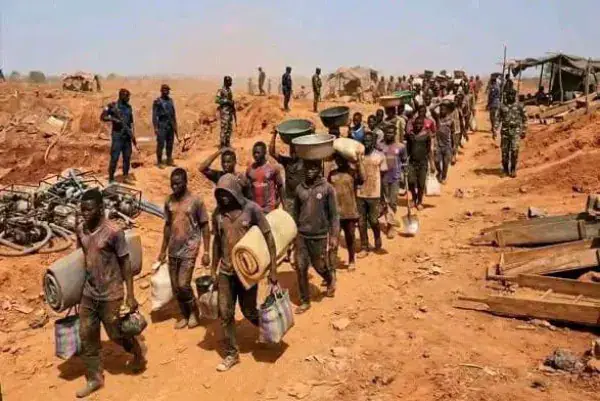
The Malian government, through the Interministerial Committee for Crisis and Disaster Management, has launched several emergency measures to address the massive influx of refugees from Guinea. According to the Centre de Coordination et de Gestion des Crises (CECOGEC), as of November 7, 2026, approximately 100,000 people have arrived in the Bamako district, while nearly 60,000 have arrived in Kouremalé. The situation is dire, with six reported deaths in Kouremalé and many injured.
The government has expressed its deepest condolences to the families of the deceased and has offered its compassion to those affected, wishing a speedy recovery to the injured. To address the crisis, the government has mobilized all relevant ministries to coordinate and conduct security, humanitarian assistance, and repatriation operations. A site has been prepared in Ouinzinbougou to accommodate the refugees in suitable conditions.
The government has also mobilized resources to facilitate the return of refugees to their respective countries. With the help of Burkina Faso, 47 buses and 2 buses provided by Mali have enabled the return of nearly 3,430 people on November 5, 2026. Furthermore, Mali has deployed 74 trucks and 24 buses to transport around 15,000 people to Burkina Faso, with ongoing operations involving 60 trucks and 10 buses from Mali and 48 cars from Burkina Faso.
In addition to the logistical efforts, the government has also provided medical care to 413 refugees in various health structures in the Bamako district. A significant citizen and community mobilization effort has been organized, involving youth, social workers, economic operators, and individuals willing to support the assistance operations.
The CECOGEC has called on regional authorities to maintain a high level of mobilization and vigilance to ensure adequate supervision of reception, identification, registration, assistance, and repatriation operations. The center has thanked the populations and actors involved for their solidarity, generosity, and sense of responsibility.
The government has also emphasized the importance of coordinating donations and support through competent technical structures to ensure effective management and distribution. The situation remains critical, with many refugees requiring assistance and support.
The international community has been urged to provide support to address the crisis, with the Malian government working closely with neighboring countries and international organizations to provide humanitarian assistance to those affected. The refugees' situation is being closely monitored, and efforts are being made to provide them with necessary aid and support.
Key points
- The Malian government has deployed 74 trucks and 24 buses to transport around 15,000 people to Burkina Faso.
- 413 refugees have received medical care in various health structures in the Bamako district.
- The government has mobilized all relevant ministries to coordinate and conduct security, humanitarian assistance, and repatriation operations.