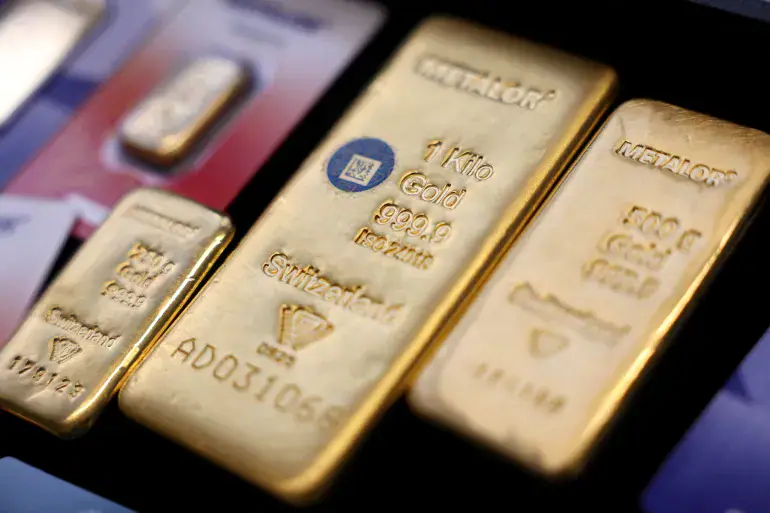
Global gold markets have experienced a significant decline from their record highs earlier in 2026, dropping by over a quarter in value. As of recent trades, the price of gold stood at $4070.31 per ounce, down from its historical peak of $5594.82 per ounce in early 2026. Despite this short-term decline, gold continues to attract investment and maintain its position as a safe haven against currency fluctuations, debt risks, and global geopolitical instability.
According to data from the World Gold Council for the third quarter of 2026, central banks and official institutions increased their gold purchases by 42% year-over-year, reaching 321 tons. This brought their total purchases for the first nine months of 2026 to 675 tons. China and official institutions led the way with 63 tons of purchases, followed by Poland with 40 tons. This trend is driven by a desire to diversify reserves and reduce reliance on the US dollar.
In addition to central banks, gold-backed exchange-traded funds also saw significant inflows during the third quarter, reaching a record $31 billion. This pushed the total holdings of these funds to a record 4256 tons. However, in contrast to institutional investors, demand for gold bars and coins from individual investors declined by 19% to 268 tons during the third quarter. This decline was driven by investors waiting for clearer price trends and ongoing high interest rates.
Despite the overall decline in individual investor demand, certain markets such as China and Egypt saw increased demand for gold due to weak local currencies and a desire for savings. On the other hand, some regions experiencing conflict and economic crisis, such as those affected by the war in Iran, saw individuals selling their gold holdings to cover essential living expenses and relocation costs.
Looking ahead to 2027, international banks have varying forecasts for gold prices. UBS predicts that the price of gold will rise to $5400 per ounce by September 2027, driven by increasing government debt and geopolitical hedging. In contrast, ING takes a more conservative view, forecasting an average annual price of $4375 per ounce.
Investment recommendations suggest that gold should be considered a long-term hedge and store of value, with a recommended allocation of 5-10% of an investment portfolio. However, investors are advised to be aware of the lack of regular returns and the costs associated with storing and manufacturing gold.
Overall, despite the recent decline in gold prices, the metal remains an attractive investment opportunity for those seeking a safe haven and a hedge against economic uncertainty. As investors continue to navigate complex global markets, gold is likely to remain a popular choice for those looking to diversify their portfolios and protect their wealth.
Key points
- Gold continues to attract investors as a safe haven against economic uncertainty and geopolitical instability.
- Central banks and official institutions increased their gold purchases by 42% year-over-year in the third quarter of 2026.
- Investment recommendations suggest allocating 5-10% of a portfolio to gold as a long-term hedge and store of value.