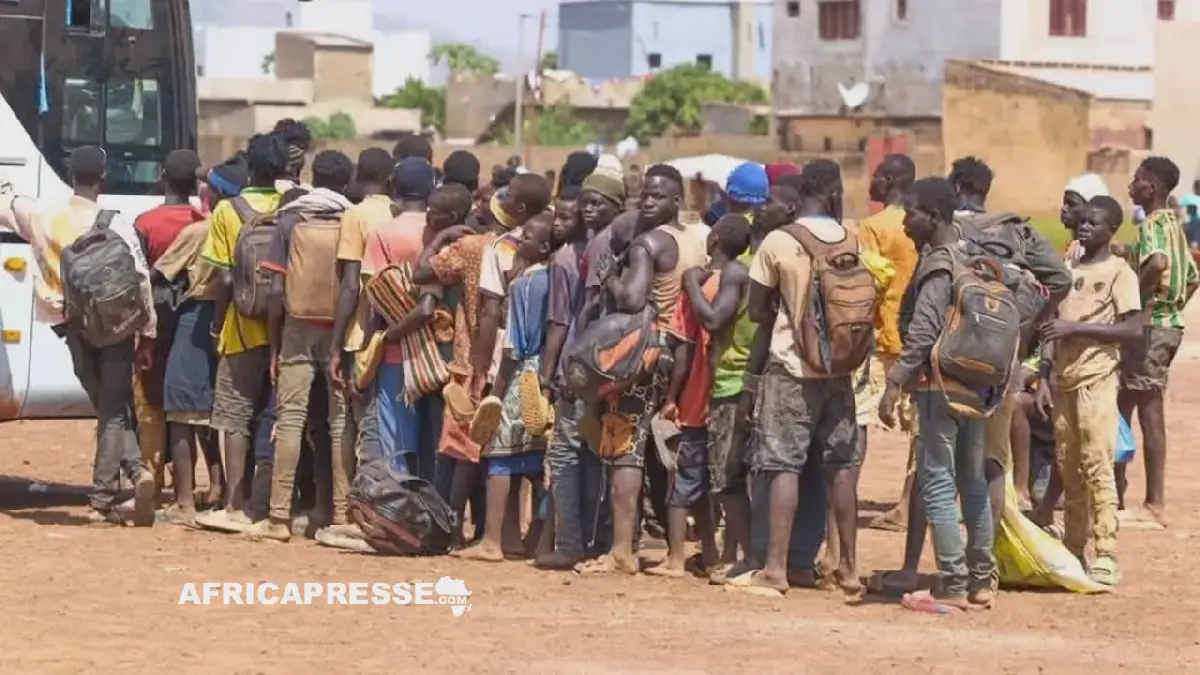
The Malian government is facing a humanitarian crisis as over 100,000 gold miners expelled from Guinea have arrived in the country. According to the Malian Ministry of Security and Civil Protection, the miners, mostly from Burkina Faso, began arriving in recent days. The situation has prompted the government to declare a "veritable catastrophe humanitarian." The miners are being housed in sites on the outskirts of Bamako, the capital, with the government scrambling to provide assistance.
The expulsion of the gold miners follows a decision by the Guinean government to crack down on illegal gold mining. The move has left many vulnerable populations without a source of income and has put pressure on neighboring countries to provide support. The Malian government has activated an emergency plan to provide medical care to the miners, who are in need of food, shelter, and healthcare. The situation has also raised concerns about the potential for social unrest and the strain on local resources.
The Malian government has begun to organize the evacuation of some of the miners back to their home countries. A first convoy of 47 buses carrying 15,000 people has already reached Burkina Faso, with more convoys planned. The government has also set up a system to register and identify the miners, with the aim of providing them with assistance and support. However, concerns remain about the long-term impact of the crisis on the region.
The crisis has highlighted the complex relationships between West African countries and the challenges of managing migration and economic development in the region. The gold mining sector is a significant employer in many West African countries, but it is also often characterized by informal and unregulated working conditions. The Malian government has called for international support to help address the crisis.
The humanitarian response to the crisis has been led by the Malian government, with support from international organizations such as the World Health Organization and the International Committee of the Red Cross. The organizations have provided medical supplies, food, and shelter to the affected populations. However, concerns remain about the funding and sustainability of the response.
The crisis has also raised questions about the relationship between Mali and its neighbors, particularly Guinea and Burkina Faso. The Malian government has emphasized the importance of regional cooperation and solidarity in addressing the crisis. However, the situation has also highlighted the challenges of managing borders and migration flows in the region.
As the situation continues to unfold, concerns remain about the long-term impact on the region. The gold miners who have been expelled from Guinea face significant challenges in rebuilding their lives and finding new sources of income. The Malian government and its international partners will need to work together to provide support and assistance to the affected populations.
Key points
- The Malian government is facing a humanitarian crisis as over 100,000 gold miners expelled from Guinea have arrived in the country.
- The situation has prompted the government to declare a "veritable catastrophe humanitarian" and has raised concerns about social unrest and strain on local resources.
- The crisis has highlighted the complex relationships between West African countries and the challenges of managing migration and economic development in the region.