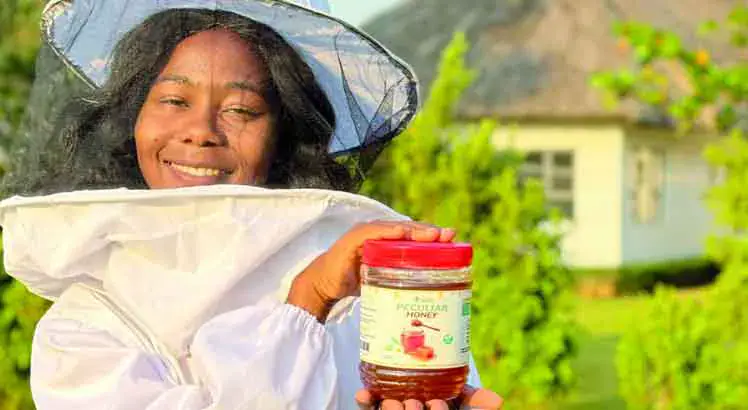
Roselyn Kasunda Blackson, a young agripreneur from Malawi, is utilizing social media to expand her agribusiness and inspire young women in agriculture. As the founder of Peculiar Honeybee Products and Services (Pehops), she uses Facebook and TikTok to market her honey products and educate aspiring beekeepers. Her journey into beekeeping began in 2018 after graduating from the Lilongwe University of Agriculture and Natural Resources (Luanar). She started with 10 beehives and has since grown her business to include honey production, packaging, and supplying beekeeping equipment.
Roselyn's interest in beekeeping grew after attending a field training conducted by a beekeeper through St Paul's Agriculture Training Centre, where she did her internship. Despite initial challenges and misconceptions about beekeeping, she persevered and expanded her business. One of the turning points in her journey came when she appeared on Spotlight, a local news platform, and began attracting more media attention. This exposure led to increased demand for her knowledge and services, and she started taking on the role of trainer and mentor.
Today, Roselyn uses social media to showcase her work, engage potential customers, and encourage others to venture into beekeeping. She shares information about beekeeping, showcases her products, and connects with people interested in the sector. Her online presence has helped her reach potential customers and aspiring beekeepers beyond her immediate community. She has received messages from people explaining how her work inspired them to begin their own beekeeping journeys.
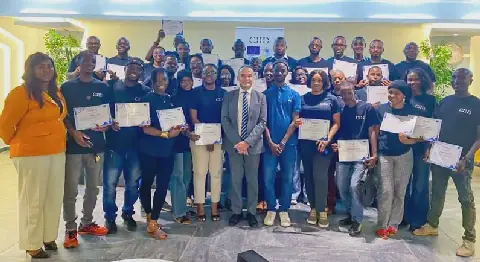
Roselyn's business has trained about 5,000 people and currently employs 39 people on a temporary, seasonal, and permanent basis. Pehops has expanded its operations to include the construction and supply of beehives, the sale of beekeeping accessories, installation of hives, consultancy, and training. The enterprise also produces other bee-based products, including beeswax, lip balms, and candles. It currently has about 2,100 beehives and harvested 12 tonnes of honey last year, although production fell to seven tonnes this year due to unfavorable weather patterns.
Roselyn's story has inspired other young women to venture into beekeeping. Chikumbutso Kambala, one of the beekeepers inspired by Roselyn's journey, said watching Roselyn's videos on social media strengthened her confidence and motivated her to start her own beekeeping venture. Kambala is expecting her first honey harvest this year and plans to increase her operation from 350 beehives in 2026 to 1,000 in 2027.
A recent report by the CGIAR Gender Accelerator highlights the importance of digital technologies in bridging gender inequalities in agriculture. The report warns that women in low-income countries risk being left further behind men as pressures on global food systems intensify without targeted interventions. It cites research showing women in Kenya are up to 25 percent less likely than men to access digital climate advisory services due to structural gender barriers.
Roselyn's experience demonstrates the potential of social media to open doors for women in agriculture, but also highlights the challenges of using these platforms effectively. She notes that creating content that attracts audiences requires confidence, digital skills, and access to suitable equipment. Despite these challenges, Roselyn remains committed to using social media to promote her business and inspire others to venture into beekeeping.
Key points
- Roselyn Blackson uses social media to market honey products and educate aspiring beekeepers.
- Her business has trained about 5,000 people and employs 39 people.
- A recent report highlights the importance of digital technologies in bridging gender inequalities in agriculture.
Reporting sources
- Roselyn Blackson: As busy as a bee · The Nation