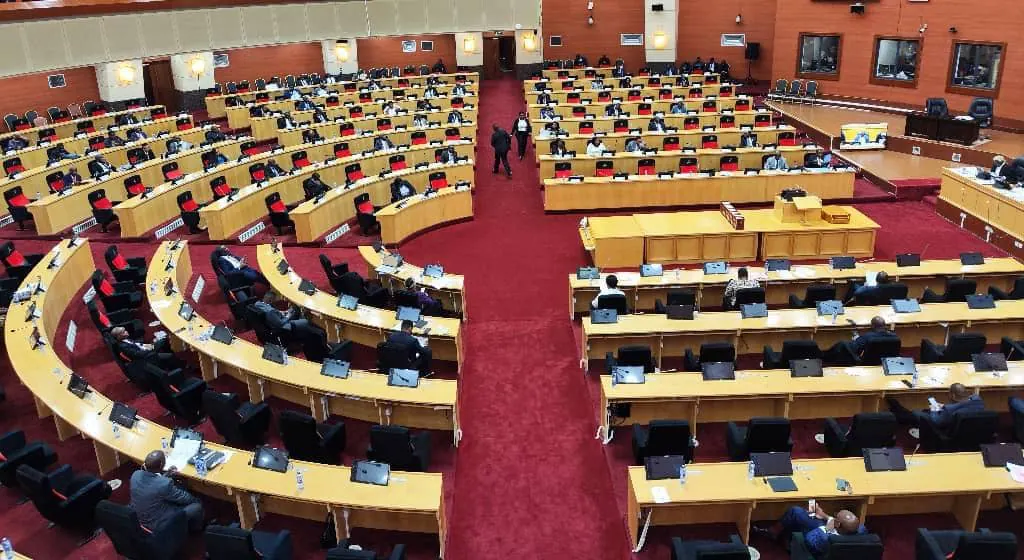
A proposal to introduce vernacular languages into Malawi's Parliament has sparked debate over governance, equality, and practicality. The country's Parliament has used English since colonial times, with Section 51 of the Constitution requiring English proficiency for lawmakers. Critics argue this silences local leaders who lack English skills, despite being able to represent their constituents effectively in their native tongues.
Activist Sylvester Namiwa and the Lost History Foundation have petitioned Parliament to allow vernacular languages, citing the need for inclusivity and cultural dignity. They argue that English is a colonial relic that hinders effective communication and representation. The proposal has garnered support from some who feel excluded from parliamentary debates and see vernacular languages as a means of reclaiming cultural heritage.
However, others view the proposal as a regressive distraction that could lead to division and inefficiencies in Parliament. International business strategist Rhoderick Kalumpha and public sector transformation expert McBride Nkhalamba have expressed concerns about the potential consequences, citing the need for a neutral language that connects Malawi to the global stage. They argue that vernacular languages could create linguistic enclaves and hinder unity.
Malawi's linguistic landscape is diverse, with over 20 languages deemed equally important. Introducing vernacular languages into Parliament would require translation services, which could slow proceedings and increase costs. The challenge lies in balancing cultural heritage with the need for clarity, efficiency, and unity. Some suggest using vernacular languages for constituency outreach and civic education, while preserving English for legislative debate.
Experts, including Dr. Jolly Max Ntaba, head of the Department of Journalism and Media Studies at Malawi University of Business and Applied Sciences, warn that abandoning English in Parliament could weaken Malawi's geopolitical voice. They argue that English acts as a neutral bridge across the country's linguistic mosaic and connects Malawi to international diplomacy, trade, and development partners.
Some lawmakers, including Nkhotakota Central MP Ayuba James, oppose replacing English with vernacular languages, citing the need for a constitutional amendment and potential ambiguity in laws and policies. James notes that legal and technical terms often lack direct equivalents in vernacular languages, which could hinder effective governance.
Commentators suggest a compromise: using local languages for civic education and community outreach, while maintaining English as the unifying voice in Parliament. This approach would allow Malawi to honor its cultural heritage while ensuring clarity, efficiency, and unity. The debate highlights the complexities of language policy in post-colonial Africa, where identity and practicality often clash.
Key points
- The proposal to introduce vernacular languages into Malawi's Parliament has sparked debate over governance, equality, and practicality.
- Critics argue that English, a colonial relic, hinders effective communication and representation, while others see it as a neutral bridge to the global stage.
- A compromise could involve using local languages for civic education and community outreach, while preserving English for legislative debate.