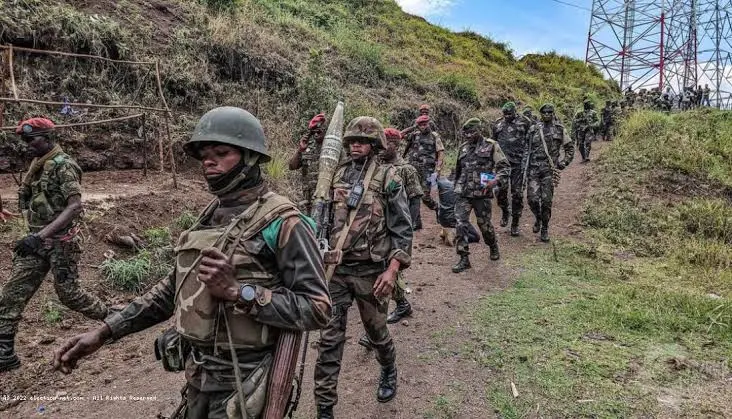
The Democratic Republic of Congo's military, backed by Wazalendo self-defense groups, continues to gain ground against the M23 rebel coalition and its Rwandan allies. In the Sud-Kivu region, loyalist forces have recaptured key positions, forcing insurgents to retreat. The advances have resulted in the rebels losing control of strategic locations, including the town of Shanje, the locality of Gasenda, and the Bukumba hills.
The military's progress has also led to the surrender of 17 rebels and allied fighters, who have renounced their armed struggle. One of the captured fighters, Safari Mukengerwa Patrice, called on his former comrades to lay down their arms and join the military to defend their country. The DRC military has been pursuing operations in the Nord-Kivu region, particularly around Remeka, which has changed hands several times in recent weeks.
Remeka, a strategic location in the Masisi territory, was recaptured by the military and Wazalendo groups on October 3, after intense fighting. The area is considered crucial, as it allows the loyalist forces to control key axes of circulation and monitor adversary movements. Analysts describe the military's repositioning around Remeka as a triple tactical lock, aimed at blocking the M23's expansion and neutralizing their infiltration routes.
The military's advances have also resulted in the recovery of abandoned arms and equipment, indicating a hasty retreat by the M23. The rebels' situation has been further complicated by the international community's growing pressure on Rwanda, which has been accused of supporting the M23. The UN Security Council has demanded the immediate withdrawal of Rwandan troops from DRC territory and an end to their support for the M23.
A delegation of African leaders, including former heads of state Uhuru Kenyatta, Mokgweetsi Masisi, and Sahle-Work Zewde, visited Goma, a city under M23 control, to discuss the peace process. The visit, the first since Goma fell to the rebels in January 2025, aimed to maintain a dialogue channel with the rebellion and signal that the international community will not tolerate a prolonged occupation.
The DRC military's gains have been accompanied by a growing number of defections and surrenders among M23 fighters. The rebels' leaders have been accused of using forced labor, torture, and other human rights abuses, further eroding their legitimacy. The international community's pressure on Rwanda to cease its support for the M23 has also contributed to the rebels' declining fortunes.
The situation in eastern DRC remains volatile, but the military's advances have created an opportunity for a peaceful resolution to the conflict. The African leaders' visit to Goma and the UN Security Council's demands for Rwandan withdrawal have underscored the need for a negotiated settlement. As the military continues to push back against the M23, the rebels' leaders face increasing pressure to negotiate an end to the conflict.
Key points
- The DRC military has recaptured key positions from the M23 rebels, including the strategic town of Remeka.
- The international community has stepped up pressure on Rwanda to cease its support for the M23 rebels.
- The M23 rebels are facing a growing number of defections and surrenders, further eroding their legitimacy.