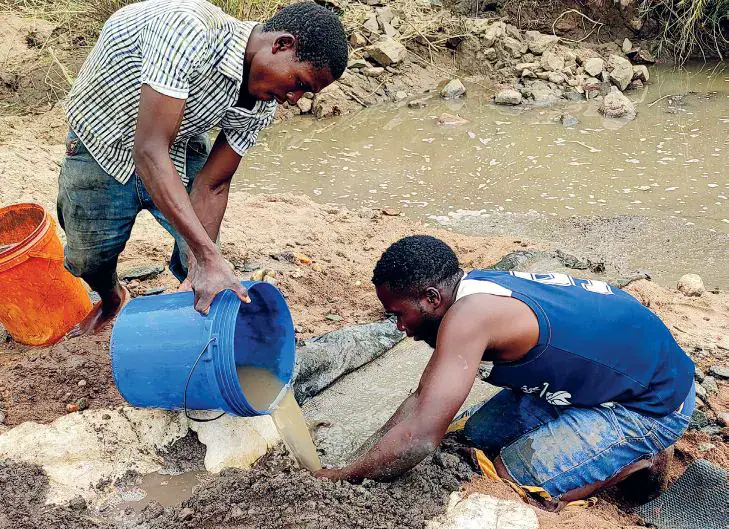
The Malawian government's recent decision to increase mining licence fees has raised concerns among artisanal and small-scale miners. The Mining and Minerals Regulatory Authority (MMRA) announced revised fees for various mining licences, including a significant increase in the small-scale mining licence fee from K30,000 to K350,000. This change may make it difficult for local operators, particularly those with limited financial resources, to obtain licences and sustain their businesses.
The revised charges vary according to the type and size of the licence. A non-exclusive prospecting licence now costs K315,000 per district, up from K10,000. A reconnaissance licence will cost K525,000, while an exploration licence will attract K1.58 million. The retention licence fee has risen from K1.5 million to K8 million. Large-scale mining licence charges now range from K5.6 million to K10.15 million, depending on the size of the licensed area.
Malawi Women in Mining Association president Ashley Simbeye and Federation of Artisanal and Small-scale Mining in Malawi president Percy Maleta expressed concerns that the increased charges could make formal mining unaffordable for local operators. Simbeye noted that women in rural areas, who struggle to raise money for licences, would be disproportionately affected. "If women were already unable to afford K30,000, how can they afford K330,000? Many women in rural areas will not manage," she said.
However, Ministry of Mining deputy director Mphatso Kakosa defended the revised fees, citing the need to finance technical extension services for miners. These services include assistance with mineral marketing, safety, formalisation, and the formation of cooperatives. Kakosa argued that previous charges were too low compared with those in other countries in the region.
The fee increases have come amid calls by artisanal and small-scale miners for the government to resume issuing new mining licences. President Peter Mutharika announced a suspension of new licence issuance on February 13, 2026, to review existing licences and mining agreements. The suspension has been prolonged, causing difficulties for small-scale miners who had planned investments and operations.
Mining expert and former minister of Mining Grain Malunga agreed that the higher fees could disadvantage genuine local operators who lacked the financial capacity to meet the new requirements. This could lead to a situation where some miners are forced to remain in subsistence mining, potentially limiting the country's ability to benefit from its mineral resources.
The impact of the fee increases on Malawi's mining sector remains to be seen. However, it is clear that the changes will have significant implications for artisanal and small-scale miners. The government must balance the need to generate revenue with the need to support local operators and promote sustainable mining practices.
Key points
- The Malawian government's increased mining licence fees may make formalisation unaffordable for artisanal and small-scale miners.
- The revised fees vary according to the type and size of the licence, with small-scale mining licence fees increasing from K30,000 to K350,000.
- The government defends the fee increases as necessary to finance technical extension services for miners.
Reporting sources
- Miners fear fees could stall formalisation · The Nation