The opposition group Cadre national de concertation pour le changement (CNCC) held a meeting in Atikoumé, near Tsévié, on Sunday, November 8, despite facing several obstacles. The meeting, initially scheduled for September 27, had been postponed due to administrative issues. The CNCC had obtained authorization from the mayor's office and notified the Ministry of Territorial Administration, but the event was still disrupted.
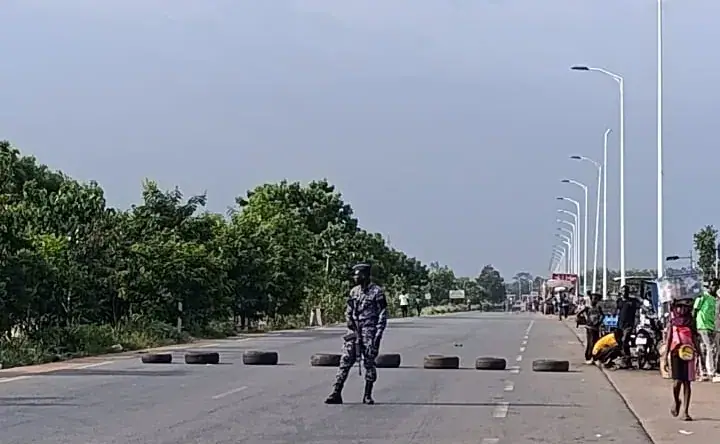
On the day of the meeting, police and gendarmerie officers blocked the CNCC leaders' convoy on the national highway near Adétikopé, detaining them for over an hour and a half. No official explained the reason for the blockade. According to Benjamin Amouzouvi of the ADDI party, when asked who had ordered the blockade, an officer claimed it wasn't him.
During the blockade, some phones were confiscated, and a delegation from Dalavé, led by municipal councilor Emmanuel Avognon, was taken to the Tsévié gendarmerie, along with activist Nadia Touré. An accident involving a vehicle belonging to a local elected official from the ruling party further delayed the convoy. The detained individuals were released after mobilization by CNCC militants.
This incident is not an isolated case, as similar disruptions had targeted a previous meeting in Vogan. The CNCC has questioned the effectiveness of obtaining authorization if it does not guarantee the right to assemble. The situation highlights a contradiction with the President of the Council's statement that the country needs a strong opposition.
Despite the challenges, the CNCC meeting ultimately took place, with leaders Jean-Pierre Fabre, Me Dodji Apévon, Professor Wolou, and Benjamin Amouzouvi in attendance. They addressed the recent judgment by the ECOWAS Court of Justice and the issue of water shortages in Tsévié. The opposition groups, including ANC, FDR, ADDI, and PSR, are contesting the 2024 constitutional reform.
The reform changed Togo from a presidential to a parliamentary system, which the CNCC sees as a means for the current leaders to maintain power. The opposition groups have adopted the slogan "No to the permanent coup, yes to the restoration of C92." Authorities have not provided any explanation for the disruptions.
The silence from authorities can be seen as a response to the opposition's concerns. The events have raised questions about the guarantee of freedom of assembly in Togo, even with official authorization. The CNCC has vowed to continue its opposition to the constitutional reform.
Key points
- The CNCC meeting was disrupted despite having obtained authorization from the mayor's office and notifying the Ministry of Territorial Administration.
- The opposition groups are contesting the 2024 constitutional reform that changed Togo from a presidential to a parliamentary system.
- Authorities have not provided any explanation for the disruptions faced by the CNCC.