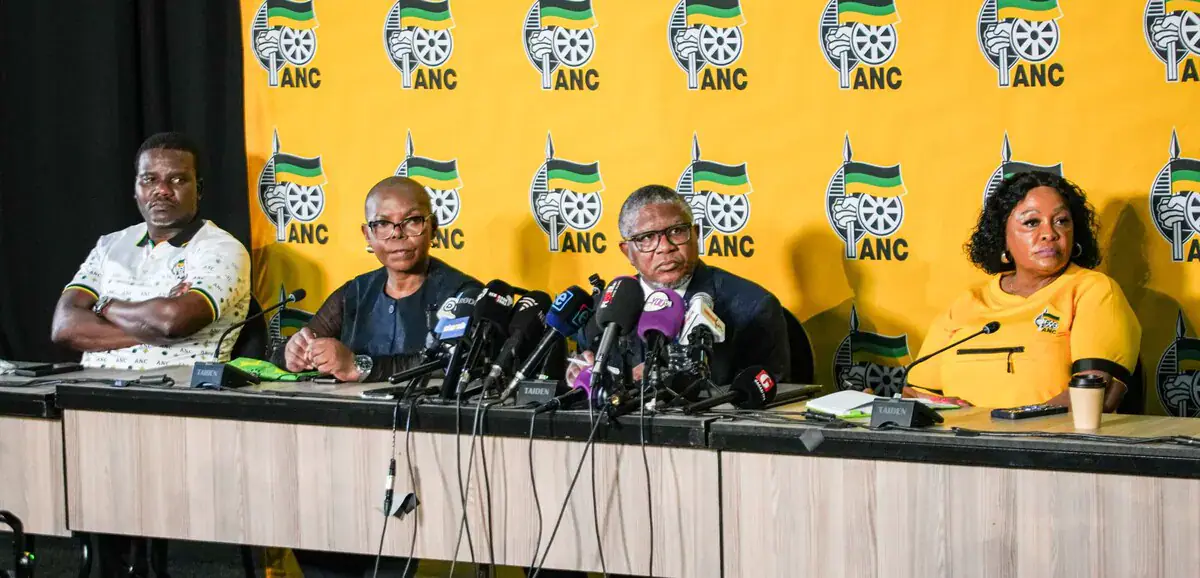
The African National Congress (ANC), in power since the end of apartheid, received 30.76% of the votes in the municipal elections, according to final results announced on Sunday. This marks a historic setback for the party of Nelson Mandela, which will have to negotiate alliances to retain control of many major cities. The ANC's decline comes amid high unemployment, above 34%, corruption scandals, and degradation of public services.
The Democratic Alliance (DA), the main opposition party and ANC partner in the national unity government, came in second with 24.67% of the votes. The voter turnout was 52%, six points higher than in the 2021 municipal elections, according to the electoral commission's president, Mosotho Moepya. The ANC's poor performance was acknowledged by its secretary general, Fikile Mbalula, who described the results as "catastrophic" and recognized the party's shortcomings.
More than half of the 213 municipal councils do not have an absolute majority, making negotiations necessary to form coalitions and designate local leaders. The DA won the only absolute majority in Cape Town, in the southwestern part of the country. The party also came in first in Johannesburg, the economic capital, where it presented Helen Zille, a former mayor and historical figure of the opposition to the ANC.
The ActionSA party, which came fifth nationally, could also play a significant role in forming majorities, particularly in Pretoria. President Cyril Ramaphosa, also head of the ANC, called on political parties to prioritize the interests of residents over their differences. "The people have spoken, and their verdict must be respected," he said on Sunday.
The law requires new municipal councils to hold their first meeting within 14 days of the official proclamation of the results, including the election of mayors. The ANC's decline has raised concerns about its ability to govern effectively, particularly in major cities. The party has been in power since the end of apartheid in 1994.
The municipal elections were seen as a test of the ANC's popularity and its ability to address the country's challenges, including high unemployment, corruption, and service delivery issues. The party's poor performance has sparked speculation about its future and the potential for coalition governments in major cities.
The results of the municipal elections have significant implications for the country's politics and governance. The ANC's loss of support could lead to changes in its leadership and policies, as well as a shift in the balance of power in the country's politics. The DA and other opposition parties are likely to capitalize on the ANC's weakness and push for greater representation and influence in government.
Key points
- ANC suffers historic loss with 30.76% of votes in municipal elections
- DA comes in second with 24.67% of votes
- Coalition governments likely in many major cities due to lack of absolute majority