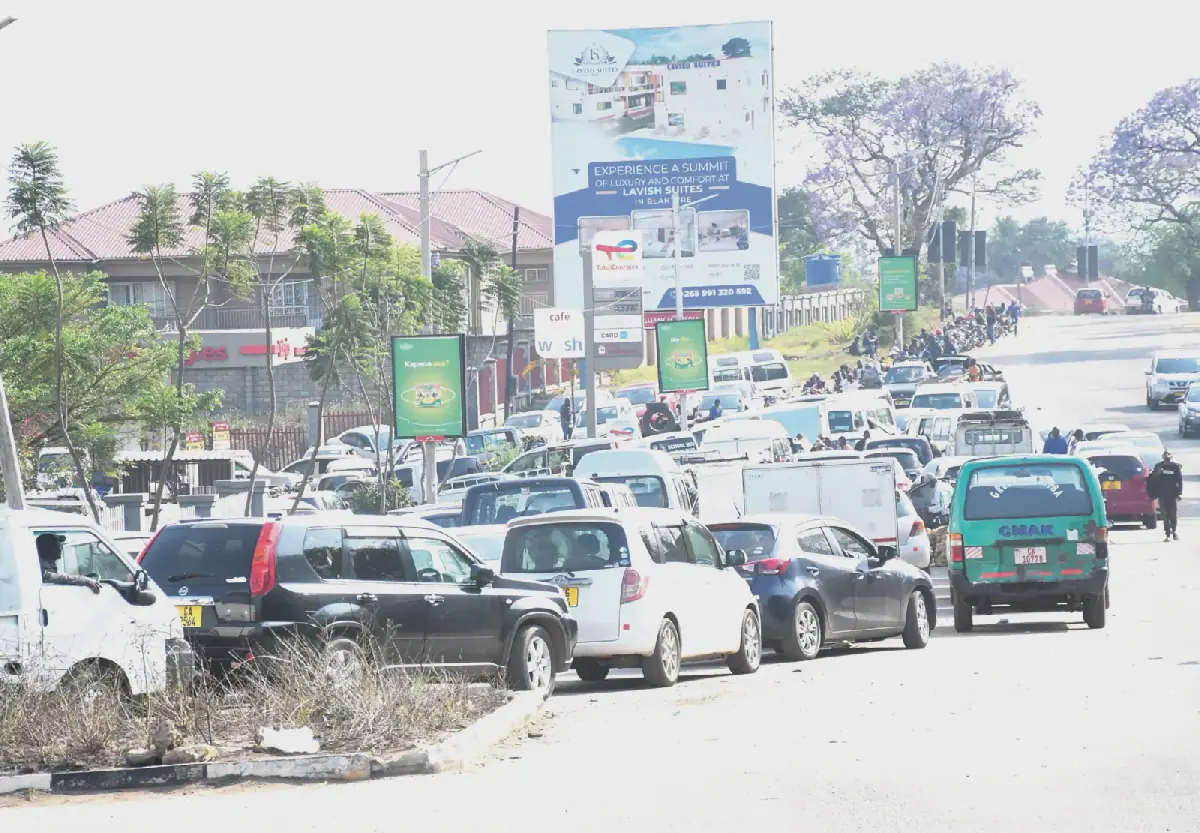
Malawi is experiencing its worst fuel crisis, with fuel shortages persisting for three consecutive months. The Malawi Energy Regulatory Authority (Mera) has announced a policy allowing companies with strategic developmental projects to import fuel for their own use, provided they meet legal and regulatory requirements. This move aims to broaden participation in fuel importation but has been seen as a capitulation by the government to address the crisis.
The fuel crisis in Malawi is primarily attributed to a shortage of foreign exchange. Government officials, including Minister of Energy Jean Mathanga, have acknowledged that the current fuel shortage is a result of forex scarcity. Mathanga has previously stated that once forex is available, the government will pay suppliers and replenish strategic fuel reserves to resolve the crisis. However, despite repeated promises, there has been no improvement in fuel supply.
The private sector in Malawi is also facing challenges due to forex scarcity. The Malawi Confederation of Chambers of Commerce and Industry has lamented the shortage of foreign exchange, while a World Bank report noted that the private sector is constrained by foreign exchange scarcity. The report highlighted that limited convertibility and scarcity of foreign currency pose critical challenges for private investors, affecting their ability to access fuel and other critical imported inputs.
Trade statistics show that Malawi generated only $106 million from exports in the first nine months of this year, which is insufficient to import fuel for more than two months. The country's reliance on forex generated by a few in the private sector has raised concerns. Analysts argue that allowing companies that generate forex to prioritize fuel importation for their own use may deprive those that do not generate forex, exacerbating the crisis.
Economists have expressed concerns that the new arrangement may create an uneven playing field for the private sector. Mavin Banda noted that businesses generating forex could enjoy an advantage over those dependent on the domestic market, particularly Small and Medium Enterprises (SMEs). Unless Mera ensures transparent licensing criteria and effective monitoring, the arrangement may favor those with the capacity to import fuel, affecting forex generation and the overall economy.
Economists Velli Nyirongo and Mavin Banda argue that the government's solution does not address the root cause of the fuel crisis. They emphasize that fuel security is a national economic concern, not just a private sector responsibility. A resilient system is needed, rather than recurring emergency measures. The analysts believe that the government should focus on strengthening forex generation, improving fuel procurement and financing, and reducing its structural dependence on imported energy.
The Ministry of Energy and Mera have been contacted for their response to the concerns raised, but they did not respond to the questions. The situation remains critical, with the fuel crisis continuing to affect businesses and consumers. The government's policy has been seen as a temporary solution, but a more comprehensive approach is needed to address the underlying issues driving the crisis.
Key points
- The fuel crisis in Malawi is primarily caused by a shortage of foreign exchange.
- The government's new policy allows companies generating forex to import fuel for their own use, but may create an uneven playing field for the private sector.
- Economists argue that the policy does not address the root cause of the fuel crisis and may exacerbate the problem.
Reporting sources
- Government’s fuel ‘policy’ found falling short · The Daily Times