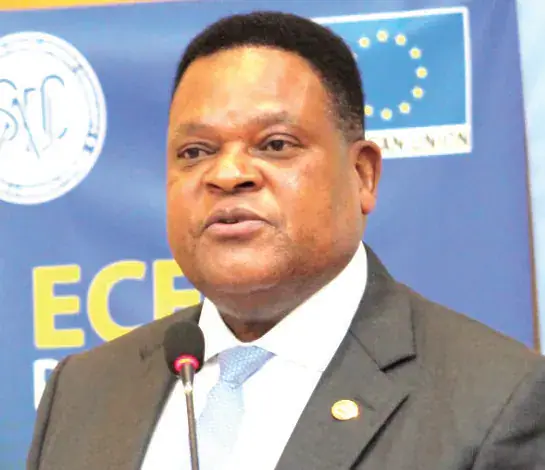
The Malawian government is taking steps to strengthen its fight against transnational criminal activities. Homeland Security Minister Peter Mukhito stated that protecting citizens remains a top priority and that a coordinated approach is needed to address the problem of criminal networks operating across the country's borders. Mukhito made these remarks during a multi-stakeholder consultative workshop on the development of Malawi's National Strategy to Prevent and Counter Transnational Organised Crime.
The strategy is being developed amid concerns over Malawi's vulnerability to cross-border criminal networks. According to the Global Organised Crime Index, Malawi is primarily a transit point for illicit goods and people. Criminal networks are reportedly exploiting the country's porous borders to facilitate activities such as human trafficking, drug trafficking, smuggling of migrants, and wildlife-related crimes.
Official figures from the Joint Permanent Commission on Defence and Security show that Malawi registered 41,000 transnational crimes in 2025, down from 42,800 cases recorded in 2024. The Malawi Police Service is strengthening its capacity to respond to emerging criminal threats through specialised training, particularly in cybercrime investigations. Inspector General of Police Richard Luhanga stated that the police are working tirelessly to improve the skills of their officers and capabilities to keep pace with increasingly sophisticated criminal networks.
Malawi is also strengthening regional security cooperation through bilateral arrangements. The country has signed an anti-human trafficking memorandum of understanding with Ethiopia and has cross-border intelligence-sharing initiatives with Mozambique and Tanzania. The development of the national strategy is being supported by the Southern African Development Community Secretariat, which is promoting coordinated regional efforts against transnational organised crime.
The national strategy is expected to provide a framework for strengthening institutional coordination, improving law enforcement responses, and enhancing cooperation with neighbouring countries. Malawi is the sixth country in the region to develop such a strategy. The strategy will help to address the root causes of transnational organised crime and provide a coordinated approach to combat it.
The Malawian government is committed to protecting its citizens from the threats of transnational organised crime. The development of the national strategy is a significant step towards achieving this goal. The strategy will help to improve the country's response to emerging criminal threats and enhance cooperation with regional partners.
The implementation of the national strategy will require a coordinated effort from all stakeholders, including government agencies, law enforcement institutions, and civil society organisations. The Malawian government is working closely with regional partners and international organisations to ensure that the strategy is effective in combating transnational organised crime.
Key points
- The Malawian government has registered 41,000 transnational crimes in 2025, down from 42,800 cases recorded in 2024.
- Malawi is strengthening regional security cooperation through bilateral arrangements, including an anti-human trafficking memorandum of understanding with Ethiopia.
- The national strategy is expected to provide a framework for strengthening institutional coordination, improving law enforcement responses, and enhancing cooperation with neighbouring countries.
Reporting sources
- Malawi moves on cross-border crime · The Daily Times