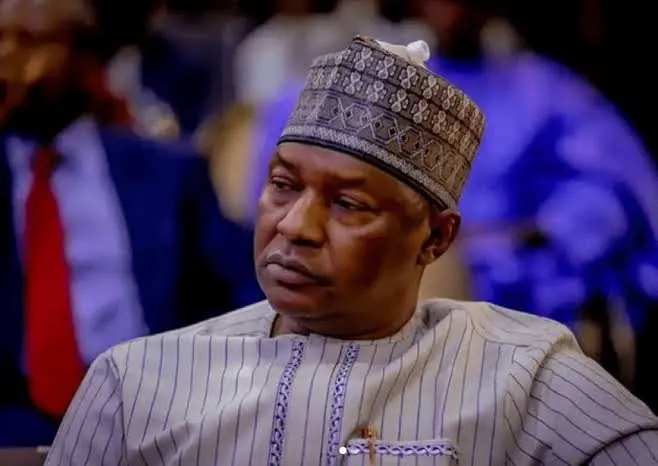
Former Attorney-General of the Federation and Minister of Justice, Abubakar Malami, has defended his role in the $200 million settlement between the Federal Government and Sunrise Power over the Mambilla Hydropower Project. Malami stated that his actions were motivated by Nigeria's interests, not personal financial gain. He responded to an International Chamber of Commerce tribunal's findings that the settlement agreement and addendum were products of corruption and unenforceable.
The ICC tribunal's 616-page award found that Malami and Leno Adesanya, Sunrise Power's promoter, had a common intention to secure a settlement favourable to the company at Nigeria's expense. The tribunal concluded that Malami cooperated in committing Nigeria to terms that could have exposed the country to a $400 million liability. Malami rejected these allegations, stating that his official actions were not undertaken pursuant to a corrupt agreement or in exchange for personal financial benefit.
Malami questioned the evidentiary basis of the allegations, noting that no evidence was presented showing that he received money or another financial benefit from Sunrise, Adesanya, or any related entity. He also pointed out that the $200 million settlement was never paid by the Federal Government to Sunrise. The dispute dates back to 2003, years before Malami became Attorney-General, and involved successive administrations, attorneys-general, and government ministries.
In January 2020, Malami and then Minister of Power Saleh Mamman signed a settlement agreement under which the Federal Government would pay Sunrise $200 million. An addendum signed two months later divided the payment into two $100 million instalments and provided for an additional $200 million default payment, apart from interest. Sunrise promoter Adesanya alleged that Malami and Mamman demanded half of the settlement as bribes, but did not produce recordings of the conversations.
Malami stated that after former President Muhammadu Buhari refused to approve payment, he instructed government lawyers to resist attempts by Sunrise to enforce the settlement and to protect the Federal Government's legal position. He cautioned against describing the tribunal's findings as a criminal conviction, stressing that the proceedings were commercial arbitration and that he was not a party to the case or given an opportunity to present his side.
Malami said he would provide a more comprehensive response after reviewing the full tribunal award and underlying records. His statement was issued through his Special Assistant on Media, Mohammed Bello Doka. The Mambilla Hydropower Project has been delayed, and the dispute had become an obstacle to financing discussions.
The controversy surrounding Malami's role in the $200 million settlement has sparked concerns about corruption and accountability in Nigeria's government. Malami's defence of his actions has raised questions about the transparency of government dealings and the need for thorough investigations into allegations of corruption.
Key points
- Malami insists his actions in the $200m Mambilla deal were motivated by Nigeria's interests.
- ICC tribunal finds settlement agreement and addendum were products of corruption.
- Malami rejects allegations of corrupt agreement or personal financial benefit.