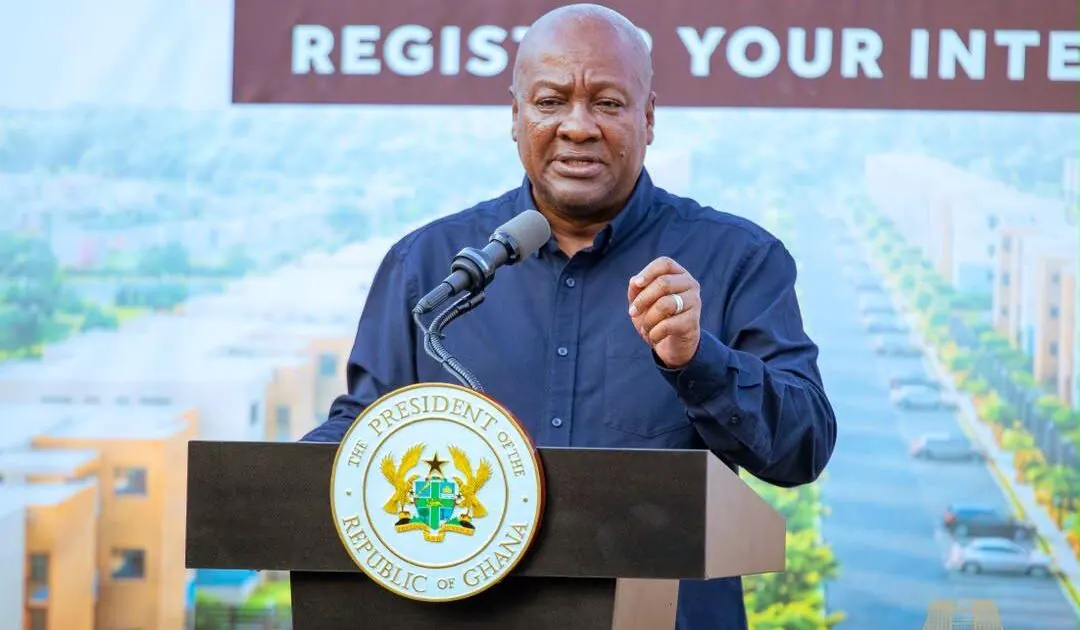
Former President John Dramani Mahama has cautioned against disproportionate arrests over mere criticism or politically charged commentary, warning that such actions could create “undeserving martyrs” and undermine public confidence in state institutions. In a letter signed by the Secretary to the President, Dr Callistus Mahama, the Media Foundation for West Africa (MFWA) and the Ghana Journalists Association (GJA) were requested to jointly convene a national stakeholder engagement on hate speech, abusive language and harmful content on social media and emerging digital platforms.
President Mahama emphasized that while hate speech, threats, incitement and other unlawful conduct must be addressed, legitimate criticism, political commentary, satire and dissent should not be criminalised. He expressed concern that disproportionate arrests over mere criticism or politically charged commentary may be counterproductive and create undeserving martyrs. The proposed stakeholder engagement aims to bring together various stakeholders, including the National Media Commission, Ghana Police Service, civil society organisations, traditional media organisations, religious bodies, content creators, bloggers and influencers.
The engagement is expected to examine the adequacy of Ghana’s existing legal and regulatory framework and clarify the distinction between lawful criticism and unlawful speech. It will also consider practical guidelines for law-enforcement agencies, public education, digital literacy, ethical standards for online content creators and accessible complaints and redress mechanisms. This initiative seeks to protect freedom of expression while providing an appropriate and proportionate response to genuinely harmful digital content.
President Mahama's concerns come at a time when there have been several instances of arrests and prosecutions of individuals for comments made on social media. The former President's initiative has been welcomed by stakeholders, who believe that a national conversation on the issue is long overdue. The stakeholder engagement is expected to provide a platform for various stakeholders to share their perspectives and experiences on the issue.
The proposed engagement will also bring together legal and human-rights experts, representatives of digital platforms, as well as relevant regulatory and security institutions. The initiative aims to promote a coherent national roadmap that balances the need to protect freedom of expression with the need to address genuinely harmful digital content. By doing so, the government hopes to build public trust in state institutions and promote responsible digital communication.
President Mahama's call for a stakeholder engagement on hate speech and harmful content on social media is a significant step towards promoting a safe and respectful online environment. The initiative has the potential to promote a more nuanced understanding of the issues and foster a culture of responsible digital communication in Ghana. The engagement is expected to lead to practical recommendations for addressing the challenges associated with hate speech and harmful content on social media.
Key stakeholders are expected to participate in the engagement, which will help to ensure that the issues are addressed in a comprehensive and inclusive manner. By promoting a national conversation on the issue, President Mahama's initiative has the potential to contribute to the development of a more robust and effective framework for addressing hate speech and harmful content on social media in Ghana.
Key points
- Former President John Dramani Mahama has warned against disproportionate arrests over criticism, which he believes could create “undeserving martyrs” and undermine public confidence in state institutions.
- The proposed stakeholder engagement aims to promote a coherent national roadmap that balances the need to protect freedom of expression with the need to address genuinely harmful digital content.
- The initiative has the potential to promote a more nuanced understanding of the issues and foster a culture of responsible digital communication in Ghana.