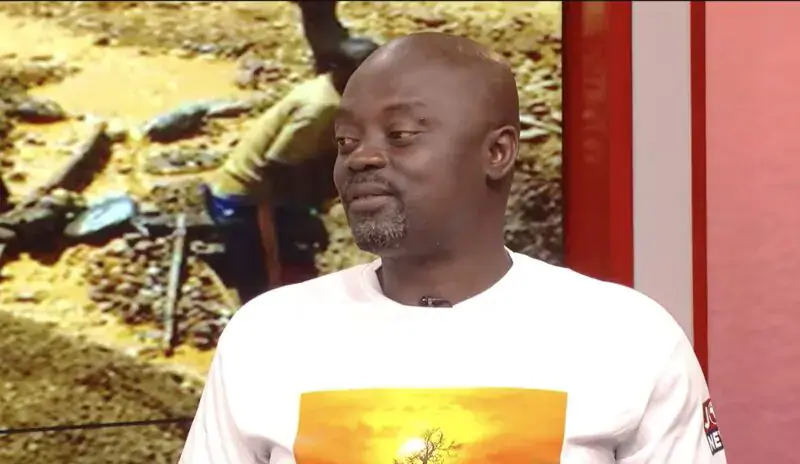
Investigative journalist Erastus Asare Donkor has expressed concerns that the John Mahama administration is repeating the same approaches used by the previous Akufo-Addo government in the fight against illegal mining, popularly known as galamsey. According to him, the government's response has not been sufficiently different or forceful to match the scale of environmental destruction. He made these comments on JoyNews' Newsfile on Saturday, October 31, during a discussion on the Mahama administration's fight against galamsey.
Mr. Asare Donkor noted that although the previous administration failed to give the problem the attention it deserved, the current government was also not matching its public statements with action. He stated that the country appeared to be repeating past mistakes rather than adopting a more effective strategy. The journalist emphasized that a government genuinely committed to ending illegal mining must deploy all the resources available to it, including personnel, equipment, logistics, and funding.
Mr. Asare Donkor used a military analogy to explain that defeating an enemy required a well-resourced strategy informed by a proper understanding of the threat. He complained that personnel assigned to combat illegal mining often lacked the basic resources needed to operate effectively. According to him, the officers require pick-up vehicles, equipment, canoes, and logistics to reach affected communities, as well as money to fuel vehicles and support personnel deployed in remote areas.
The journalist alleged that the officers sometimes had to plead for resources, only to receive small amounts that were eventually exhausted. He stated that the seriousness of the issue was not being seen, and that the country was not doing much as it was talking about. Mr. Asare Donkor also welcomed efforts by the Ghana Gold Board to reclaim 50 hectares of the affected forest, although he noted that a significant portion of the 192 hectares destroyed remained to be recovered.
Mr. Asare Donkor disclosed that more than 150 excavators had been seized from illegal mining areas, including Tano Anwia, Tano Nimri, Yor Yor, and Boi River, with some currently parked at Samreboi. He described these developments as important gains in the fight but warned that new methods of illegal mining were threatening progress made in protecting forest reserves. He cited the Tano Anwia and Tano Nimri forest areas, as well as Yor Yor, Boi River, and the Jimera Extension, as places where consistent reporting had helped keep illegal mining activities in the public eye.
The journalist noted that investigative reporting helped to draw attention to the destruction of several forest reserves and said sustained media coverage had contributed to efforts to protect some of them. He stated that if consistent reporting had not been done on Tano Anwia, that forest would have been gone by now. Mr. Asare Donkor also mentioned that he considered documenting environmental destruction a responsibility to future generations.
When asked why he continued to visit illegal mining sites despite the risks involved, Mr. Asare Donkor said it was his duty to document the destruction. He emphasized that it was essential to draw attention to the issue and help protect the environment for future generations.
Key points
- The Mahama administration is repeating the same approaches used by the previous Akufo-Addo government in the fight against galamsey.
- The government’s response has not been sufficiently different or forceful to match the scale of environmental destruction.
- The journalist, Erastus Asare Donkor, emphasized the need for a well-resourced strategy to combat illegal mining.