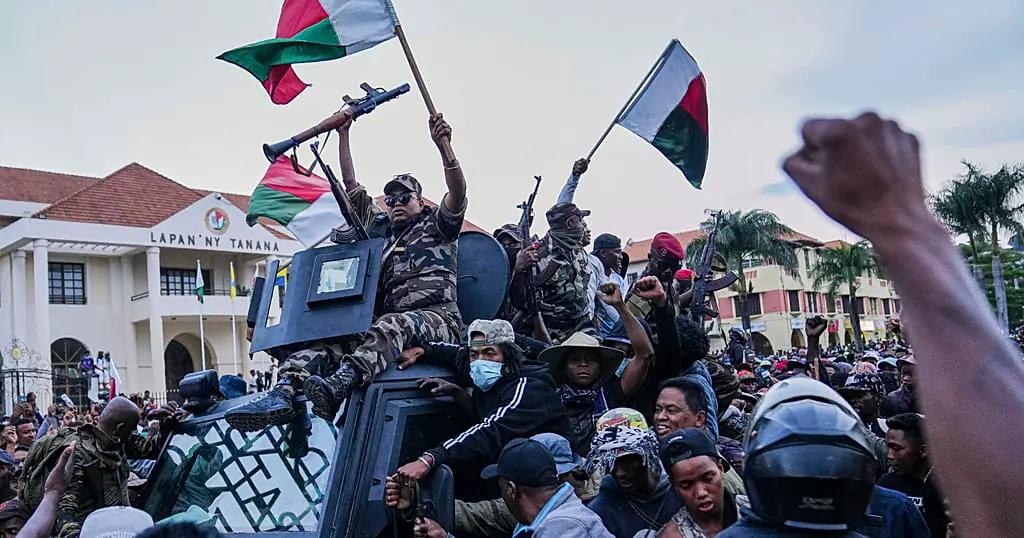
In Madagascar, a year has passed since Gen Z-led protests forced President Andry Rajoelina from power. The young protesters, who were euphoric when soldiers joined them in October last year, now feel betrayed by the new government. They accuse the authorities of resorting to the same old tactics. Herizo Andriamanantena, the figurehead of the movement, said there were only "little changes here and there" after the protests.
The protests began on September 25, 2025, focused on chronic water and power shortages. The movement gained momentum, and on October 17, the military seized power, swearing in Colonel Michael Randrianirina as interim leader. This brought an end to unrest that claimed at least 22 lives. Herizo Andriamanantena, an agricultural engineer by training, recalled the joy and relief when soldiers joined the protests.
However, when Herizo's group called a march in April this year to protest the slow pace of promised reforms, the new authorities cracked down. Herizo and five other activists were thrown in jail on charges of endangering state security. Herizo spent 13 days in police custody, saying he was treated like a criminal. He also lost his job, as did another activist, Nomena Ratsihorimanana.
Nomena Ratsihorimanana described his arrest as violent, saying he was rammed by an SUV while on his motorbike and then beaten for around an hour. The activists were threatened with guns and told they would be killed. According to lawyer Maromanana Aliarivelo, the charge of endangering state security has been used for years by those in power to silence critics.
The Gen Z movement, which was diverse and had around 200,000 followers on a Facebook page, drew mainly urban, educated young people. The page was hacked and deleted shortly before the military switched sides. Felana Andriatahina, an eco-construction entrepreneur, said it's a betrayal that the new government is using the same tactics as the previous one.
In the impoverished country, where around 70 percent of the population is under 30, according to UNICEF, the movement has split into factions. One faction recently affirmed its support for Colonel Randrianirina, who has promised elections by the end of next year. However, some leaders are wary of official commemorations planned for the first anniversary of the protests.
The programme in the capital Antananarivo includes the unveiling of a stele, a march, and an address by Colonel Randrianirina at the central May 13 Square, a symbol of political protest in the country. Elliot Randriamandrato, one of the administrators of the original Facebook page, said if the commemoration is used for self-interest, it's pointless.
Key points
- Gen Z activists in Madagascar feel betrayed by the new government.
- The movement drew mainly urban, educated young people.
- The new government has resorted to the same old tactics as the previous one.