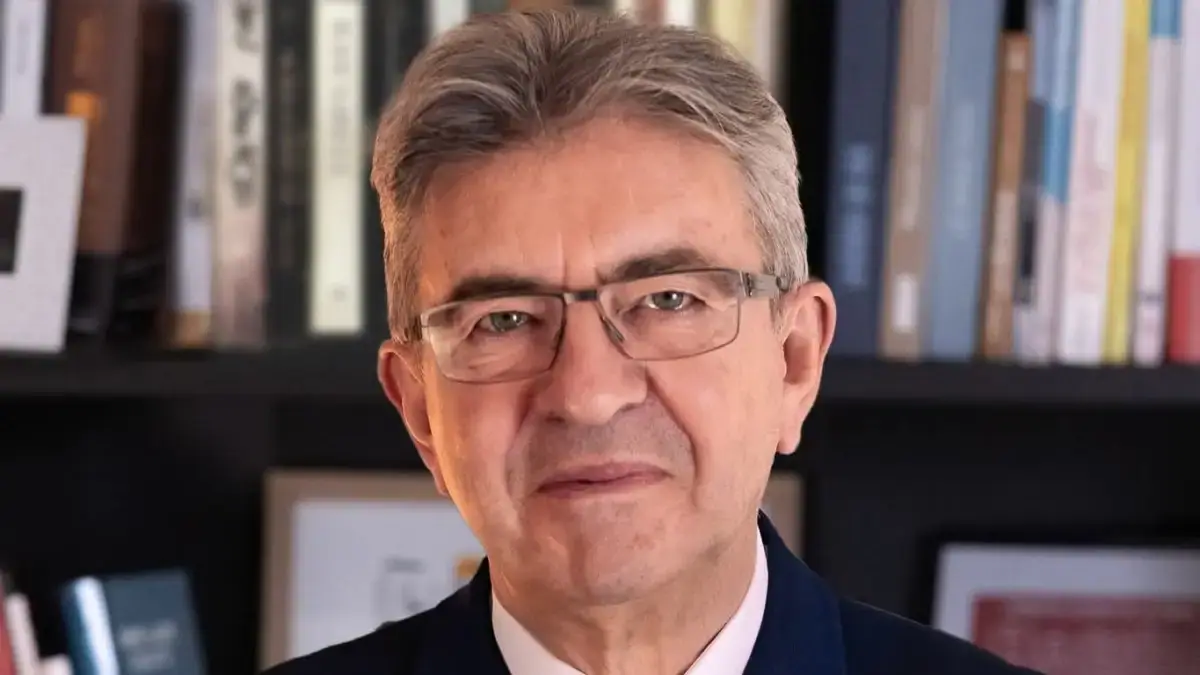
French politician Jean-Luc Mélenchon has sparked controversy with his recent comments on international partnerships. On November 3, 2026, Mélenchon, the founder of La France insoumise, posted a message on social media, comparing the reliability of China and the United States as partners. He expressed his views on the Ukraine conflict, criticizing the stance of his political opponents on China's role. Mélenchon has been a vocal critic of alignment with the US, particularly within the NATO framework.
Mélenchon's comments were directed at what he termed "atlantists" in France, who support close ties with the US. He referenced a diplomatic episode involving the US, Russia, and China, where the US proposed a summit on Ukraine. According to Mélenchon, China declined the invitation, stating that Europeans should have a seat at the negotiating table. He questioned the loyalty of his opponents, suggesting that China is a more reliable partner than the US. This stance is part of Mélenchon's broader foreign policy vision, which advocates for non-alignment.
Mélenchon's program for the 2027 presidential election includes withdrawing from NATO's integrated command structure and ending France's alignment with the European Union's atlanticist stance. His non-alignment policy seeks to avoid choosing between Washington, Moscow, and Beijing. However, German President Frank-Walter Steinmeier, who met with Chinese President Xi Jinping on October 30, presented a slightly different account of the diplomatic exchanges. Steinmeier stated that he was the one who suggested a summit involving China, the US, and Russia on Ukraine.
According to Steinmeier, Xi Jinping expressed surprise at the proposal, stating that no preparations were underway for such a summit. Xi Jinping reportedly viewed the conflict as a European issue, suggesting that Europeans should participate in negotiations. This exchange highlights the complexities of international diplomacy on the Ukraine conflict. The idea of a three-way summit was initially proposed by Russian President Vladimir Putin, with US President Donald Trump expressing openness to the idea.
A potential meeting between the three leaders may still occur on the sidelines of the APEC summit in Shenzhen on November 18-19. However, Ukraine is not expected to be on the agenda. Mélenchon's comments have reignited debates on France's international alliances and the country's stance on global issues. His criticism of the US and praise for China reflect his long-standing skepticism of atlanticism.
Mélenchon's views on China and the US have been shaped by his experiences as a presidential candidate. He has run for president three times, in 2012, 2017, and 2022. His foreign policy vision emphasizes the need for France to maintain its independence and avoid entanglement in international conflicts. Mélenchon's stance on China and the US has sparked both support and criticism in France.
The controversy surrounding Mélenchon's comments highlights the challenges of navigating complex international relationships. As France prepares for the 2027 presidential election, Mélenchon's views on global issues are likely to remain a topic of debate. The international community continues to grapple with the Ukraine conflict, and the role of major powers like China, the US, and Russia in resolving the crisis.
Key points
- Mélenchon criticizes US, praises China as reliable partner
- Steinmeier presents different account of diplomatic exchanges
- APEC summit may provide opportunity for three-way meeting