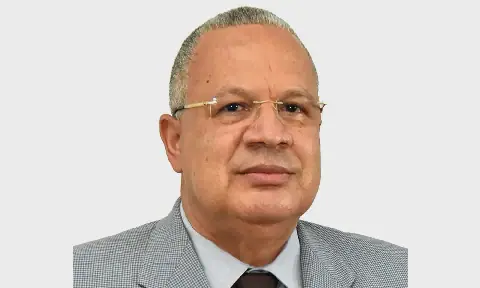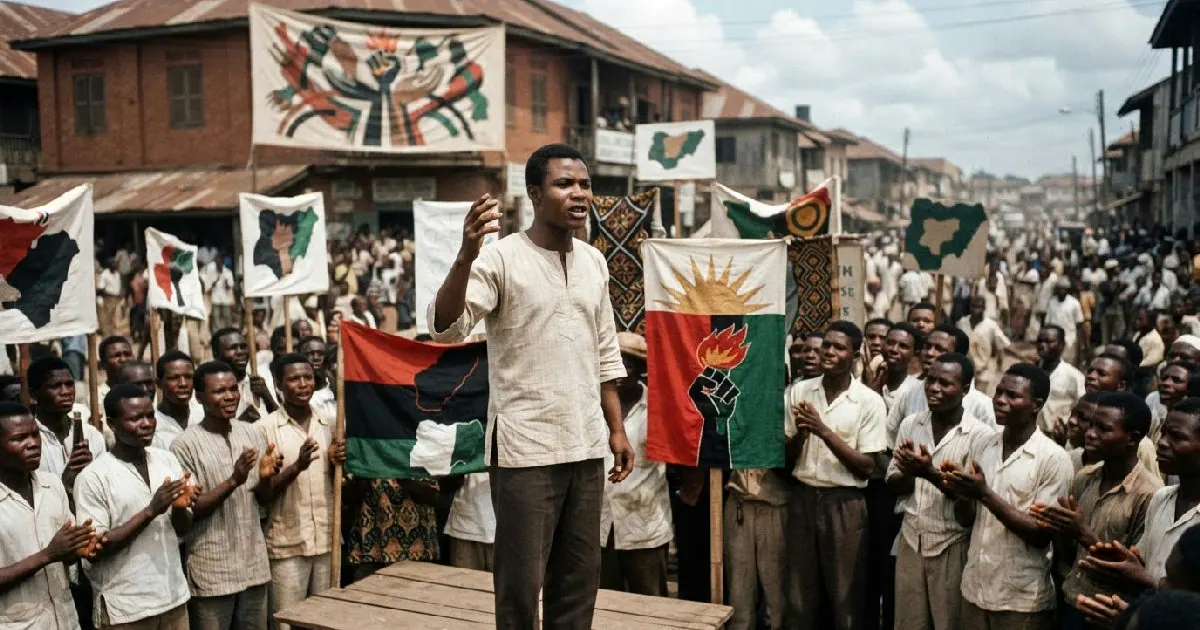
The Radical Nationalist Movement, later known as the Zikist Movement, was founded in Lagos in 1946 by a group of young nationalists who demanded immediate self-government from British colonial rule. C. K. Ajuluchukwu, a figure who later served in Chief Obafemi Awolowo’s Unity Party of Nigeria, emerged as the movement's general secretary. This youth-led organization rejected the slow pace of constitutional reforms and demanded immediate self-government.
The Zikist Movement formally started in Lagos on February 16, 1946, drawing significant inspiration from Dr. Nnamdi Azikiwe’s political influence. However, it quickly forged its own identity, with Kolawole Balogun as its first president and M. C. K. Ajuluchukwu as its first general secretary. Other notable figures, including Abiodun Aloba, Nduka Eze, Mokwugo Okoye, Raji Abdallah, and Osita Agwuna, joined their ranks.
The Zikists represented a distinctly militant current within Nigerian nationalism, openly criticising imperial rule and arguing that political freedom should not hinge indefinitely on reforms granted by colonial authorities. Their views were often shaped by broader anti-imperialist and socialist ideas circulating globally after the Second World War. One pivotal moment for Zikist agitation came in October 1948, when Osita Agwuna delivered his famed lecture, A Call for Revolution, in Lagos.
The colonial administration grew increasingly alarmed by this revolutionary rhetoric and the mounting militancy of young nationalists. Government pressure intensified, and the Zikist Movement was ultimately banned in 1950. Ajuluchukwu’s leadership position within this original structure underscored his direct involvement in organised anti-colonial nationalism, far beyond mere journalistic commentary.
After the Zikist Movement was proscribed, Ajuluchukwu continued his career in journalism, working at the Daily Comet as an assistant editor in 1946, collaborating closely with figures like Anthony Enahoro. He later became deeply associated with the West African Pilot, the influential newspaper founded by Dr. Nnamdi Azikiwe in 1937.
Ajuluchukwu served as an editor at the West African Pilot, known for columns like Weekend Catechism, which blended political argument with public education. His career trajectory then took him to Enugu and the public information system of Eastern Nigeria, where he joined the Nigerian Outlook, a newspaper published by the Government of Eastern Nigeria, ascending to senior editorial and managerial roles.
In February 1965, Ajuluchukwu was the General Manager of the Eastern Nigeria Information Service, placing him at the heart of the regional government’s communication apparatus during the First Republic. Decades later, he became a senior figure in the Unity Party of Nigeria (UPN) during the Second Republic, serving as the UPN’s Director of Publicity and Research, and later joined the Concord Press, established by Chief M. K. O. Abiola.
Key points
- - M C K Ajuluchukwu led the Zikist Movement, a radical nationalist organization demanding immediate self-government from British colonial rule in 1946. - He had a prolific journalism career, working with prominent newspapers, including the West African Pilot and Nigerian Outlook. - Ajuluchukwu transitioned from anti-colonial activism to mainstream politics, serving in the Unity Party of Nigeria and Concord Press.