Luanda, Angola's capital, is a city that rewards careful preparation for business travel. Executives can expect high costs and peak-hour congestion, but also a strong Atlantic character and a growing institutional push for corporate visitors. To navigate the city effectively, it's essential to understand the local culture and language. Portuguese is central to daily business and social life in Luanda, and executives who arrive with even basic Portuguese phrases can move faster on the ground.
Before traveling to Luanda, executives should be aware of the entry requirements. South African passport holders may enter Angola visa-free for short stays under certain conditions, but business activity often falls outside those permitted purposes. It's crucial to confirm travel purpose directly with an Angolan consulate before departure. Additionally, health preparation is vital, as travelers aged nine months or over must carry proof of yellow-fever vaccination for entry into Angola. Malaria risk is high across the country, so medical advice and mosquito-bite protection are essential steps before travel.
The cost of visiting Luanda can be high, particularly outside corporate hotels and established conference venues. According to Skyways Magazine, Luanda is among Africa's more expensive destinations. Card payments are not universal, so carrying local cash can avoid disruption at smaller outlets and restaurants. Executives should also be prepared for traffic congestion, which can be a significant operational variable. Meetings should be scheduled within compact daily schedules, and a professional driver can reduce friction considerably.
Local contacts can provide valuable guidance on navigating Luanda's transport network, including useful shortcuts. Candangueiros, shared minibuses, offer a cheaper alternative to private transport, but their routes and destination calls require local knowledge. Hotel concierge staff and business contacts are reliable sources of practical guidance. Understanding the city's geography is also important, as the central district holds historic buildings and government offices, while Luanda Sul, further south, hosts many higher-end residential and commercial developments.
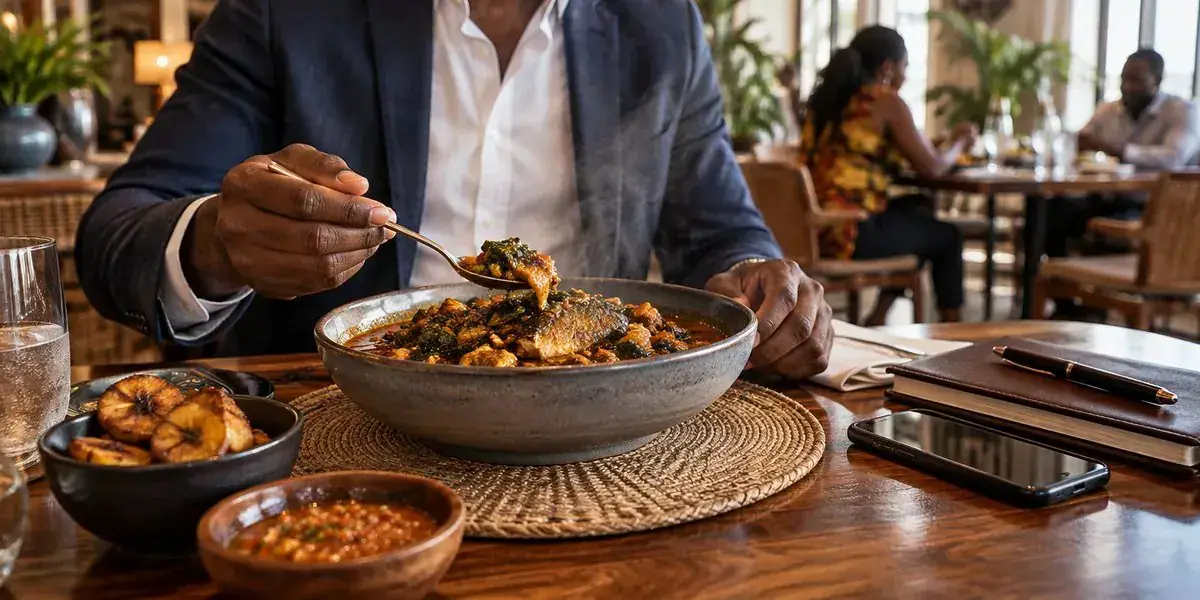
Luanda offers a strong cultural return alongside its commercial activity. Local dishes include calulu, a fish stew cooked in red palm oil, and moamba de galinha, a chicken stew with strong local spicing. Mufete combines grilled tilapia with plantains, beans, and sweet potatoes. Informal quintais serve simpler meals at lower price points, while Ilha do Cabo provides more polished restaurant options. Portuguese wines and local beers are widely available across both settings.
The seafront avenues around Praia do Bispo and the Marginal provide executives with useful informal meeting points. These spaces connect visitors directly to Luanda's Atlantic identity and double as networking settings beyond the conference room. With its unique blend of culture, food, and commerce, Luanda offers a compelling experience for business travelers. By understanding the local culture and being prepared, executives can make the most of their visit.
Angola's tourism sector is gaining institutional backing, with the 2026 BITUR tourism fair running from 20 to 22 November 2026 in Luanda. The event brings together operators, investors, and policymakers, reflecting a wider government effort to promote tourism in the country. As the tourism sector continues to grow, Luanda is likely to become an increasingly important destination for business travelers.
Key points
- Executives traveling to Luanda should be prepared for high costs and peak-hour congestion, but also a strong Atlantic character and growing institutional push for corporate visitors.
- Understanding the local culture and language is essential for navigating Luanda effectively.
- The 2026 BITUR tourism fair in Luanda reflects a wider government effort to promote tourism in Angola.
Reporting sources
- Luanda business travel guide for executives · FurtherAfrica