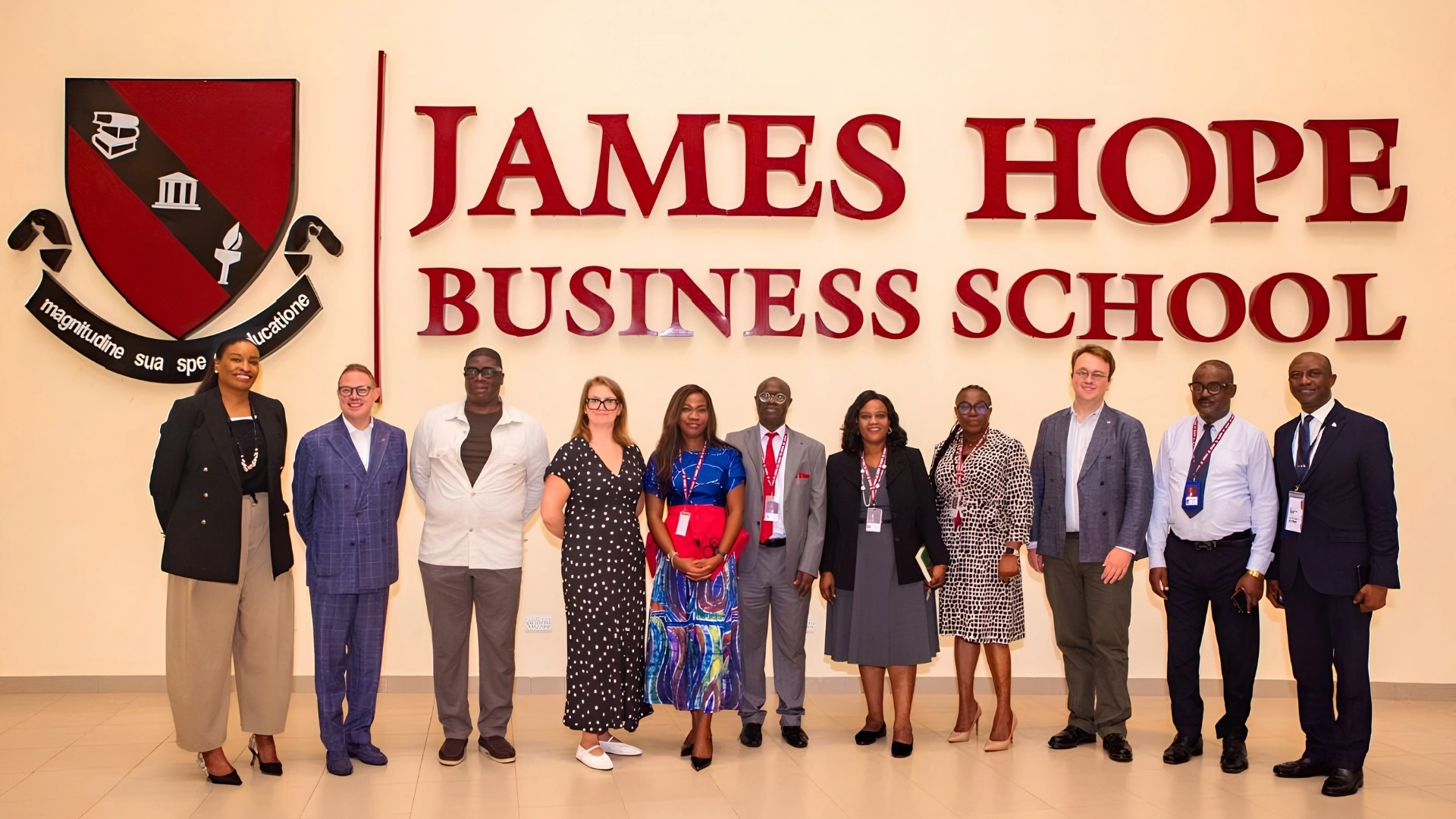
The London School of Economics and Political Science (LSE) recently visited James Hope University for a second campus visit, strengthening growing engagement between the two institutions. The visit, held on September 14, created a platform for students to participate in a global conversation on the future of higher education. Members of the LSE leadership team, including Ben Plummer-Powell, Sarah Cook, and Corey Moore, engaged with students and members of the James Hope University community.
The engagement, themed "Education Across Borders: Building Collaborative Opportunities Between the Global South and West," examined how universities can build deeper, more reciprocal relationships across regions. The conversation explored the evolving landscape of higher education and opportunities for institutions to collaborate, exchange knowledge, and build lasting impact. The event was hosted by Zephia Ovia-Ikem, JHU Director of Strategic Partnerships & International Office.
The visit marked a milestone in strengthening connections between James Hope University and one of the world's leading academic institutions. LSE has recently been ranked number 1 University in London and top 3 University in the United Kingdom according to the 2027 Guardian University Guide. The conversation turned to the rapidly changing role of artificial intelligence in education and how universities should respond to the technology.
The session considered how universities can ensure that the core purpose of education remains firmly rooted in developing critical thinkers and capable professionals. Ben Plummer-Powell emphasized the importance of enhancing soft skills in education, enabling global citizenship. Suggestions were made on what it means to go beyond the classroom to enforce a culture of communication and learning about different cultures and regions.
The conversation also touched on the role of academic institutions in socio-economic issues and policy formulation. Zephia Ovia-Ikem noted that Western universities usually have a stance on socio-economic issues, while Nigerian academic institutions are often neutral. The discussion explored what role and boundaries universities hold on public discourse and what it means in different regions.
For James Hope University, the visit reflects the University's commitment to building meaningful global partnerships and creating opportunities for its students, faculty, and wider community to engage with leading institutions and ideas from around the world. The visit is an important part of shaping the future of education in Africa and beyond.
As James Hope University continues to build its global academic network, conversations such as these will help shape the future of education. The University is grateful to the LSE team, management, faculty, students, and guests for contributing to this important conversation. The engagement comes at a time when African universities are increasingly positioning themselves as important contributors to global conversations on education, innovation, research, and development.
Key points
- The London School of Economics and Political Science visited James Hope University for a fireside chat on the future of education and reciprocal partnerships.
- The conversation explored the evolving landscape of higher education and opportunities for institutions to collaborate, exchange knowledge, and build lasting impact.
- The visit reflects James Hope University's commitment to building meaningful global partnerships and creating opportunities for its students, faculty, and wider community.