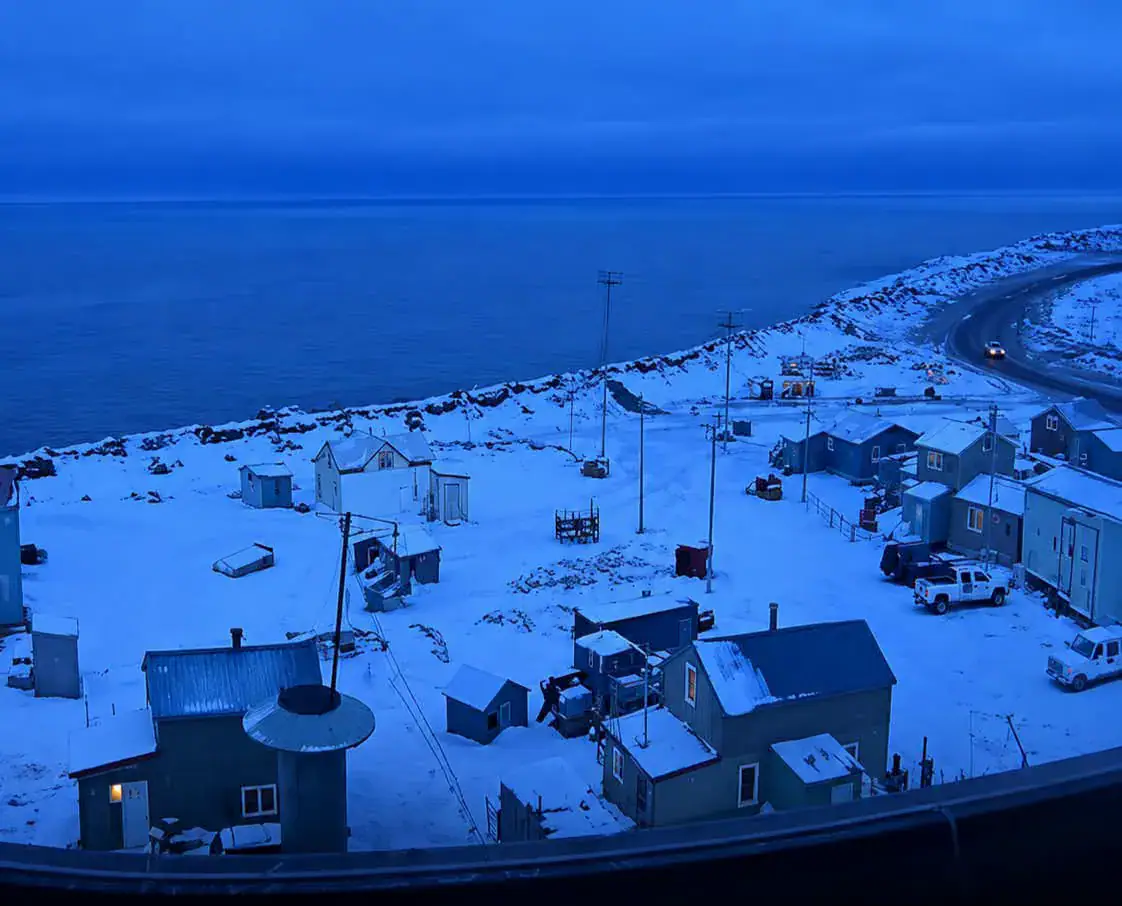
Utqiaġvik, the northernmost city in the United States, has entered its annual period of darkness known as the polar night. This natural phenomenon keeps the Sun below the horizon for approximately 65 consecutive days. The town's residents will not see the Sun rise again until January 23, 2027, following its final sunset in November 2026. This unusual experience is part of everyday life for the residents of Utqiaġvik.
The unusual daylight pattern in Utqiaġvik results from Earth's axial tilt of approximately 23.5 degrees relative to its orbital plane around the Sun. As the planet travels around the Sun, different regions receive varying amounts of daylight throughout the year. During winter, the Northern Hemisphere tilts away from the Sun, causing the Sun to remain below the horizon for extended periods in locations close to the North Pole.
Despite the prolonged absence of sunrise, Utqiaġvik does not remain in complete darkness throughout the entire period. The town experiences different stages of twilight, particularly around midday, when sunlight scatters through the atmosphere and produces a faint glow. This creates beautiful blue and purple shades across the sky, allowing residents to experience some natural illumination even though the Sun remains below the horizon.
Life in Utqiaġvik continues normally despite the polar night. Residents attend school, go to work, shop, and carry out their daily responsibilities. The community also maintains cultural practices and traditional activities that have developed over generations in the Arctic environment. Artificial lighting and awareness of the clock become particularly important during this period.
In contrast to the polar night, Utqiaġvik experiences the midnight Sun during summer, with approximately 82 to 85 days without sunset. The Sun remains above the horizon throughout the day and night, providing continuous daylight. This phenomenon occurs because the Northern Hemisphere tilts towards the Sun during summer, allowing locations within the Arctic Circle to receive continuous daylight.
Alaska's daylight experiences vary across different parts of the state. In Fairbanks, residents experience approximately 70 days of continuous daylight during summer, while winter daylight becomes considerably shorter. Anchorage experiences more moderate seasonal changes, with over 19 hours of daylight around the June summer solstice and considerably shorter daylight during winter.
Utqiaġvik offers a remarkable example of how Earth's natural movements influence life on the planet. The changing seasons have a dramatic impact on regions close to the Arctic and Antarctic circles. For residents of Alaska's northernmost city, the return of the Sun in January marks the gradual end of an extraordinary seasonal experience, followed by another remarkable season with continuous daylight.
Key points
- Utqiaġvik experiences 65 days without sunrise during polar night and 82 days without sunset during midnight Sun.
- The unusual daylight patterns in Utqiaġvik result from Earth's axial tilt of approximately 23.5 degrees.
- Life in Utqiaġvik continues normally despite the polar night, with residents attending school, work, and maintaining cultural practices.