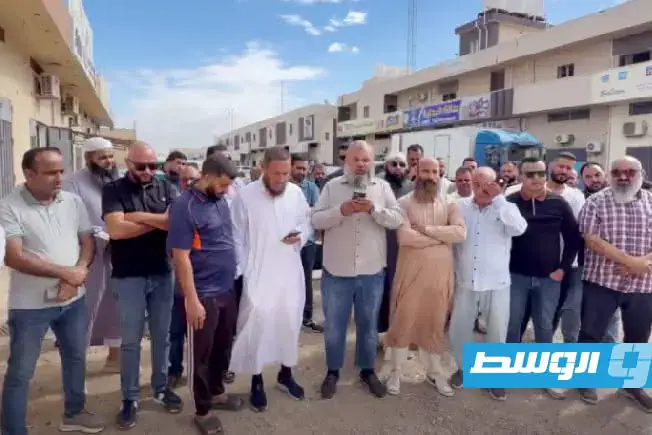
Wholesale traders at the Krimia market in Tripoli, Libya, have presented four key demands to the government in an effort to address the rising prices of goods and alleviate economic pressures. The demands were made through a statement released on Wednesday, October 28, 2026. The traders emphasized their commitment to supporting the organization of trade, combating corruption, smuggling, and money laundering. They also expressed their concerns about the recent decision to restrict imports to only those made through official banking channels.
The traders' statement highlighted that the recent decision number 449 of 2026, which prohibits the importation of goods and commodities outside of official banking channels, has contributed to the rising prices. They argued that the decision unfairly places the blame for the price hikes on honest traders, while ignoring the complexities of the issue. The traders emphasized that the rising prices are not solely the responsibility of traders, but are also linked to the cost of imports, difficulties in obtaining foreign currency through banks, and weak oversight of large-scale transactions.
The traders' statement also expressed frustration with the requirement that they use official banking channels for imports, while being unable to benefit from the documentary credit system. They called for an immediate halt to the implementation of decision 449, or its cancellation until a fair and effective banking system is established. The traders also demanded that the government open all approved banking channels and facilitate foreign transfers and credits, ensuring swift procedures and fair distribution of foreign currency.
In addition to these demands, the traders called for enhanced oversight of large-scale transactions, verification of transferred funds and supplied goods, and review of beneficiary companies. They also requested that those found guilty of monopolistic practices or price manipulation be held accountable according to the law. The traders emphasized that addressing the root causes of price hikes is essential, rather than simply placing blame on one party.
The traders' demands reflect broader concerns about the economic situation in Libya, where price hikes have become a significant challenge. The country's economic and monetary policies, as well as the scarcity of foreign currency, have contributed to the rising prices. The traders' statement concluded that resolving the issue of price hikes requires reforming economic and monetary policies, providing foreign currency, combating corruption and monopolies, and strengthening oversight and accountability.
The Libyan government faces pressure to address the economic challenges facing the country, including rising prices and a shortage of foreign currency. The government's response to the traders' demands and its efforts to stabilize the economy will be closely watched by various stakeholders. The traders' call for dialogue and cooperation with the government may help to find solutions to the economic challenges.
The economic situation in Libya remains complex, with multiple factors contributing to the rising prices. The government's policies and decisions, including those related to imports and foreign currency, have a significant impact on the economy. The traders' demands and the government's response will likely have far-reaching implications for the country's economic stability and growth.
Key points
- Libyan wholesale traders demand halt to decision restricting imports outside official banking channels.
- Traders call for enhanced oversight of large-scale transactions and accountability for those found guilty of monopolistic practices.
- Government faces pressure to address economic challenges, including rising prices and shortage of foreign currency.