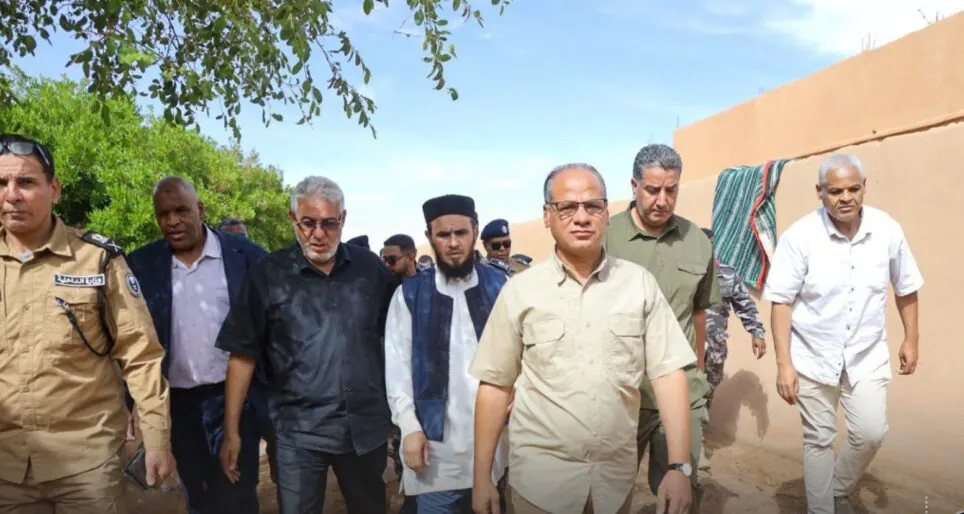
A high-level ministerial delegation, led by Libyan Deputy Prime Minister Ahmed Houma, conducted a field visit to several areas and municipalities in southern Libya on Tuesday. The visit aimed to assess local conditions, address urgent needs, and identify obstacles facing public services. The delegation's tour is part of the government's efforts to monitor the situation in southern Libya, particularly in communities affected by recent weather events.
The delegation included several high-ranking officials, such as Minister of Awqaf and Islamic Affairs Atif Abdulwahid Al-Abidi, Minister of Local Government Sami Al-Dhawi, and Major General Jamal Al-Amami, head of the Urban Organization Committee. They visited several locations and service facilities to directly evaluate the level of public services, prioritize needs, and determine the most urgent issues. Their assessments will guide future executive measures according to the priorities identified in these field visits.
The tour began in Toyuwa, part of Qaraqrah municipality, which recently suffered damage from rain and flooding. Delegation members surveyed the area to assess the extent of the damage and identify the necessary interventions to support residents and restore local facilities. This visit follows Cabinet Decision No. 237 of 2026, which established a crisis committee to address challenges in the region.
The delegation then traveled to the Ibreik area to review conditions and further investigate key requirements as part of the crisis committee’s mission. They collected data on critical needs that require immediate attention, based on their field assessments. This information will help ensure that priorities are set accurately across affected areas.
A key stop on the tour was the Al-Ghuraika Health Center, where officials looked into the facility’s conditions and the adequacy of provided services. They discussed the materials and resources needed to ensure smooth operations and prioritized these needs for further committee action. The committee’s work includes tracking service-related problems faced by municipalities, inventorying urgent needs, and coordinating with other agencies to implement necessary measures.
The crisis committee is gathering information about damage and requirements on the ground, consulting with local residents, and preparing to relay findings to relevant authorities for appropriate action. The committee plans to continue its work in other southern municipalities, conducting further assessments and compiling comprehensive data about damages and requirements.
The visit is part of broader government efforts to regularly review the needs of southern municipalities, particularly those related to public and health services. The committee also aims to streamline field assessment results and improve coordination between committee members and executive authorities, ensuring that essential services continue without interruption.
Key points
- The Libyan government has established a crisis committee to address challenges in southern Libya.
- The ministerial delegation assessed conditions and needs in several municipalities.
- The committee's findings will guide future executive measures to address urgent needs.