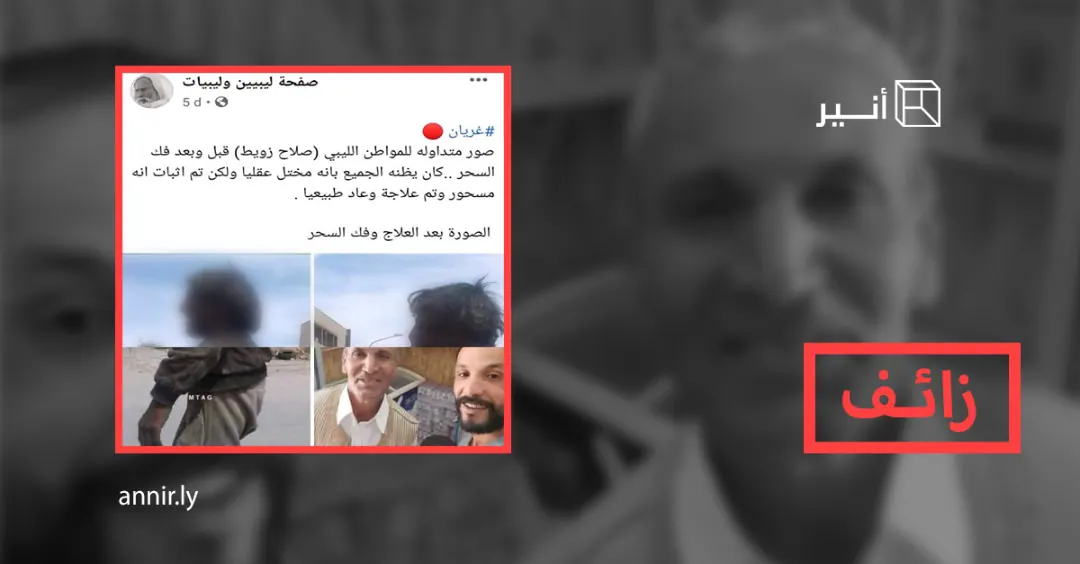
Recently, Libyan social media platforms circulated a story about a man from Gharyan, Salah Zweit, who allegedly suffered from witchcraft for an extended period. According to the claims, Salah was cured after the discovery of the spell in a cemetery. However, an investigation by Annir revealed that the reality of the situation was far different. Salah had been struggling with a mental health issue for 17 years, not witchcraft.
Upon further investigation, Annir contacted a reliable source close to Salah and learned that the man's condition was being monitored by a psychologist for the past 10 months. The source stated that Salah's health had shown significant improvement, but he was still undergoing treatment and care. This clarification aimed to put an end to the misinformation that had spread rapidly across social media platforms.
The incident highlights the dangers of misinformation and the importance of verifying information before sharing it online. In this case, the false narrative about witchcraft could have had serious consequences, including perpetuating stigma and misconceptions about mental health. Annir's efforts to set the record straight demonstrate the importance of fact-based reporting in maintaining public trust.
Salah's story serves as a reminder that mental health issues are common and require professional attention. His 17-year struggle with his condition is a testament to the need for accessible and reliable mental health services. By sharing the correct information, Annir aims to promote awareness and understanding of mental health issues in Libya.
The incident also raises questions about the role of social media in shaping public discourse. The rapid spread of misinformation about Salah's condition underscores the need for social media platforms to take responsibility for the content they host. By doing so, they can help prevent the dissemination of false information and promote a more informed public.
Annir's investigation and clarification of Salah's story demonstrate the importance of responsible reporting and the need for a fact-based approach to journalism. By verifying information through reliable sources, journalists can help prevent the spread of misinformation and promote a more informed public.
In conclusion, the story of Salah Zweit serves as a reminder of the importance of verifying information and promoting accurate reporting. By doing so, we can work towards creating a more informed and compassionate society that supports individuals struggling with mental health issues.
Key points
- A Libyan man's 17-year mental health battle was mistakenly attributed to witchcraft on social media.
- The man's condition was being monitored by a psychologist for the past 10 months, and his health had shown significant improvement.
- The incident highlights the dangers of misinformation and the importance of verifying information before sharing it online.