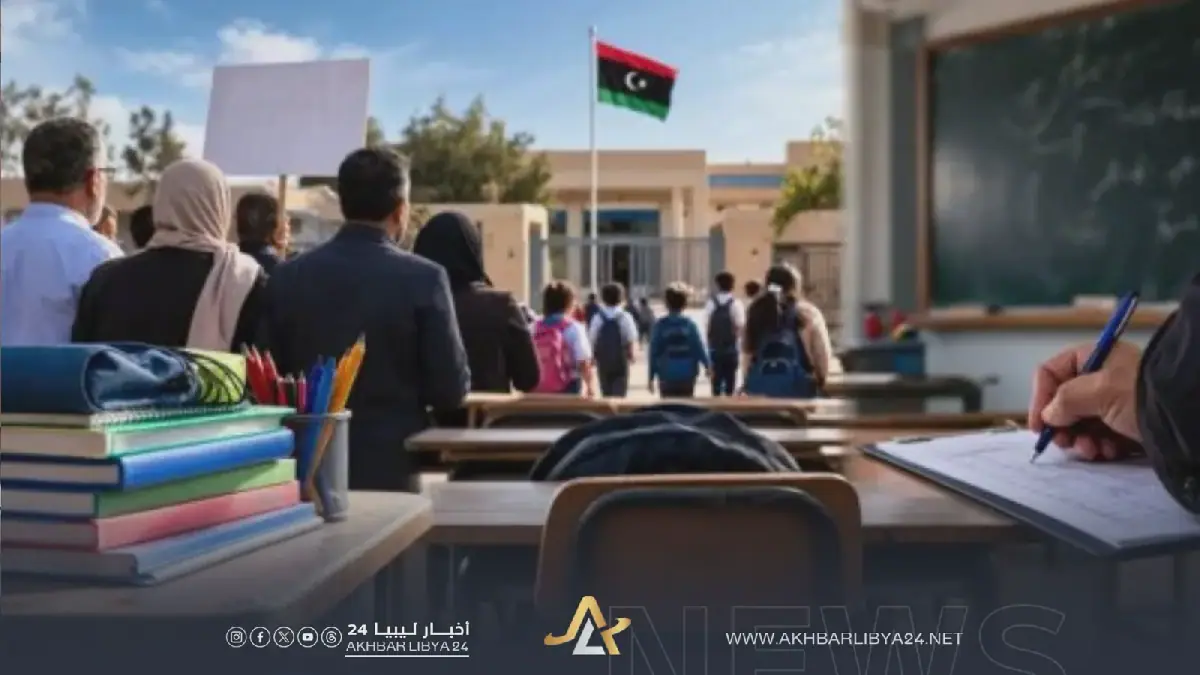
The Libyan education sector is in turmoil as teachers continue their protest over unpaid dues and unfulfilled promises. The General Teachers' Syndicate in Libya has called for the implementation of financial and legal commitments, holding the House of Representatives responsible for the ongoing educational crisis. The protests have entered a critical phase, with over a million students and their families bearing the brunt of the uncertainty.
The crisis is not merely a professional dispute over salaries or pending dues but has become a test of the government's ability to respect its legal obligations and manage vital sectors. Teachers have been waiting for the settlement of financial differences dating back to five years, while promises to disburse these funds have been repeatedly delayed. The issue of contract teachers who started working in 2014 but only began receiving salaries in 2021 remains unresolved, with arrears still pending for nearly eight years.
The General Teachers' Syndicate has shifted its focus from addressing the government and ministry to directly engaging with the House of Representatives. The syndicate has questioned why the council can swiftly make decisions on sovereign positions but has been slow to address the teacher crisis. This comparison highlights the need for the government to prioritize the education sector and address the concerns of teachers, who are demanding not only financial settlements but also a commitment to improving working conditions and the overall education environment.
The teachers' demands include the implementation of Law No. 4 of 2018, which was only partially applied when it came into effect in 2021. The law's limited implementation has left many teachers without the benefits they are entitled to. The syndicate has proposed a temporary measure to alleviate the crisis: an allowance to be added to Law No. 4 of 2018, pending a comprehensive solution. This proposal aims to provide immediate relief to teachers while negotiations for a more permanent resolution continue.
The Ministry of Education has faced criticism for its handling of the situation, particularly its visits to schools during the protests. Teachers view these visits as attempts to create the impression that schools are functioning normally despite the ongoing protests. The ministry's approach has been seen as insensitive to the teachers' concerns and has contributed to the erosion of trust between the ministry and the teaching community.
The Libyan government has been urged to take a more proactive and responsible approach to resolving the crisis. The international community has expressed concern over the impact of the protests on the education sector and the future of Libya's children. As the situation continues to unfold, it remains to be seen whether a resolution can be reached that addresses the teachers' demands and ensures the stability of the education sector.
Ultimately, the Libyan government must prioritize the education sector and work towards a comprehensive solution that addresses the teachers' demands and ensures the stability of the sector. The future of over a million students and the country's development depend on it. The government must demonstrate its commitment to improving the education sector and providing a high-quality education to Libyan children.
Key points
- The Libyan education sector faces a deepening crisis as teachers continue their protest over unpaid dues and unfulfilled promises.
- The crisis has affected over a million students, with many facing uncertainty about their education.
- The government has been urged to take a more proactive and responsible approach to resolving the crisis and ensuring the stability of the education sector.