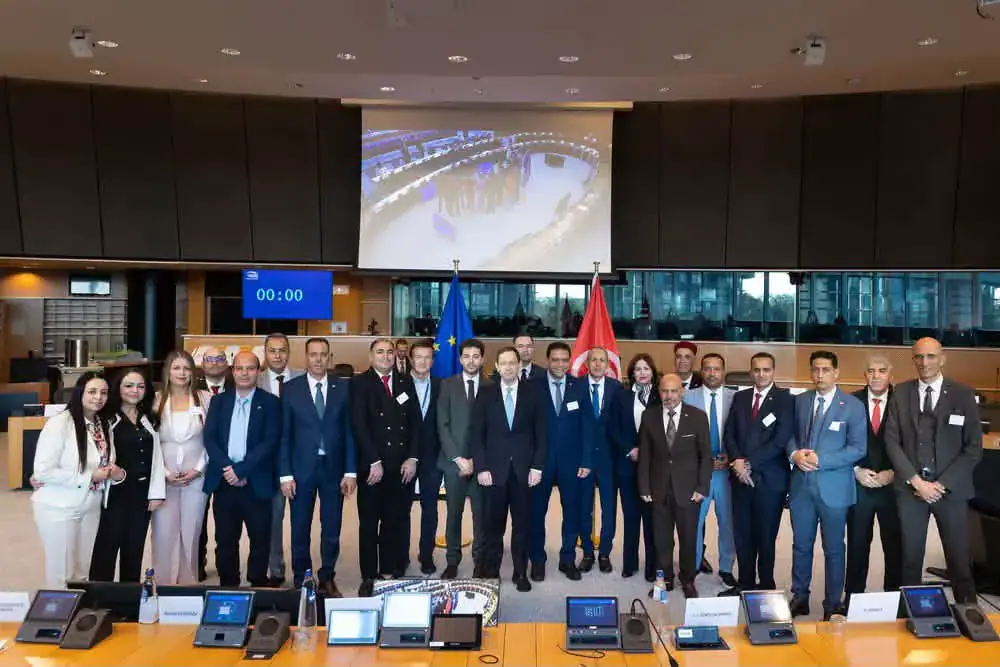
The Tunisia-EU Joint Parliamentary Committee held its fourth session on November 5, 2026, at the European Parliament in Brussels. Co-chaired by Tunisia's Riyad Jaidane and the EU's Ruggero Razza, the session marked a crucial milestone in reinstating parliamentary dialogue and strengthening ties between the two sides after an eight-year hiatus. The committee's agenda encompassed various areas of mutual interest, including regional and international developments, bilateral relations, migration, security, and economic and financial cooperation.
In their opening statements, Jaidane and Razza emphasized the importance of this parliamentary mechanism in supporting dialogue and enhancing Tunisia-EU relations. Razza highlighted Tunisia's status as a key partner for the EU, stressing that their partnership is built on cooperation, mutual respect, and shared responsibility in addressing regional and global challenges. Jaidane expressed his appreciation for the resumption of the committee's activities, underscoring the shared will to reactivate this parliamentary mechanism and promote cooperation between Tunisia and the EU.
Jaidane also emphasized Tunisia's commitment to upholding its independence, diversifying its international relations, and defending its national interests while appreciating the EU's support. He advocated for a renewed partnership based on a balanced approach that achieves mutual benefits. Regarding migration, Jaidane stressed that addressing irregular migration requires a comprehensive approach that tackles its root causes in countries of origin, incorporating developmental, humanitarian, and security dimensions.
The committee's discussions also focused on the need to update the 1995 Partnership Agreement to reflect changes in the EU and regional and global developments. Jaidane called for a Tunisia-EU strategy in education, scientific research, and exchange of expertise, as well as cooperation in artificial intelligence. He also emphasized the importance of recovering stolen assets and addressing global challenges, including the Palestinian issue, in accordance with international law and the UN Charter.
The session featured a lively debate among committee members on various agenda items, with a consensus on the need to upgrade the Tunisia-EU partnership and review its contents based on mutual interests. Members stressed the importance of addressing the root causes of migration, balancing security concerns with human dignity, and supporting development based on solidarity. The Tunisian side reiterated its rejection of using Tunisia as a transit or settlement country for irregular migrants.
The committee concluded its session by issuing a joint statement outlining key outcomes and agreements, including the importance of revitalizing the strategic partnership based on equality and mutual interest, supporting sustainable development, and addressing migration, energy transition, and digitalization. The statement also reflected the parties' positions on various regional and international issues of mutual concern, highlighting the need for continued parliamentary dialogue and consultation on shared challenges.
Key points
- The Tunisia-EU Joint Parliamentary Committee's fourth session marked a significant step in reinstating dialogue and cooperation between Tunisia and the EU.