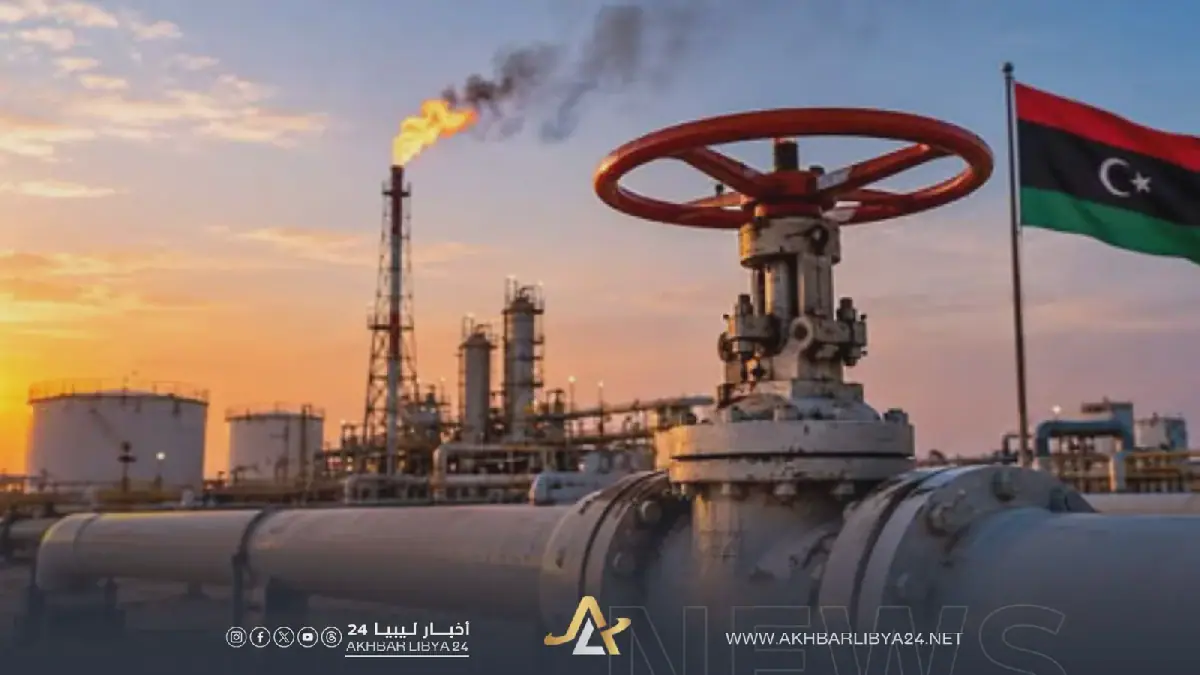
Libya's Sharara oil field is among the largest oil fields in OPEC countries, with estimated reserves of 3 billion barrels and daily production ranging from 300,000 to 325,000 barrels. The field, discovered in 1980, plays a crucial role in Libya's oil sector, which is the country's primary source of revenue. According to data published by the Energy Platform, the Sharara field is one of the key oil fields in Libya, contributing significantly to the country's economy.
The Energy Platform's data highlights the significance of the Sharara field, along with other major oil fields in OPEC countries. These include Algeria's Hassi Messaoud field, discovered in 1956, with estimated reserves of 3.9 billion barrels, and Iraq's Rumaila field, discovered in 1953, with remaining reserves of 9.3 billion barrels. Other notable fields include Kuwait's Burgan field, discovered in 1937, with estimated reserves of 11.2 billion barrels, and Saudi Arabia's Ghawar field, discovered in 1948, with remaining reserves of 49.9 billion barrels.
The data also reveals significant variations in production levels among the listed fields. The Sharara field's daily production ranges from 300,000 to 325,000 barrels, while Iraq's Rumaila field produces around 1.47 million barrels per day, and Kuwait's Burgan field produces 1.7 million barrels per day. Iran's Ahvaz field produces 750,000 barrels per day, and Venezuela's Bolivar field produces 2.6 million barrels per day, with the Ghawar field leading in daily production at 3.8 million barrels.
The oil sector plays a vital role in Libya's economy, with the government relying heavily on oil revenues to fund public spending. As such, oil fields like Sharara are crucial to the country's financial stability. Maintaining continuous production and developing infrastructure are essential to maximizing the country's oil reserves and ensuring a stable economy.
The Sharara field's significance extends beyond its reserves and production levels, as it is also a key contributor to Libya's oil exports. The country's oil exports are a critical component of its economy, and the Sharara field's output has a direct impact on Libya's ability to meet its export commitments. As such, the field's performance has far-reaching implications for the country's economic stability.
Libya's oil sector faces challenges, including fluctuations in global oil prices and infrastructure constraints. However, the country's oil fields, including Sharara, continue to play a vital role in driving economic growth. Efforts to maintain and develop the country's oil infrastructure are essential to ensuring the long-term sustainability of Libya's oil sector.
In conclusion, the Sharara oil field is a significant asset for Libya, contributing substantially to the country's oil production and economy. With its estimated reserves of 3 billion barrels and daily production of 300,000 to 325,000 barrels, the field is an essential component of Libya's oil sector, and its performance has a direct impact on the country's economic stability.
Key points
- The Sharara oil field has estimated reserves of 3 billion barrels and daily production ranging from 300,000 to 325,000 barrels.
- The field is one of the top 8 oil fields in OPEC countries, alongside other major fields in Algeria, Iraq, Kuwait, and Saudi Arabia.
- The oil sector plays a vital role in Libya's economy, with the government relying heavily on oil revenues to fund public spending.