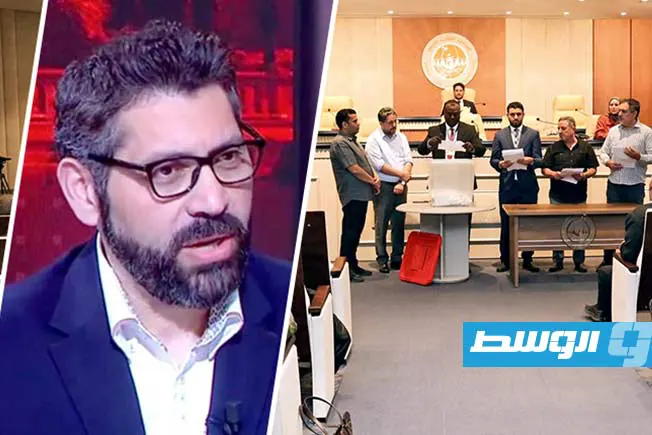
Libya's presidential advisor, Ziyd Dghim, has expressed concerns over the recent parliamentary session held in Benghazi, which resulted in the election of a new House of Representatives leadership. Dghim stated that the session, which took place on October 6, 2026, was not in line with the country's laws and regulations. He emphasized that, as a former member of the parliamentary legislative committee, he understands the difference between a formal session and an informal meeting.
Dghim's comments come after the House of Representatives elected a new leadership, with Saleh Abdelnabi being chosen as the new speaker. The advisor stressed that the election of Abdelnabi, a member of the parliament, is a positive development, as it promotes democratic work within the House and puts pressure on the current speaker, Aguila Saleh. Dghim also praised Abdelnabi's qualifications, describing him as an educated and modern individual.
However, Dghim questioned the legitimacy of the session, citing Article 17 of the House's internal regulations, which outlines the procedures for convening formal sessions. He argued that the recent session did not meet these requirements, and therefore, the administrative judiciary will likely invalidate the session's outcomes. Dghim predicted that the judiciary will quickly rule in favor of halting and then annulling the session's decisions.
Dghim also criticized the United Nations Mission in Libya (UNSMIL) for its handling of the situation. He expressed disappointment with the mission's recent statements, accusing it of being selective and biased. Dghim argued that the mission has deviated from its mandate and has become an advocate for specific interests rather than a neutral supporter of the Libyan people.
The advisor also weighed in on the stance of Libya's Presidential Council, led by Mohamed al-Menfi. Dghim described al-Menfi's positions as those of a statesman, guided by the country's constitution and laws. He emphasized that al-Menfi is committed to upholding Libya's sovereignty and the principles of the Libyan people.
Dghim's statements reflect the ongoing divisions within Libya's political landscape. The country has been struggling to establish a stable and functioning government since the 2011 uprising. The recent parliamentary session has added to the tensions, with various factions vying for power and influence.
The international community, including the UN, has been closely monitoring the situation in Libya. The country's fragile stability and the ongoing efforts to establish a lasting peace have been a major focus of international attention. Dghim's comments are likely to add to the ongoing debate about Libya's future and the role of its institutions.
Key points
- - Libya's presidential advisor, Ziyd Dghim, criticizes the recent parliamentary session in Benghazi. - Dghim questions the legitimacy of the session, citing irregularities with the House's internal regulations. - The advisor also criticizes the UN Mission in Libya for its handling of the situation.