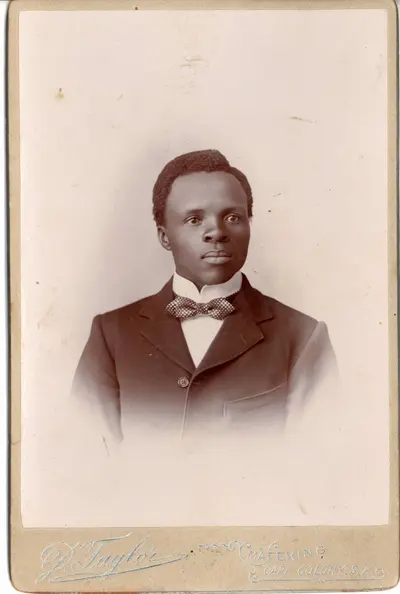
Today, South Africa commemorates the 150th birthday of Sol Plaatje, a black icon whose legacy continues to resonate. Plaatje was a multifaceted individual who made significant contributions to the country's history. Born in 1876, he would have celebrated this milestone birthday today. His works remain pertinent, addressing issues that are still relevant today, such as citizenship, narrative control, accountability, and community building in the face of institutional failure.
Plaatje's impressive body of work was achieved despite having only a standard three education. One of his notable works is the diary he kept during the Mafeking siege between 1899 and 1900. In this diary, he documented the experiences of his people, who were overlooked by colonial officials during what they termed a "whiteman's war". This work not only showcased his writing skills but also served as a historical record of the suffering of Africans during that period.
As a journalist, Plaatje wrote and edited several newspapers between 1901 and 1915, exposing the betrayal of the British imperial crown's promise to protect Africans from Boer brutality. His newspaper, Tsala ea Batho, served as a conduit of information between the structures of the African National Congress (ANC) and its leadership, solidifying his role as a political organiser and a founding general-secretary of the ANC in 1912.
Plaatje's most notable literary work is the book "Native Life in South Africa", which emerged from his journalism in 1916. The book was a result of a failed deputation to appeal to the British crown to repeal the 1913 Land Act, which dispossessed Africans of their land. This work, along with his other publications, such as "Sechuana Proverbs" and a Setswana phonetic reader, demonstrate his intellectual prowess and commitment to documenting African experiences.
In 1919, Plaatje returned to England as part of the Congress delegation and toured Canada and the US, speaking about the plight of Africans. He used a Canadian passport for the trip, as the South African authorities had denied him one. During his time in England in 1922, Plaatje performed in the theatrical production "Cradle of the World" and recorded "Nkosi Sikelel'iAfrika" for Zonophone Records.
Plaatje continued to contribute to journalism throughout his life, publishing works in various newspapers, including the Diamond Fields Advertiser and Pretoria News. He also founded the Brotherhood movement in South Africa and translated Shakespeare into Setswana. His iconic novel, "Mhudi", was the first full-length novel in English by a black South African. Plaatje passed away in Johannesburg in 1932 at the age of 55.
Sol Plaatje remains relevant today because the questions he posed in his time are still being asked. His legacy serves as a guide for seeking solutions to modern-day challenges. Through his example and documentation, we can begin to address the issues that continue to affect South Africa and the world at large. His contributions to literature, journalism, and politics have left a lasting impact on the country's history.
Key points
- Sol Plaatje's works remain relevant today, addressing issues such as citizenship, narrative control, accountability, and community building.
- Plaatje's legacy serves as a guide for seeking solutions to modern-day challenges.
- He made significant contributions to literature, journalism, and politics, leaving a lasting impact on South Africa's history.