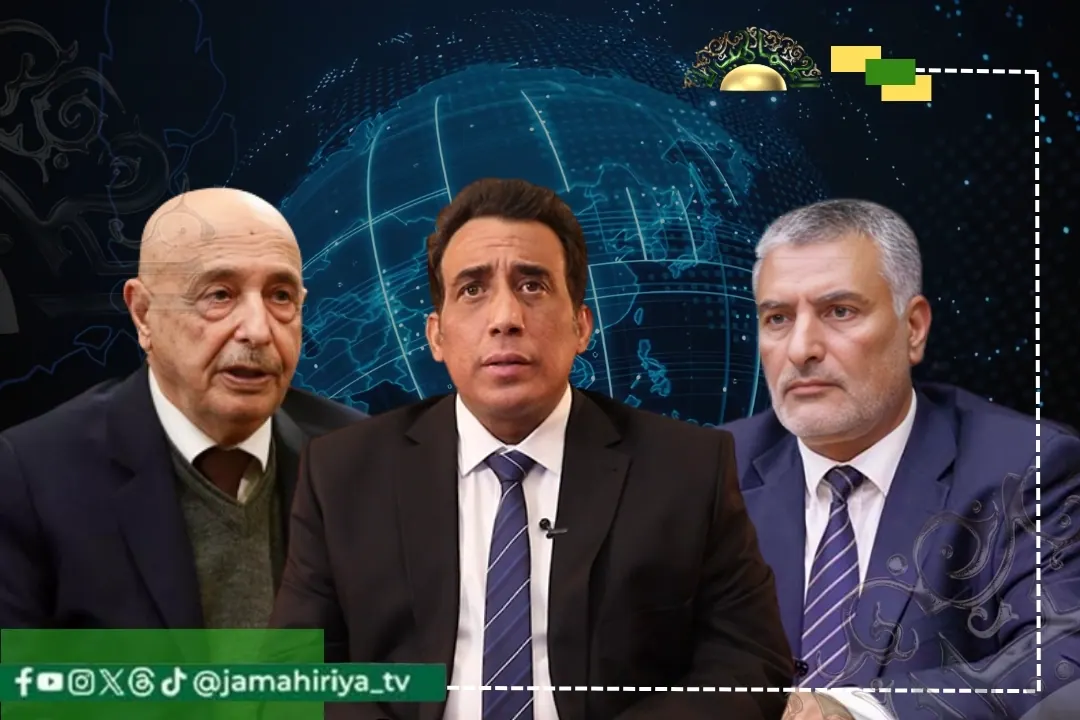
Libyan political analyst Mohamed Amtirid has stated that the ongoing disagreement between the country's political institutions reveals a consensus among some parties to hinder any path that could lead to comprehensive political agreement. This is particularly evident in the efforts of the "4+4" committee and the American initiative. Amtirid's comments were reported by the Russian news agency Sputnik.
According to Amtirid, the Presidential Council has become a target for change, while the High Council of State is aware that it may be excluded from the political scene if a new settlement is reached. The House of Representatives is attempting to rectify its position, with some members exerting pressure to accept the outcomes of the "4+4" committee.
The initiative launched by the three presidencies in Cairo in 2024 failed to end the political stalemate that persisted until 2026. This stalemate continued until the "4+4" initiative and the American initiative emerged, prompting some parties to revive their political movements. They fear being left out of the scene if a new settlement is reached.
Amtirid believes that the core of the current dispute is largely related to preserving positions, influence, and power, rather than seeking the best interests of the Libyan citizen and ending the division. The Presidential Council has been unable to utilize its granted powers to achieve tangible progress in unifying institutions.
The council lacks the actual power tools to enforce its decisions on parties operating on the ground. Amtirid pointed out that armed formations have control over part of the decision-making process, limiting the Presidential Council's ability to perform its role. He thinks that the council has lost much of its bet on using its powers to unify institutions and end the division.
Regarding the laws and procedures proposed by the "4+4" committee, Amtirid stated that the disagreement is not about the laws themselves but about the associated political interests. Some parties view these files as a means to preserve their positions and political gains.
Amtirid emphasized that understanding the current conflicts between political institutions requires considering the interests linked to the survival of parties within the scene. He noted that some parties, including the High Council of State, are seeking to maintain their presence and influence in the political landscape.
Key points
- The ongoing disagreement between Libya's political institutions is driven by a desire to protect positions and influence.
- The "4+4" committee and American initiative aim to achieve a comprehensive political agreement.
- The Presidential Council lacks the power to enforce its decisions on parties operating on the ground.