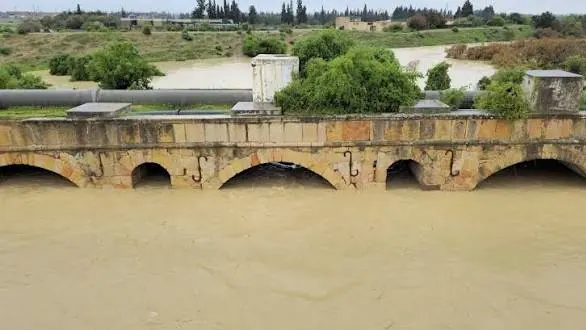
The Tunisian government has initiated multi-disciplinary efforts to mitigate pollution sources and safeguard the Majerda and Melyan valleys. As reported by the Ministry of Environment, these efforts involve collaboration with representatives from the Ministries of Environment, Interior, Agriculture, and Health. The campaigns aim to monitor and address pollution from industrial activities.
In the governorate of Manouba, monitoring operations covered 18 sites affiliated with various factories and activities. These operations resulted in the identification of 11 environmental infractions, proposals for temporary closure of three sites, and the collection of four samples from pollution sources. The infractions were attributed to non-compliance with national standards and maximum discharge limits into the receiving environment.
The monitoring team is set to extend its operations to the governorates of Jendouba and Bajah. The goal is to protect the Majerda valley basin, which spans across Jendouba, Bajah, and Manouba. The campaigns seek to ensure that industrial activities adhere to environmental regulations and mitigate the impact of pollution on the ecosystem.
Regarding the Melyan valley, the National Environment Protection Agency oversaw monitoring of 10 industrial facilities located along the valley. The agency recorded infractions, developed a corrective action plan with facility owners, and aimed to implement environmental rehabilitation and wastewater treatment projects.
Six wastewater treatment plants are under construction or rehabilitation in the Melyan valley. One of the plants, located in southern Melyan 2, has a capacity of 90,000 cubic meters per day and is 60% complete. Another plant, the integrated industrial facility in southern Melyan, is 70% complete and expected to be operational by the end of 2026.
Additional projects include the Khalidia treatment plant, which has a capacity of 2,400 cubic meters per day and is operational. The Fahs treatment plant is 85% complete and scheduled for completion by the end of 2026. Construction of the Bir M'charga treatment plant, with a capacity of 2,400 cubic meters per day, is 55% complete.
The Melyan valley, stretching 160 kilometers across Ben Arous, Zaghouan, and Silyana, originates from Jebel Berkou and empties into the Gulf of Tunis. Its water level varies depending on rainfall, reaching up to 200 cubic meters per second during floods. The projects aim to protect the environment and promote sustainable development in the region.
Key points
- The Tunisian government has launched monitoring campaigns to protect the Majerda and Melyan valleys from pollution sources.
- The campaigns involve collaboration between multiple ministries and aim to ensure industrial activities adhere to environmental regulations.
- Six wastewater treatment plants are under construction or rehabilitation in the Melyan valley to mitigate pollution and promote environmental sustainability.