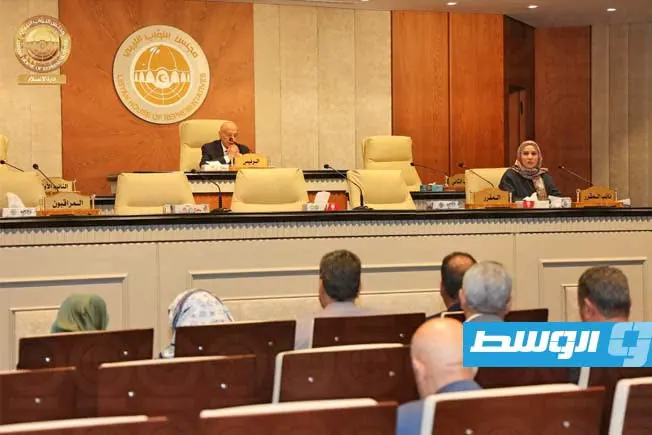
The Libyan House of Representatives has issued Law No. 4 of 2026, amending Law No. 28 of 2023 regarding the election of the country's president. The new law allows for simultaneous presidential and parliamentary elections to be held within 24 months of the formation of a unified executive authority to oversee the elections. This move is part of the legislative and regulatory procedures related to the implementation of the outcomes of the "4+4" meeting signed in Tripoli on August 30.
The amended law stipulates that the presidential election will be held in two rounds, with the top two candidates with the most valid votes in the first round advancing to the second round. However, if one candidate receives an absolute majority, or 50% + one vote, in the first round, the second round will be canceled. The law also allows individuals with dual nationality to run for president, provided they renounce their non-Libyan nationality before taking the oath of office.
The new law also permits military personnel to participate in the presidential election, both as voters and candidates, provided they resign from their military service before taking the oath of office. If a candidate fails to resign, they will be replaced by the next candidate on the list. The law also stipulates that the High National Elections Commission will announce the final results of the election after the completion of the electoral process.
The amended law maintains the same eligibility requirements for presidential candidates as Law No. 28 of 2023, including being at least 40 years old, a Libyan Muslim with both parents being Libyan Muslims, and a resident of the country. Candidates must also have a university degree or equivalent, be physically fit to perform the duties of the presidency, and have a clean record.
The "4+4" agreement, signed on August 30, aims to achieve the first two steps of the roadmap launched by the United Nations Support Mission in Libya in August 2025, which include the formation of a new council for the High National Elections Commission and the amendment of the electoral laws. The agreement was endorsed by the House of Representatives on September 14, but has not yet been approved by the High Council of State.
The deadline for approving the agreement is September 30, and if approved, it will pave the way for the holding of simultaneous presidential and parliamentary elections in Libya. The elections are seen as a crucial step towards achieving stability and ending the country's protracted conflict. The international community has welcomed the agreement, with the UN mission describing it as an important step towards promoting a peaceful and inclusive political process in Libya.
The amendment of the electoral law is a significant development in Libya's transition towards stability and democracy. The country has been plagued by conflict and political divisions since the 2011 uprising that overthrew long-time leader Muammar Gaddafi. The holding of free and fair elections is seen as a key step towards achieving lasting peace and stability in the country.
Key points
- The amended law allows for simultaneous presidential and parliamentary elections to be held within 24 months.
- The law permits individuals with dual nationality to run for president, provided they renounce their non-Libyan nationality before taking the oath of office.
- The law allows military personnel to participate in the presidential election, both as voters and candidates, provided they resign from their military service before taking the oath of office.