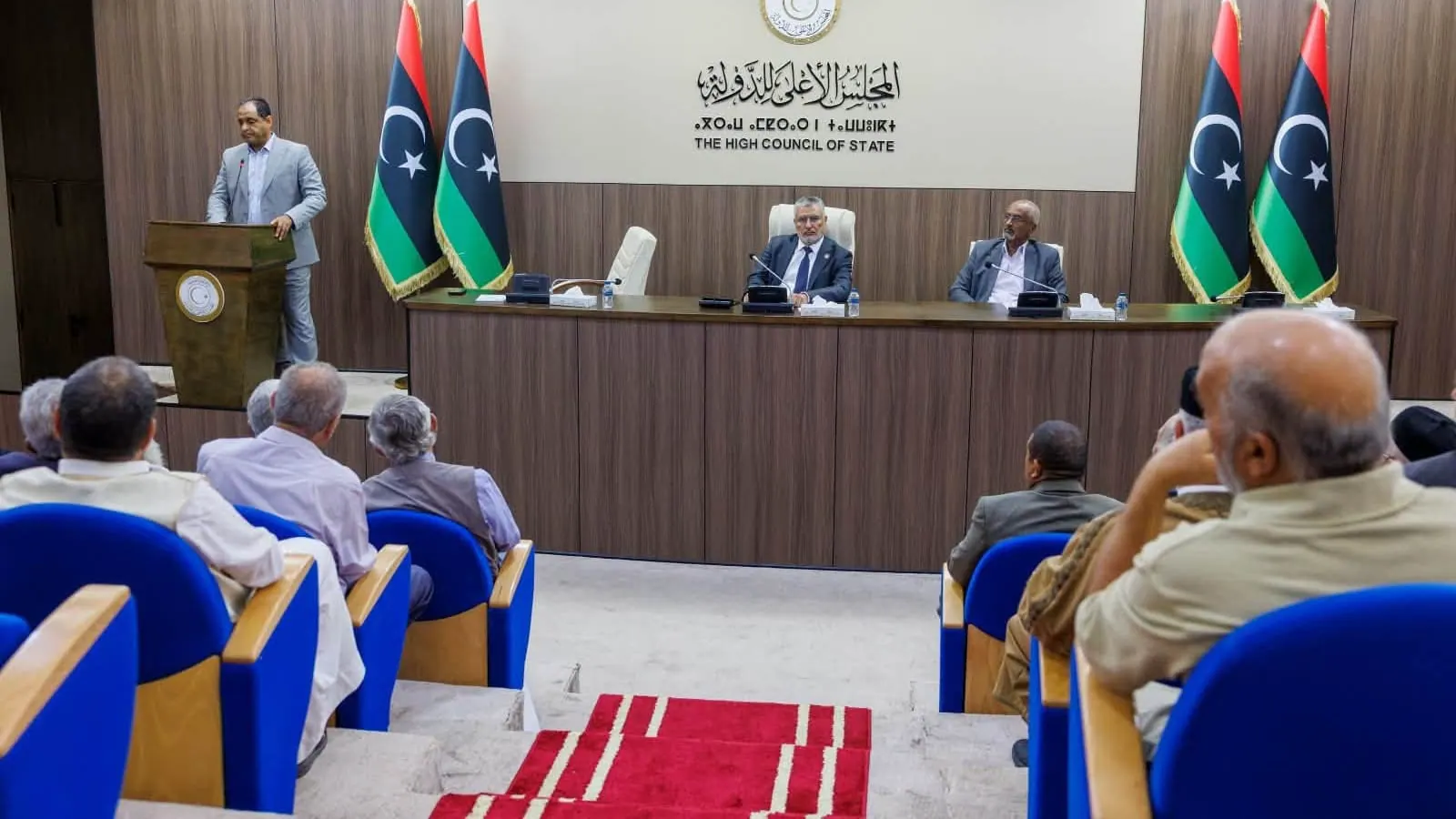
The High Council of State in Libya recently convened a meeting chaired by Mohamed Takkala, with participation from notable figures and political activists in Tripoli. According to a statement released by the council, attendees expressed their rejection of the outcomes of the mini "4+4" meeting and any parallel tracks that operate outside established institutional and consensual frameworks. This development highlights ongoing divisions within Libya's political landscape.
The meeting's outcome document emphasized the council's commitment to its legislative powers and the 13th constitutional amendment. This amendment restricts the preparation of electoral laws to a committee consisting of six members from the Council of State and six from the House of Representatives, known as the 6+6 committee. By reaffirming their stance, the council aims to maintain a structured approach to Libya's electoral process.
The document also called upon the UN mission in Libya to adhere to its facilitative mandate and respect the country's constitutional declaration. It urged the mission to refrain from engaging in or promoting any actions that could undermine existing Libyan institutions or perpetuate division. This appeal underscores the sensitivity of international involvement in Libya's internal affairs.
Furthermore, the council rejected any interference from the executive authority or the General Command of the Libyan Army in the selection of legislative body representatives. The document stressed the importance of protecting the independence of the judiciary and the High National Elections Commission. This stance reflects concerns over potential external influences on Libya's democratic processes.
The council's rejection of parallel tracks and the "4+4" meeting outcomes signals a broader resistance to unofficial or side agreements that might circumvent established institutions. By maintaining this position, the High Council of State aims to ensure that Libya's political progression remains grounded in institutional consensus and legitimacy.
Key stakeholders, including the House of Representatives and the High Council of State, have been engaged in efforts to address Libya's complex political and electoral challenges. The situation remains dynamic, with various factions vying for influence and legitimacy. International actors continue to monitor developments, emphasizing the need for a comprehensive and inclusive solution.
As Libya navigates its transitional phase, the High Council of State's recent meeting underscores the ongoing struggle for a stable and consensual political framework. The council's commitment to established processes and institutions reflects a broader aspiration for a unified and democratic Libya.
Key points
- The High Council of State rejects "4+4" meeting outcomes and parallel tracks outside established frameworks.
- The council reaffirms its commitment to legislative powers and the 13th constitutional amendment.
- The council calls for international non-interference and respect for Libyan institutions.