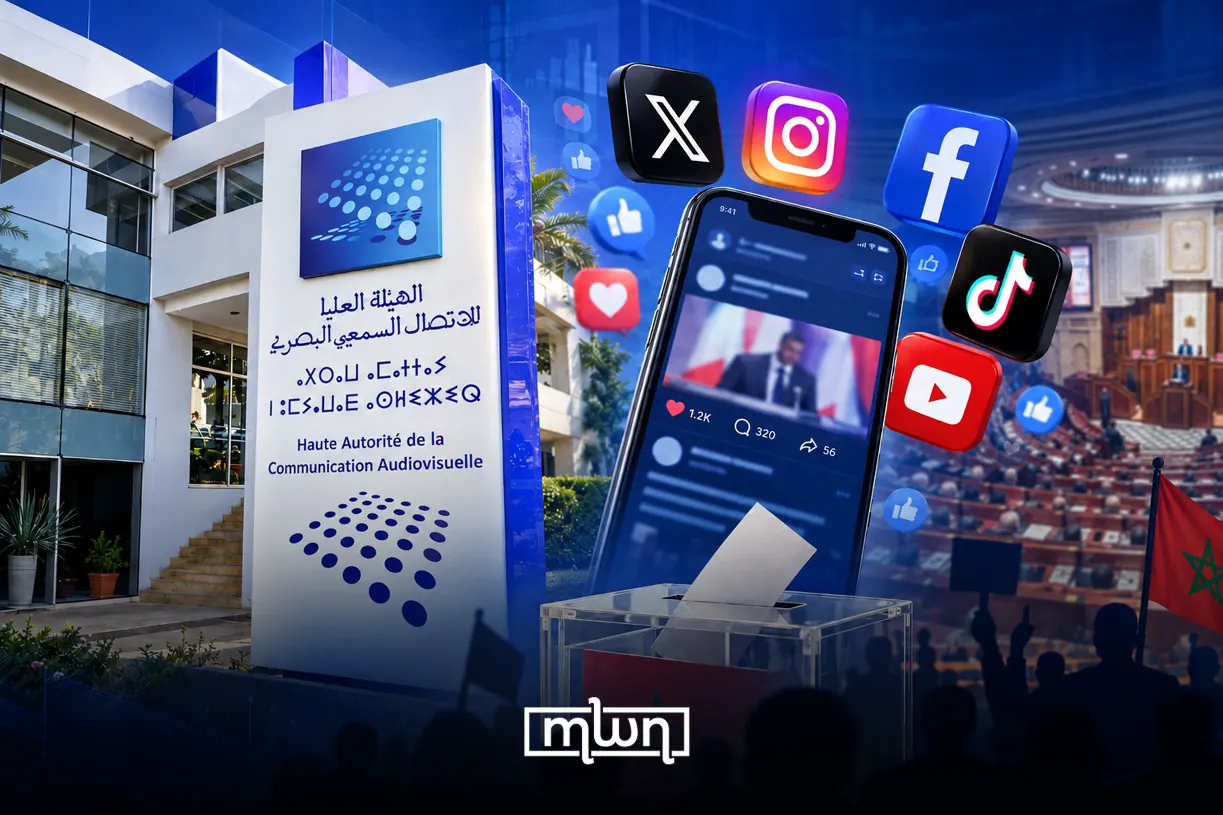
Morocco's High Authority for Audiovisual Communication (HACA) has published a study examining the use of social media by political parties and the risks of disinformation. The study, titled "Social Media and Political Communication Between Opportunities for Influence and Risks of Disinformation," analyzes the role of social media in shaping political communication in Morocco. It highlights the opportunities for influence and the risks of disinformation and algorithmic manipulation. The study reveals that nearly 99% of internet users in Morocco use social media platforms.
The study was conducted by a working group chaired by Narjis Rerhaye, who warned that disinformation and algorithmic manipulation can affect how people perceive political realities. Rerhaye expressed concerns about the lack of transparency around how major platforms distribute content and the concentration of power among large technology companies. She called for greater algorithmic transparency, digital education, and access to a wider range of information sources. The study's findings emphasize the need for responsible digital practices to promote democratic debate.
The study examined the digital presence of political parties represented in Parliament following the 2021 legislative elections. Researchers collected data between January and May 2026, analyzing 2,651 posts on Facebook, 925 TikTok videos, 507 YouTube videos, and 1,012 posts on X. The study also included an analysis of the parties' websites. The findings show that each platform plays a different role in political communication, with Facebook serving as a central space for interaction with citizens.
The study highlights the importance of TikTok for viral visibility, particularly among younger audiences, while YouTube offers parties more room to explain issues through longer content. X stands out for its speed, allowing political messages to circulate rapidly within the wider media environment. Political party websites continue to serve as official institutional sources but attract less citizen engagement. The study's results provide insights into how Moroccan parties use social media to communicate with citizens.
The study also examines citizen mobilizations in Morocco and abroad that have used social media as public spaces. It highlights the role of algorithms in determining what users see and the impact of social media on individuals. HACA emphasizes that the impact of social media will depend partly on the ability of institutions, civil society, and citizens to promote responsible digital practices and strengthen digital literacy.
Rerhaye stressed that Morocco needs to develop its own approach to regulation and moderation while balancing national principles with openness, innovation, and the protection of individual rights. The new study builds on previous work by HACA's Regulation and Digital Media group, including guides on safer internet use for young people in 2021 and combating disinformation in 2022.
The study's findings and recommendations aim to promote a more informed and responsible use of social media in Moroccan politics. The report provides a comprehensive analysis of the opportunities and risks associated with social media use in political communication. It underscores the need for a nuanced approach to regulating social media and promoting digital literacy in Morocco.
Key points
- The study analyzed the social media presence of 12 Moroccan political parties, examining 2,651 Facebook posts, 925 TikTok videos, and 507 YouTube videos.
- The study highlights the need for greater algorithmic transparency, digital education, and access to a wider range of information sources.
- The impact of social media on individuals will depend partly on the ability of institutions, civil society, and citizens to promote responsible digital practices and strengthen digital literacy.