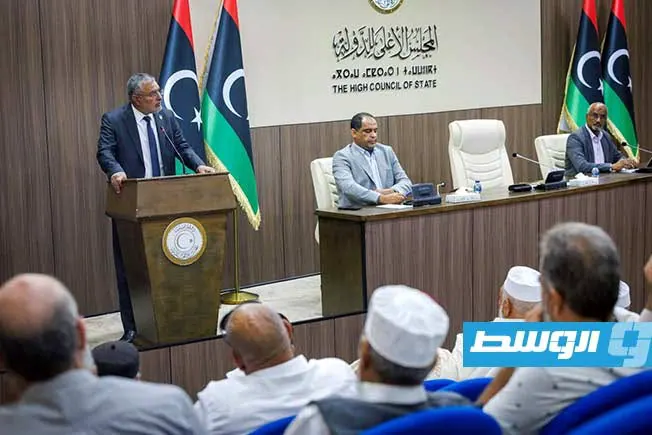
The High Council of State in Libya reaffirmed its commitment to constitutional legitimacy and rejected any parallel tracks or outcomes outside of established frameworks. The council, led by Mohamed Takkala, held a national meeting that brought together members of the council, notables, and various stakeholders from across Libya. The meeting aimed to discuss the latest developments in the country's political landscape and the path forward.
The participants in the meeting emphasized their commitment to the legislative competencies of the High Council of State and the political agreement. They also stressed the importance of adhering to the third constitutional amendment, which outlines the role of the 6+6 committee in preparing electoral laws. The committee is tasked with paving the way for elections and a constitutional referendum.
The council's statement emphasized the importance of protecting the country's institutions and preventing any interference from the executive or military authorities. The participants also rejected any attempts to reorganize the National High Commission for Elections outside of the agreed-upon frameworks between the council and the House of Representatives.
The meeting's outcome was the issuance of a document that outlined the council's stance on the current political developments. The document, known as the "Council's Meeting Document," emphasized the importance of upholding the country's constitutional and legal frameworks. It also called on the international community to respect Libya's sovereignty and institutions.
The council's rejection of the 4+4 committee's outcomes has significant implications for the country's political process. The 4+4 committee, which comprises members from the House of Representatives and the High Council of State, had proposed amendments to the electoral laws and the reorganization of the National High Commission for Elections.
The Libyan political landscape has been marked by divisions and disagreements over the past few years. The country's transition to democracy has been slow, and various factions have emerged, each with their own vision for the country's future. The High Council of State's reaffirmation of its commitment to constitutional legitimacy is seen as a significant step towards stabilizing the country's politics.
The international community has been closely following the developments in Libya. The United Nations Support Mission in Libya has been working to facilitate a peaceful resolution to the country's crisis. The mission has emphasized the importance of an inclusive and Libyan-led process to address the country's challenges.
Key points
- The High Council of State reaffirms its commitment to constitutional legitimacy and rejects parallel tracks outside of established frameworks.
- The council's stance has significant implications for the country's transition to democracy.
- The international community is closely following the developments in Libya and has emphasized the importance of an inclusive and Libyan-led process.