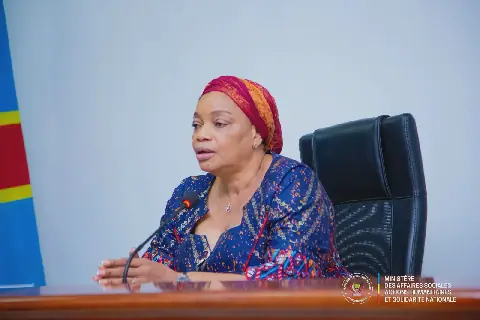
Guinea's National Assembly has announced a significant shift in its oversight approach, moving beyond traditional administrative checks to focus on the performance and impact of public policies. This change was highlighted during the 10th legislature's parliamentary opening, where National Assembly President Dr. Dansa Kourouma outlined the new framework for relations between the legislative and executive branches. The institution aims to adopt a culture of evaluation focused on the actual results and impact of public policies.
Dr. Dansa Kourouma emphasized that parliamentary oversight is neither systematic opposition nor complicit acquiescence, stating, "Contrôler, c'est aider l’État à mieux faire" ("To control is to help the state do better"). This new approach will involve measuring the effectiveness of public funds and evaluating the concrete results of policies for the population. The focus will shift from merely verifying the legality of acts and budget regularity to assessing the outcomes of public policies in terms of public services and development.
The new approach will rely on precise evaluation criteria, including the relevance of actions taken, their overall coherence, financial effectiveness, and sustainability. Each year, the Assembly will select a limited sample of priority public policies for in-depth audits. This process will involve various tools, such as oral and written questions to ministerial departments, public hearings of government members and public establishment officials, parliamentary inquiry commissions, and information missions on the ground.
The National Assembly intends to make full and regular use of its constitutional instruments to ensure rigorous oversight. This includes examining the finance law, a critical moment for verifying the nation's budgetary choices. The Assembly will also collaborate with the Court of Accounts, research institutions, and civil society to equip parliamentarians with independent analysis data, thereby enhancing accountability.
The shift in approach is expected to lead to more effective public policy implementation and better use of public funds. By focusing on performance and impact, the National Assembly aims to contribute to improved governance and more tangible benefits for the Guinean population. This new doctrine reflects a more proactive and results-oriented approach to parliamentary oversight.
Key to this new approach is the involvement of various stakeholders, including civil society and independent institutions. By working together, the National Assembly seeks to build a robust framework for evaluating public policies and ensuring accountability. This collaborative approach is seen as essential for achieving the desired outcomes and making a meaningful difference in the lives of Guineans.
The implementation of this new approach will be closely watched, both domestically and internationally. As Guinea continues to navigate its development challenges, the effectiveness of its parliamentary oversight mechanisms will play a crucial role in shaping the country's future. With its renewed focus on performance-based oversight, the National Assembly is poised to make a positive impact on governance and public policy in Guinea.
Key points
- The National Assembly will select a limited sample of priority public policies for in-depth audits each year.
- The new approach will focus on evaluating the concrete results of policies for the population.
- The Assembly will collaborate with the Court of Accounts, research institutions, and civil society to enhance accountability.