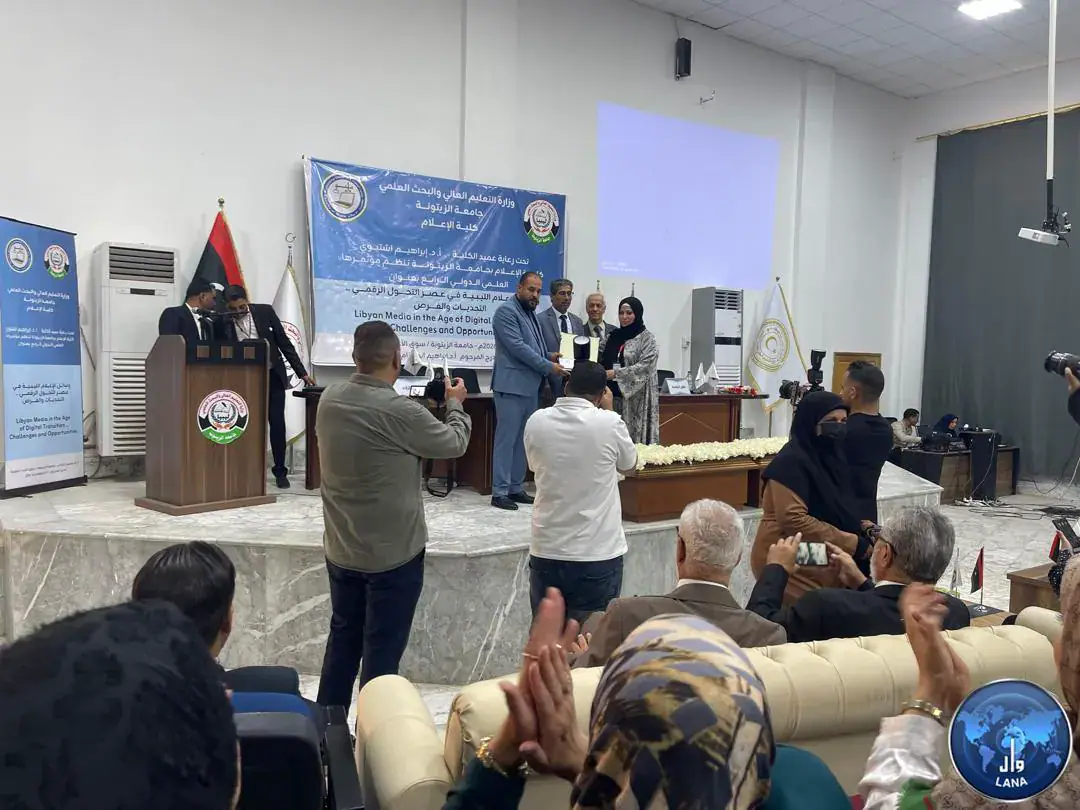
The College of Media at Al-Zitouna University in Libya recently concluded its 4th international scientific conference, which took place over two days. The conference, themed "Libyan Media in the Era of Digital Transformation: Challenges and Opportunities," brought together various academic and scientific sessions. These sessions explored the future of media work in light of digital revolution and artificial intelligence technologies. A total of 24 research papers were presented and discussed during the conference.
The conference sessions focused on several key areas, including the current state of local media, ethical and professional standards for media practices in the open digital space, and the impact of algorithms and artificial intelligence on news content creation. Participants engaged in intensive discussions and debates, aiming to address the challenges and opportunities arising from digital transformation in the media sector.
At the conclusion of the conference, participants reached a set of important recommendations. These included the development of a clear cultural and media strategy that prioritizes Libyan societal unity and promotes a discourse that rejects hate speech and misinformation. Additionally, there was a call for the development of Libyan media and communication means to align with digital transformation and artificial intelligence, serving societal development and meeting the demands of the modern era.
Further recommendations from the conference included the need to update legislation and laws regulating media practices to keep pace with technological advancements and ensure media professionals' rights and the free flow of information. Participants also suggested drawing on Arab and international experiences in digital transition and artificial intelligence to establish relevant laws and regulations. This would facilitate a deeper understanding of the requirements, challenges, and manifestations of digital transformation in the media sector.
The conference also highlighted the importance of fostering cooperation between media colleges and departments, as well as the requirements of social communication, to serve educational and training processes. Moreover, there was a call to link the outcomes of media research with the needs of various state institutions and to encourage decision-makers in public and private institutions to benefit from the outputs of scientific conferences.
Some recommendations emphasized the need for Libya to benefit from international experiences in digital transformation and artificial intelligence. This includes understanding the legal and regulatory frameworks that can help address the challenges and requirements of digital media. Furthermore, there was a suggestion to promote collaboration between media colleges, departments, and social communication requirements to enhance educational and training processes.
Key points from the conference include the need for a clear media strategy that promotes societal unity, the development of Libyan media to align with digital transformation, and the importance of updating laws and regulations to keep pace with technological advancements. These recommendations aim to improve the media sector in Libya and ensure it can effectively navigate the challenges and opportunities of the digital age.
Key points
- Development of a clear cultural and media strategy prioritizing Libyan societal unity.
- Updating legislation and laws regulating media practices to keep pace with technological advancements.
- Fostering cooperation between media colleges and departments to serve educational and training processes.