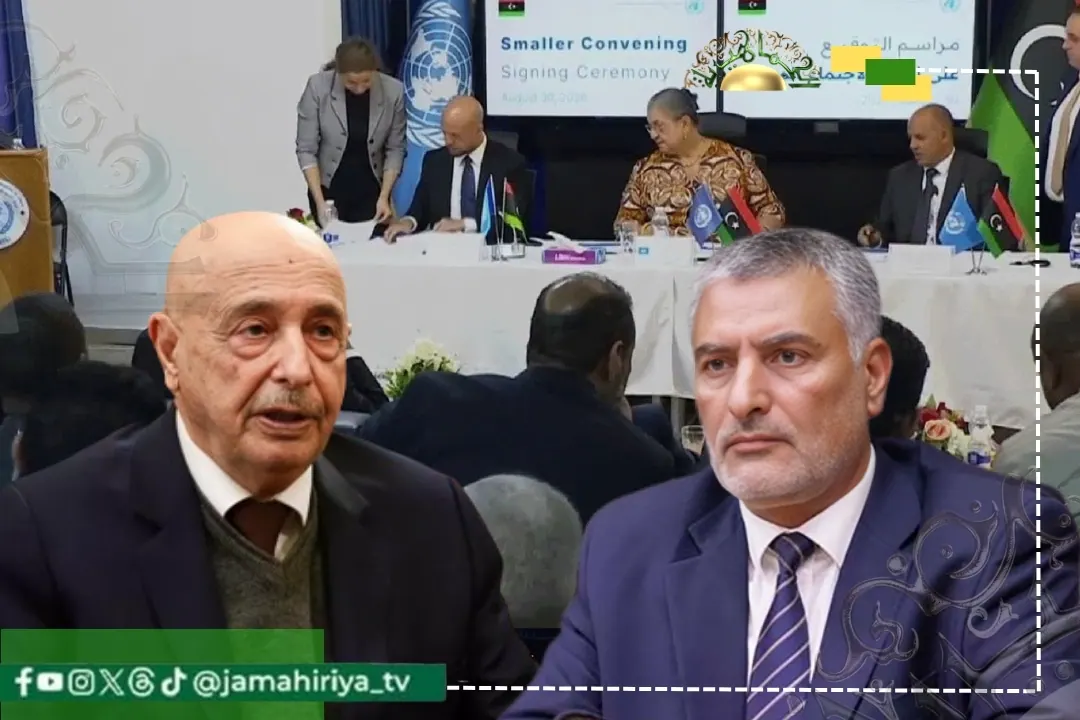
The recent developments in Libya have led to a renewed conflict between the House of Representatives and the State Council. According to a report by Emirati news site Eram News, the outcomes of the 4+4 committee have sparked a new wave of disagreements between the two councils. The committee's results had initially opened up new avenues for reconciliation under international auspices, but internal differences have once again brought the country's efforts to resolve the crisis to a standstill.
The main point of contention revolves around the legitimacy and jurisdiction to modify electoral laws. The State Council insists that any substantial changes must go through a collaborative process between the two councils. Conversely, the House of Representatives relies on its authority and the 4+4 committee's outcomes, asserting its role in determining the rules governing the electoral process. This has led to a clear clash over the legitimacy of the ongoing political processes and their outcomes.
The disagreements extend beyond the structure of the legislative framework and delve into the sensitive issue of presidential election candidacy requirements. The recent agreements allow military personnel and dual citizens to run, provided they renounce their foreign nationality upon winning and before taking the oath. However, the State Council views this as a circumvention that poses constitutional and political risks.
Another contentious issue is the synchronization of presidential and parliamentary elections. Although there is a visible consensus to hold them within 24 months, as per the 4+4 agreement, a deep-seated dispute persists over the nature of the hybrid legislative and foundational environment in which they will take place. The issue of reconstituting the election commission has also emerged as a point of contention.
The report also notes that the House of Representatives has approved a law that reinstates the 2014 law, which stipulates that parliamentary elections will be conducted under an individual system. This move has been seen as a unilateral step that impacts the structure and powers of the future legislative institution during the transitional phase.
On the executive and judicial fronts, challenges arise in overseeing the transitional phase and conducting elections. The prevalent view among various political factions and roadmaps is that free and acceptable elections cannot be held under the current circumstances of divided government and severe security fragmentation. This necessitates the unification of executive authority and security institutions beforehand.
Internally, the House of Representatives views the 4+4 committee's outcomes as a political gain and a basis for reorganizing the internal structure. In contrast, the State Council treats these understandings as political consultations that are not binding unless they follow established legislative procedures.
Key points
- The 4+4 committee's outcomes have sparked conflict between Libya's House of Representatives and State Council.
- Disagreements center around electoral laws, candidacy requirements, and the synchronization of elections.
- The internal divisions complicate efforts to unify executive authority and security institutions necessary for conducting free and acceptable elections.