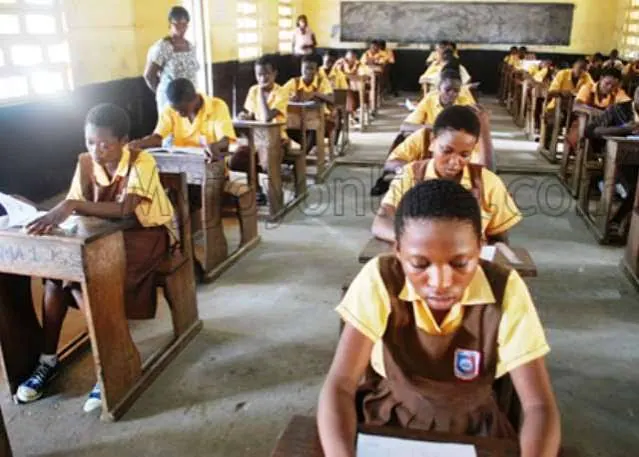
The education system in Ghana has become adept at sending children to school, but the question remains whether it is adequately preparing them for life. Every year, families celebrate the results of various exams, including BECE and WASSCE, and university graduates are announced with pride. However, despite these efforts, employers continue to complain that some graduates lack practical skills.
The problem lies not with the capability of Ghanaian children to learn, but with the reduction of education to mere schooling and passing examinations. A child's education should not cease when the school bell rings. The classroom provides knowledge, but life offers the opportunity to understand and apply it. Students can memorize textbook definitions but struggle with real-life problems requiring initiative and independent thinking.
Education in Ghana needs to expand beyond the classroom to include learning from the community, home, market, farm, and workplace. For instance, students can learn about biology by visiting a cocoa farm or greenhouse, rather than just reading about it in textbooks. Similarly, business management can be taught by having students work with local entrepreneurs to learn about pricing, profit margins, and basic business records.
Various sectors in Ghana, such as markets, farms, and workshops, are already providing practical lessons in areas like negotiation, customer relations, and entrepreneurship. However, these worlds remain largely separated from schools. By integrating these into the education system, students can gain hands-on experience and apply theoretical knowledge in practical ways.
The concept of who can educate children needs to be redefined. It's not just teachers who can educate; farmers, carpenters, nurses, engineers, and market women can also play a role. Communities possess a wealth of knowledge that can be tapped into, but much of it currently remains untapped in the education of children.
To bridge this gap, Ghana needs to deliberately connect schools with surrounding communities. Local businesses, artisans, farmers, health professionals, and retired professionals should become partners in education. Students should have opportunities to work on practical projects connected to real problems, such as investigating waste management or establishing a school garden.
The assessment of educational success also needs to change. Rather than solely focusing on exam results, parents and educators should ask different questions, such as what students have learned, what problems they can solve, and what ideas they have. This approach will help develop a different kind of child, equipped with skills like curiosity, creativity, and critical thinking, essential for Ghana's future economy.
Key points
- Employers in Ghana are complaining that graduates lack practical skills despite the country's significant investment in education.
- Education in Ghana needs to shift from mere classroom learning to practical application of knowledge in real-life situations.
- The involvement of communities and various sectors in education can help provide students with hands-on experience and a broader understanding of the world.